1 / 2

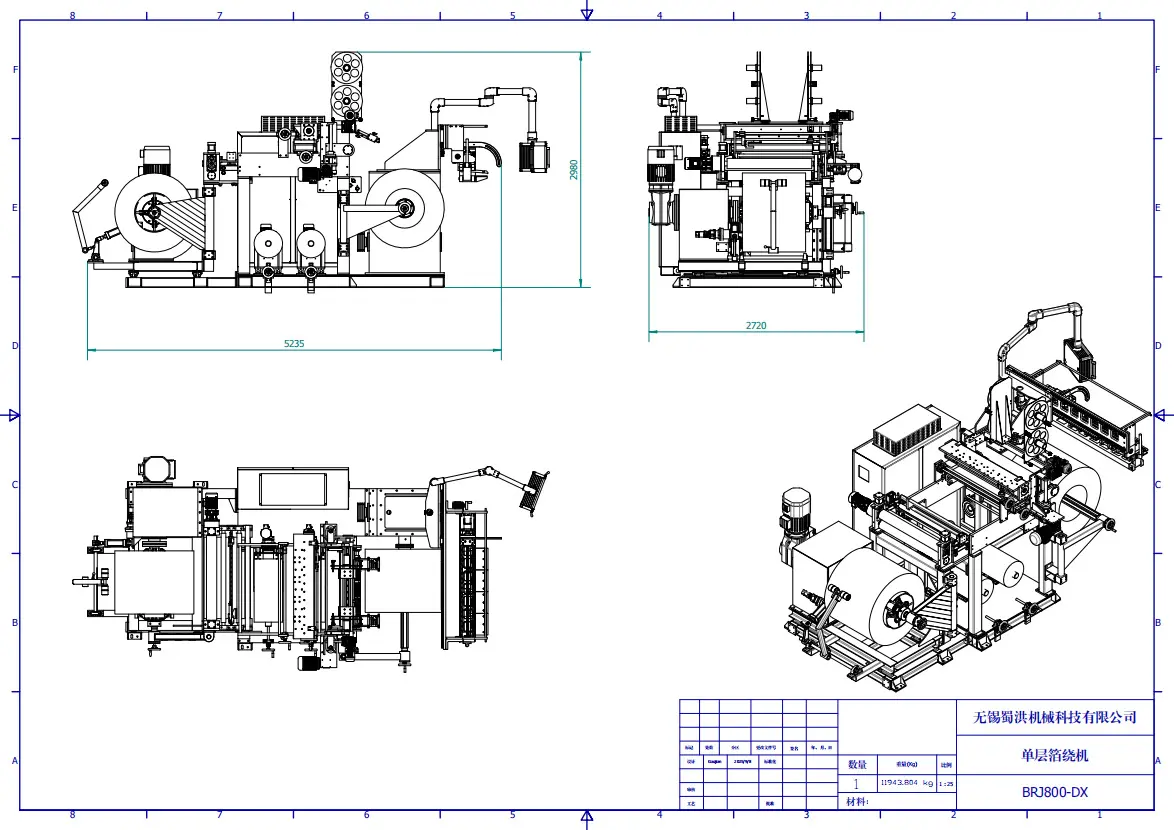
| Code | SH-600 | SH-800 | SH-1100 | SH-1400 |
| Coil outer diameter | 150-750mm | 150-850mm | 200-1000mm | 200-1000mm |
| Foil width | 100-600mm | 150-800mm | 200-1100mm | 300-1400mm |
| Foil layers | Single or double | |||
| Foil thickness | Copper Cu:0.3-2.5mm Aluminium Al: 0.5-3.0mm | |||
| Winding speed | 0-30r/min | 0-30r/min | 0-20r/min | 0-20r/min |
| Max tension of foil | 6000N | 8000N | 10000N | 14000N |
| Welding speed | 0-0.5 m/min | |||
| Correction precision | ±0.5mm | |||
| Welding method | TIG or cold pressure welding | |||
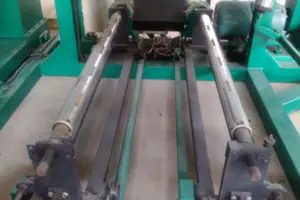
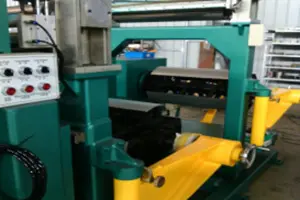
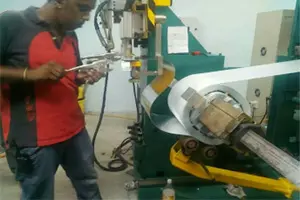
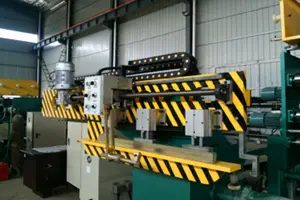
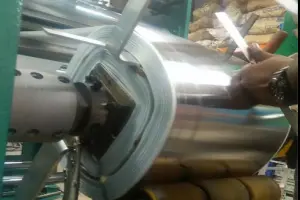
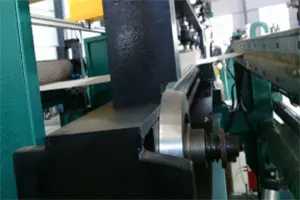
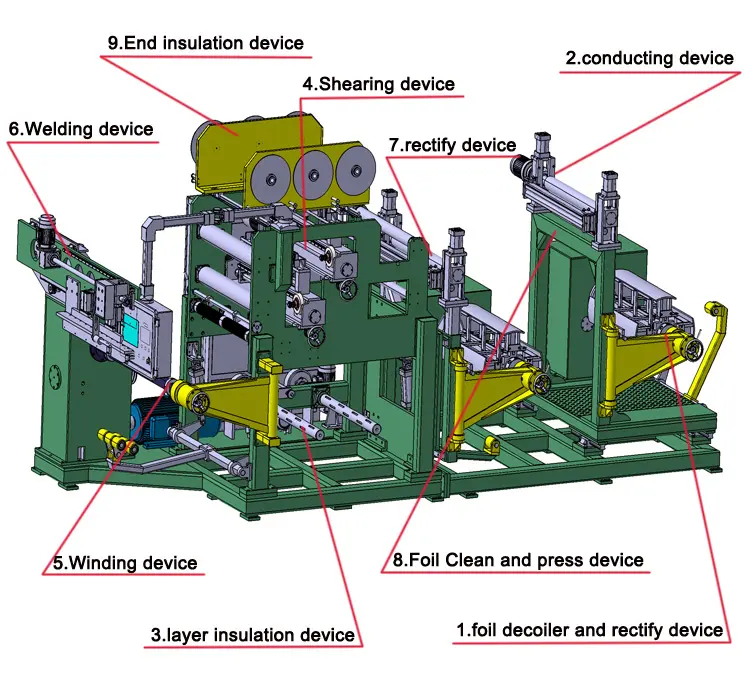
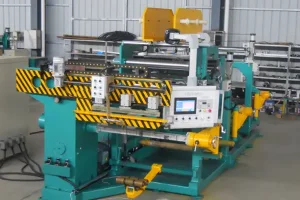
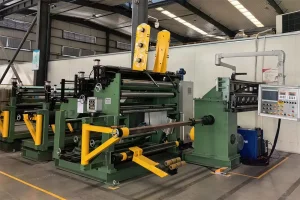
Adopting motor initiative supplying tension advanced method, stable tension, there is stable tension in foil winding, stopping and foil returning. It can avoid loosen situation when the tension lost in winding.
Winding speed reducer is turbine shaft reducer, it can keep main shaft auto-locked whenever power on or power off status.
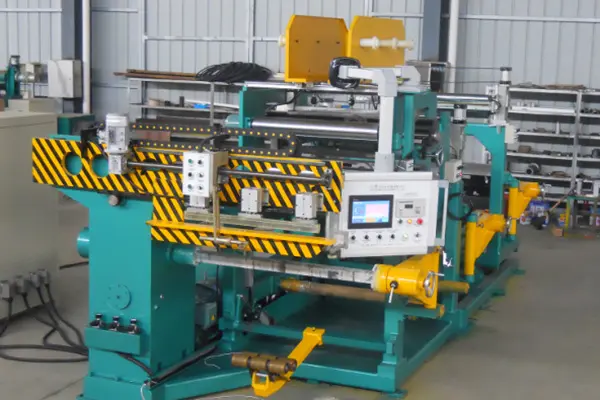
Correction system using photoelectric analog sensors, it is not meeting with foil edge, both thick and thin foil are accepted.
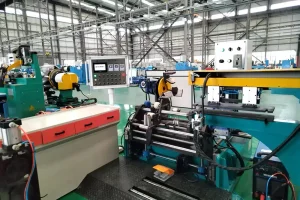
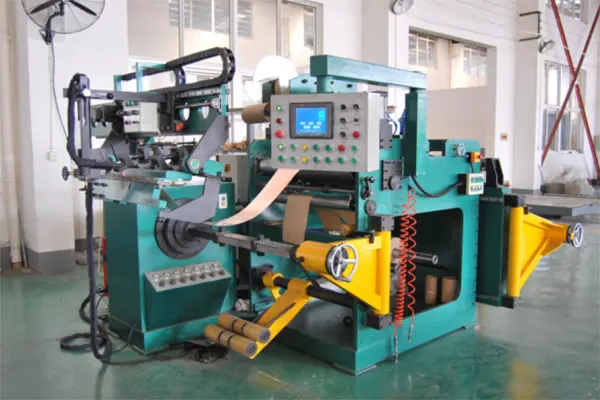
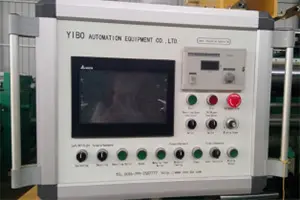
Foil tension, layer insulation tension, coil parameters, winding status and other data, all of them can be set and showed on screen, easy for operating, accurately and intuitively.
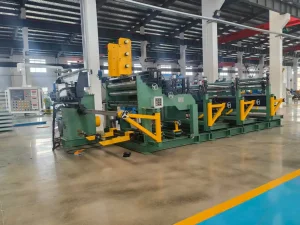
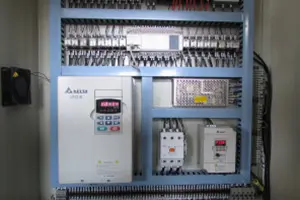
Equipment is controlled by PLC and touch screen, less fault of whole machine, no friction noisy, stable working, high working efficiency.
Used in 110kV and above power transmission and transformation systems (such as substations and inter-regional power grids), these transformers produce high-voltage windings with copper/aluminum foil conductors to meet high-voltage, low-loss power transmission requirements.
Suitable for 10kV and below distribution networks (such as urban power grids and industrial park distribution), these transformers produce low-loss, high-efficiency foil coils to ensure stable power supply to end users.
These include dry-type power transformers (used in fire-resistant environments such as high-rise buildings and subways) and oil-immersed power transformers (used in large outdoor substations). Their foil windings must be wound using this equipment.
Used in high-power industrial applications such as steel and chemical industries, they filter grid harmonics and protect precision equipment. Their foil windings require high insulation strength and overload resistance.
Suitable for industrial production lines requiring DC power, such as electrolytic aluminum and electroplating. High-current-resistant foil coils are wound to ensure stable operation of the rectifier system.
Used in industrial furnaces (such as arc furnaces and induction furnaces), they produce foil windings capable of withstanding short-term high loads to meet the power needs of high-temperature smelting.
These include wind turbine box transformers (connecting wind turbines to the grid) and photovoltaic inverter transformers. Their foil coils must withstand harsh outdoor environments (low temperatures, wind and sand) and exhibit low losses.
These are used in energy storage power plants to wind foil windings for filter and boost inductors in energy storage systems, ensuring efficient conversion between energy storage and release.
These are designed for fast-charging charging piles and feature compact, high-power-density foil coils to meet the power needs of electric vehicles for rapid charging.
Depending on the specific model, the winding speed ranges from 0-30 r/min (for SH-600/800) to 0-20 r/min (for SH-1100/1400). The machine supports foil widths from 100mm up to 1400mm, ensuring adaptability to various industrial specifications.
It processes both copper (Cu) and aluminum (Al) foils. Specifically, it supports copper foil thicknesses of 0.3-2.5mm and aluminum foil thicknesses of 0.5-3.0mm, configured for single or double layers.
The equipment uses an advanced motor-driven active tensioning method. This ensures stable tension is maintained during winding, stopping, and foil returning, effectively preventing looseness caused by sudden tension drops.
The correction system operates via photoelectric analog sensors with a correction precision of ±0.5mm, without physically touching the foil edge. Welding options include TIG (Tungsten Inert Gas) welding or cold pressure welding, operating at speeds of 0-0.5 m/min.
The machinery is managed through a central PLC and a touch screen control system. Key parameters like winding status, foil tension, and insulation settings are adjusted directly on-screen, minimizing manual errors and noise output.