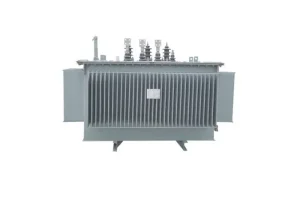
Premium energy-saving transformers and high-precision core winding systems engineered for global compliance and long lifespans.
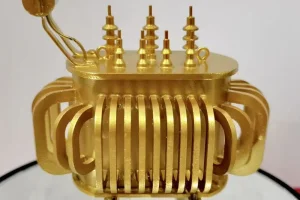
Within modern power grids, the demand for highly efficient electrical transformers to reduce voltage has scaled exponentially. Transmitting electricity over vast distances requires high voltages to mitigate resistive wire heating. However, end-use industrial motors, municipal water facilities, commercial buildings, and household grids rely on much lower, stabilized step-down voltages. An inadequate step-down process translates directly into reactive energy loss, system-wide heat spikes, and equipment failure.
As standard grid components age under high thermal stress, finding energy-efficient transformers has shifted from an operational preference to a global regulatory mandate. Modern step-down transformer architectures must maintain minimal core losses (no-load losses) and copper losses (load losses). Innovations in magnetic core engineering, specifically 3D wound cores and amorphous metal alloys, have proven crucial in satisfying strict international directives like EU Ecodesign, US DOE 2016, and China's State Grid green standards.
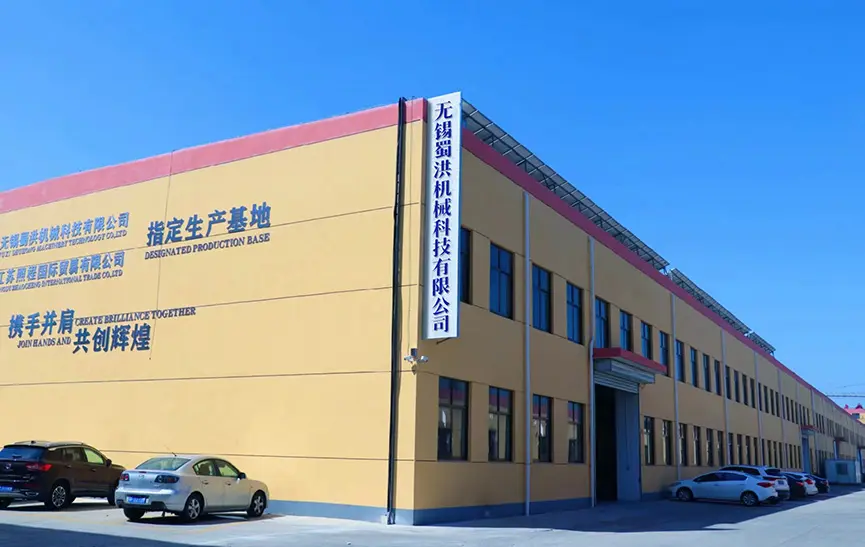
Situated on the shores of the picturesque Taihu Lake in Wuxi—a region historically designated as the "Land of Fish and Rice"—Wuxi Shuhong Machinery Technology Co., Ltd. has established itself as an innovative high-tech enterprise since its inception in 2018. Over the past decade, the transition of domestic machinery systems from simple design replication to global-tier product design has redefined the market. Recognizing this shifting landscape, Wuxi Shuhong focused intensely on addressing the performance bottlenecks of power distribution components: thermal management and lifespan limitations.
During a technical exchange for a complex State Grid project, Wuxi Shuhong’s founding engineers observed that traditional transformer configurations routinely failed under peak summer loads due to insufficient thermal dissipation. This critical drawback shortened insulation life and caused costly grid downtime. Guided by a "People-Oriented, Quality First" philosophy, the team designed and manufactured step-down transformers achieving a 30% reduction in temperature rise and an operating lifespan exceeding 15 years.
Today, Shuhong Machinery oversees a comprehensive industrial chain integrating research & development, hardware design, automated manufacturing, and global logistical support, helping substations and facilities optimize power grids worldwide.
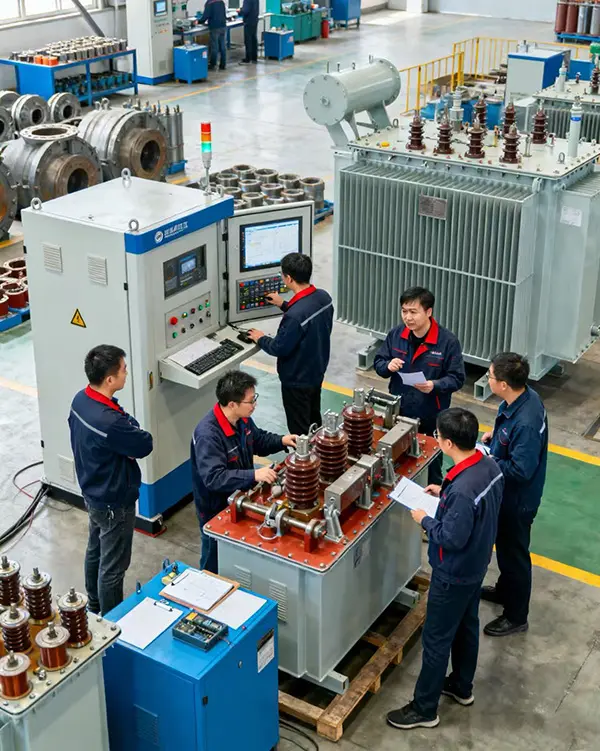
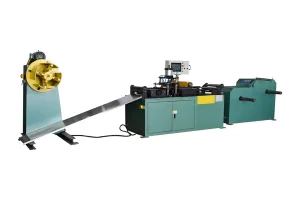
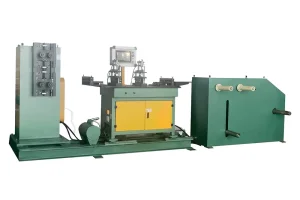
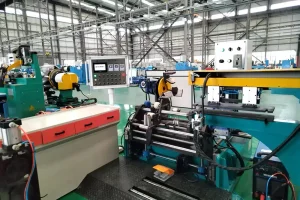
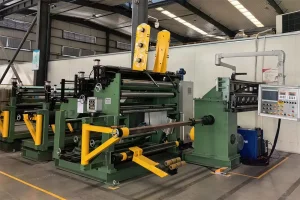
Developing a high-efficiency voltage reduction transformer relies on winding accuracy and core density. The physical parameters of the core winding dictate the level of leakage flux and magnetic reluctance. Wuxi Shuhong utilizes multi-axis servo systems to ensure tension uniformity during coil processing, avoiding micro-abrasions in the insulation enamel that can lead to catastrophic internal short circuits.
Laser and high-speed shear operations split silicon steel with zero edge burr.
Continuous winding forms a high-permeability magnetic circuit without joints.
High-temperature vacuum ovens restore magnetic domains and stress relief.
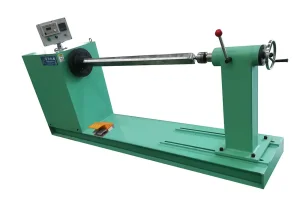
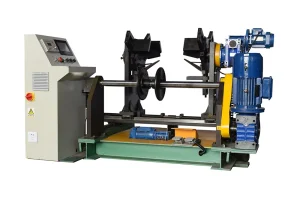
Precision horizontal and foil systems wrap high & low voltage layers.
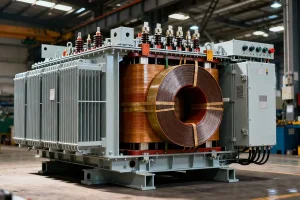
Active core structure mounting, securing leads and busbar alignments.
Moisture removal in vacuum chambers to optimize paper insulation.
Degassed dielectric fluid fill prevents bubbles and partial discharge.
Partial discharge, impedance, thermal, and sound level checks.
Traditional stacked-lamination cores contain discontinuous magnetic pathways that act as air gaps, raising no-load losses and generating mechanical hum. In contrast, 3D Wound Core and Planar Wound Core geometries maintain a continuous grain-oriented silicon steel structure. By removing physical seams, magnetic flux flows parallel to the rolling direction of the steel. This reduces exciting current requirements, lowers total weight, and yields up to 40% reduction in acoustic noise compared to conventional stacked-core configurations.
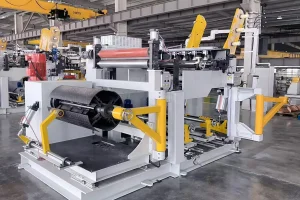
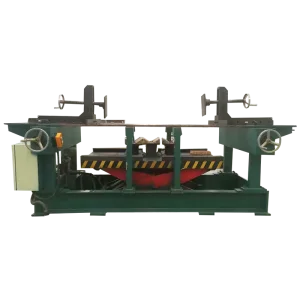
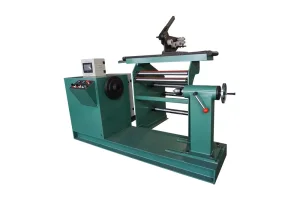
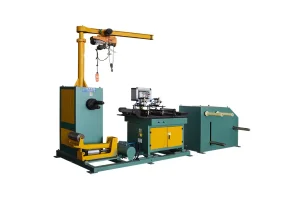
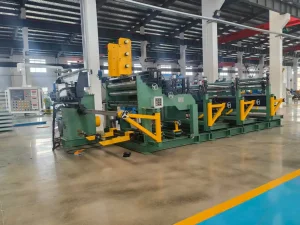
By controlling both transformer component design (such as R-type core systems and amorphous alloy assembly tables) and manufacturing machines (including foil winders and multi-axis servo arrangers), Wuxi Shuhong eliminates variations in coil tension and alignment. This vertical integration allows for prompt customization, making Shuhong a trusted wholesale partner for global suppliers.
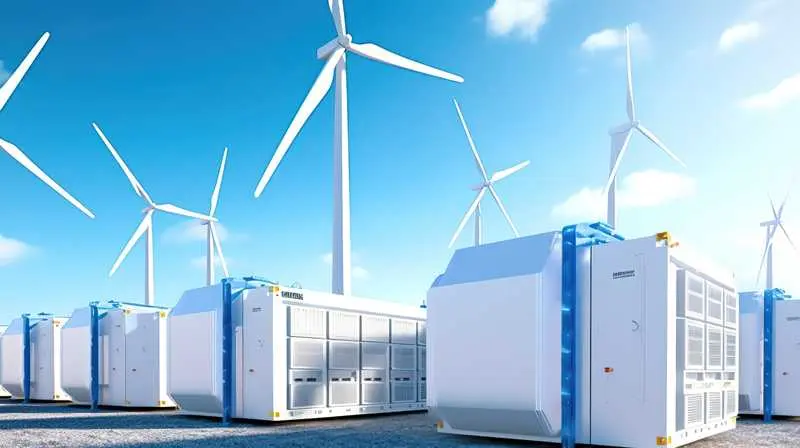
Electrical requirements vary by region, local temperature trends, and environment type. Wuxi Shuhong step-down solutions are optimized for three primary operation sectors:
Factories operating massive extrusion machines, CNC arrays, and automated assembly networks require large amounts of 380V/220V power derived from 10kV or 35kV supply lines. High-efficiency oil-immersed transformers provide excellent thermal dissipation, maintaining performance even in dust-heavy environments.
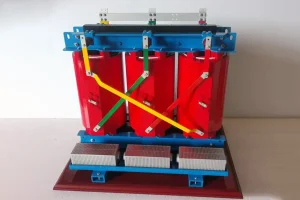
For high-rise office towers, healthcare facilities, and green data centers, liquid leakage poses a fire risk. Cast-resin dry-type transformers isolate high voltage lines without oil-leak hazards, delivering stable voltage reduction while complying with strict local building codes.
Solar arrays and wind turbines generate fluctuating electricity that must be stepped up for transmission and stepped down for storage systems. Amorphous alloy cores handle these cycles with minimal idle power loss, improving total plant efficiency.
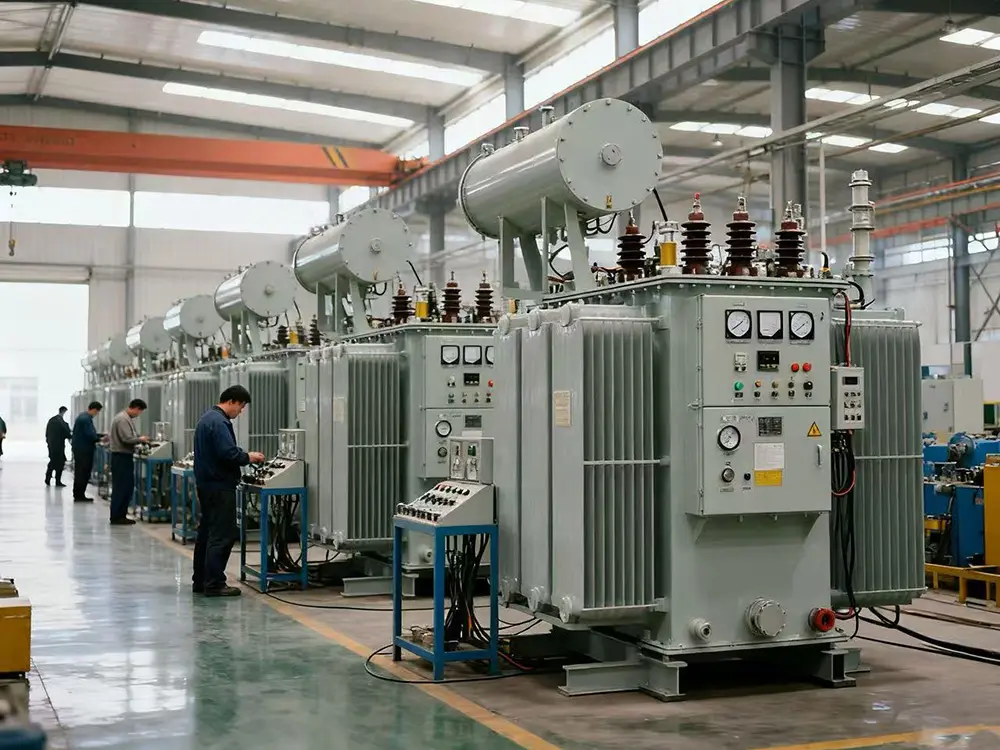
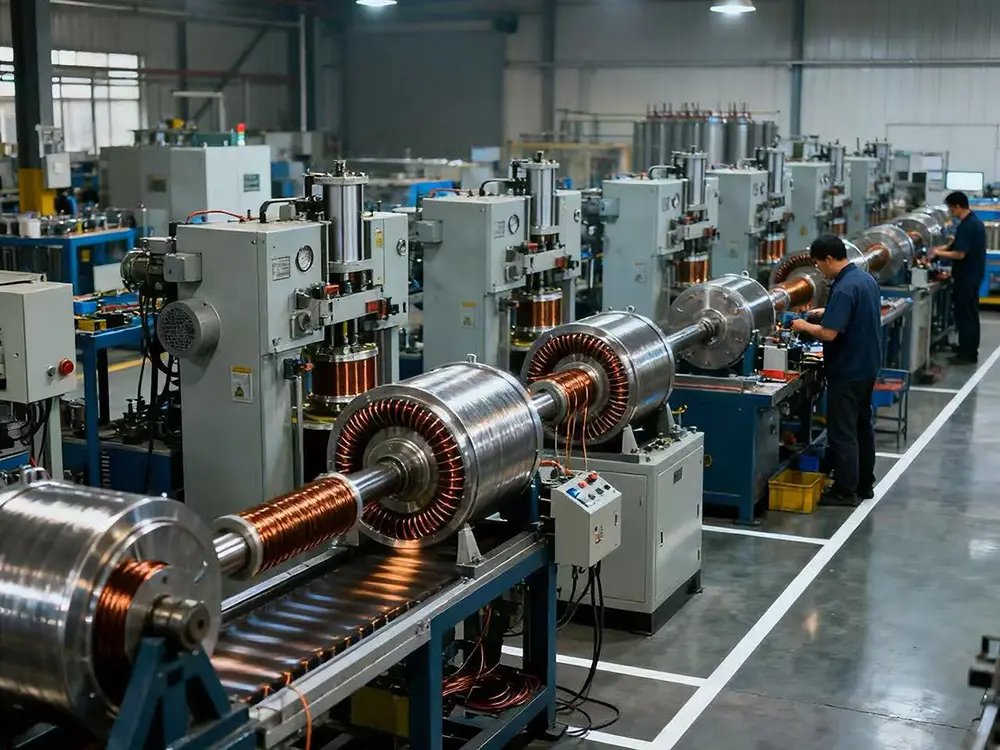
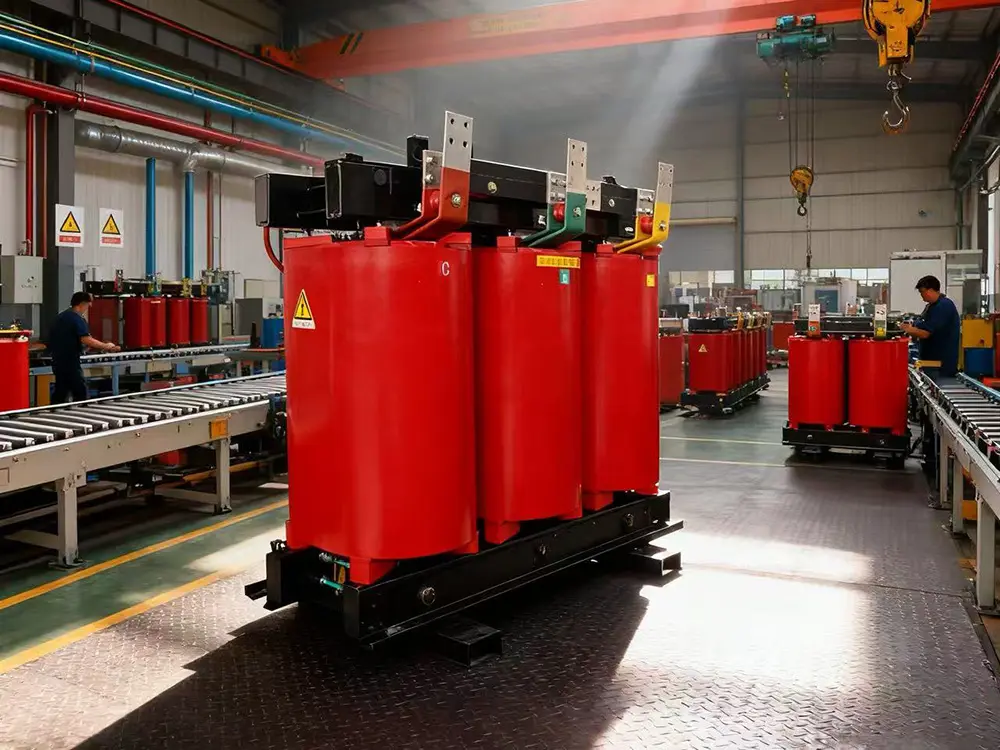
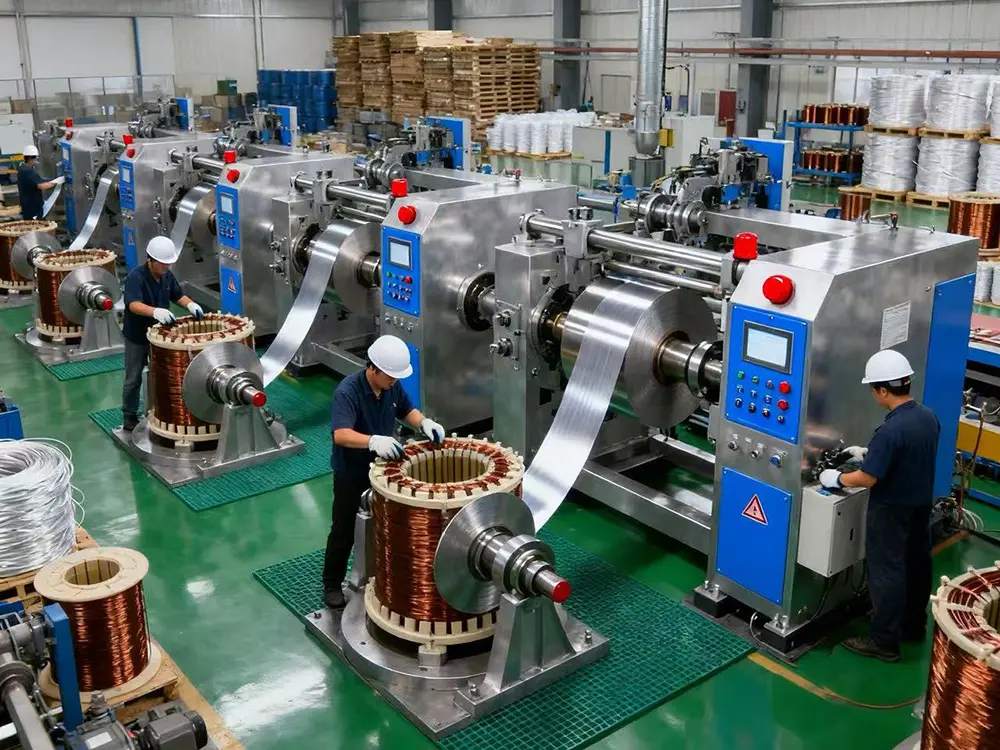
When selecting step-down transformer components, safety certifications are essential. Wuxi Shuhong implements strict quality control measures to ensure global market access. Every unit undergoes testing in accordance with IEC (International Electrotechnical Commission) and IEEE standards before shipment.
By overseeing both the mechanical R&D (designing automatic winding equipment) and final transformer assembly, Shuhong ensures complete process control. This end-to-end expertise guarantees that every step-down transformer meets design specifications and delivers reliable performance in the field.

Looking ahead, Wuxi Shuhong is incorporating IoT sensors into its transformer designs to enable real-time monitoring of winding temperatures, load states, and oil health. This technology supports predictive maintenance, helping plant managers address potential thermal anomalies before they result in grid downtime.
Additionally, the transition to high-permeability amorphous materials remains a priority. By refining annealing cycles and utilizing automated coil tension winders, Shuhong aims to further lower core losses, providing efficient voltage reduction solutions for modern power grids.
Explore our industrial winding equipment, assembly tables, and advanced core-cutting systems designed to support high-efficiency transformer manufacturing.