1 / 2

| Item | Specification |
|---|---|
| Product Model | Example: S16-M-100/10 (S=Three-Phase; 16=Amorphous Efficiency Class; 100=kVA; 10=HV kV) |
| Rated Capacity (Sn) | 30kVA~2500kVA |
| Phase/Frequency | Three-Phase; 50Hz/60Hz (±1% tolerance) |
| Connection Group | Dyn11 (standard) / Yyn0 (optional) |
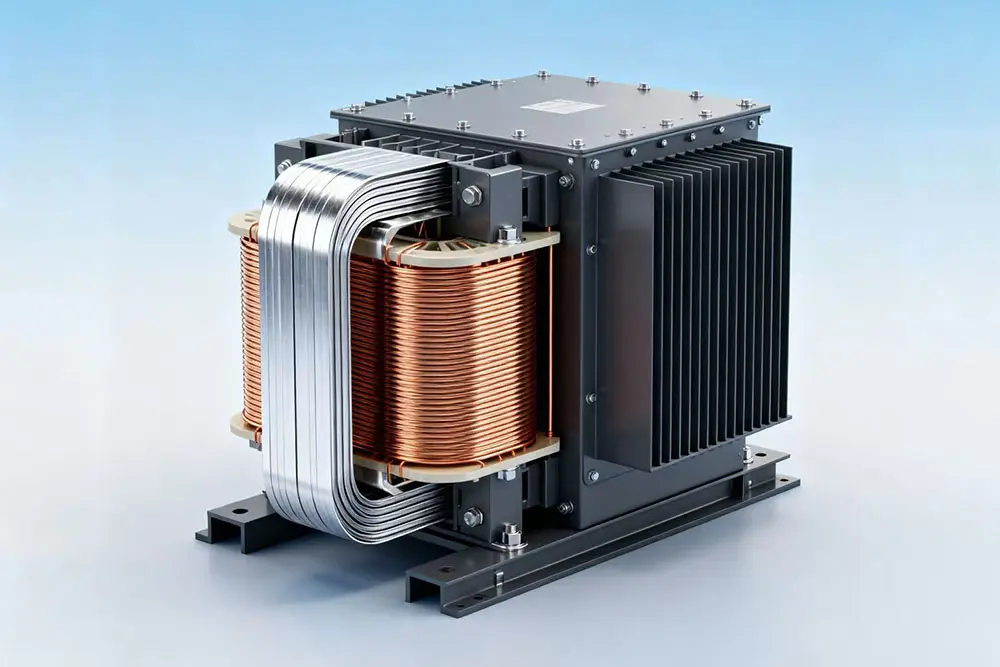
| Core Structure | Three-phase five-limb amorphous core (zero air gap, low magnetic hysteresis) |
| Parameter | Value / Description |
|---|---|
| Ambient Temperature | -25℃~40℃ (optional -40℃ with anti-freeze additive) |
| Altitude | ≤1000m (5% derating at 1500m, 10% at 3000m) |
| Humidity | ≤90% @25℃ (no condensation); Protection Class: IP23 (outdoor)/IP20 (indoor). |
| Service Life | 25 years (extended by low core loss and sealed tank). |
| Parameter | Value | Test Condition |
|---|---|---|
| No-Load Loss (Po) | ≤80W (30% lower than S13) | Rated voltage/frequency |
| Load Loss (Pk) | ≤1120W | Rated current, 75℃ |
| Short-Circuit Impedance (Uk%) | 4%~5% | 75℃, ±10% tolerance |
| No-Load Current (Io%) | ≤0.5% | Rated voltage |
| Item | Value |
|---|---|
| Rated Capacity | 100kVA |
| HV/LV Voltage/Current | 10kV/5.77A; 0.4kV/144.3A |
| No-Load/Load Loss | ≤80W / ≤1120W |
| Core Material | 1K101 Amorphous Ribbon |
| Cooling Method | ONAN |
As its most core advantage, the amorphous alloy material has an irregular atomic structure, resulting in much lower hysteresis loss than traditional silicon steel sheet cores. Its no-load loss is 30%-70% lower than that of conventional silicon steel transformers. Especially suitable for long-term operation scenarios such as power grids and residential areas, it can significantly reduce ineffective energy consumption, lowering users’ electricity costs and overall energy usage.
Due to the small magnetostriction coefficient of the amorphous alloy core (resulting in low core vibration amplitude), the transformer operates at a lower noise level (usually 5-10dB lower than traditional products). No additional noise reduction measures are needed, making it suitable for noise-sensitive environments such as commercial buildings, residential communities, and hospitals, enhancing user experience.
Amorphous alloy exhibits excellent magnetic permeability, achieving high magnetic flux even under low magnetic field strength. This optimizes the transformer’s load loss and improves energy conversion efficiency (mostly meeting national Level 1 energy efficiency standards). Especially when the grid voltage fluctuates, it can maintain stable output more effectively, reducing efficiency loss during power transmission.
The core material has better heat resistance and mechanical strength, enabling it to withstand current surges exceeding the rated load for a short time (e.g., during peak electricity consumption periods). With lower total heat generation, it effectively prevents component aging or failures caused by overload, extends the stable operation cycle of the equipment, and reduces maintenance costs.
On one hand, the low-loss and low-heat characteristics slow down the aging of internal components (such as coils and insulating materials), allowing the equipment to have a design life of over 20 years. On the other hand, energy-saving operation directly reduces carbon emissions; additionally, the amorphous alloy material is recyclable, complying with environmental requirements such as "green power grids" and "low-carbon buildings".
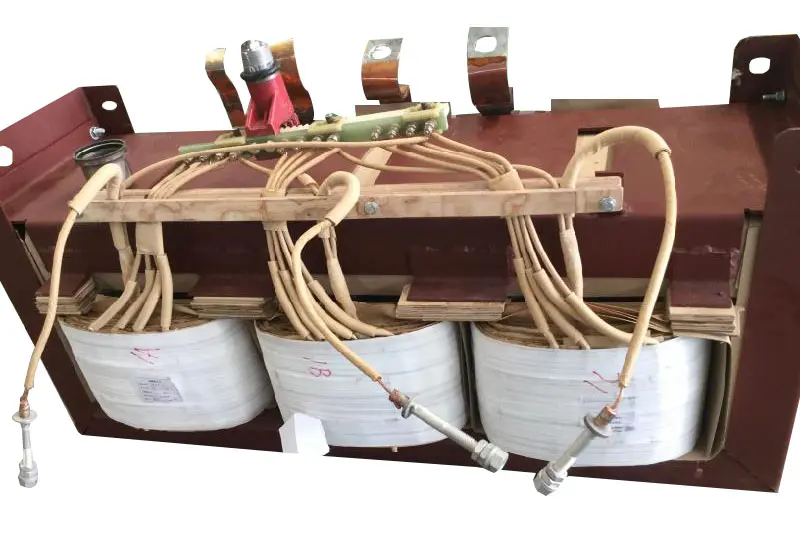
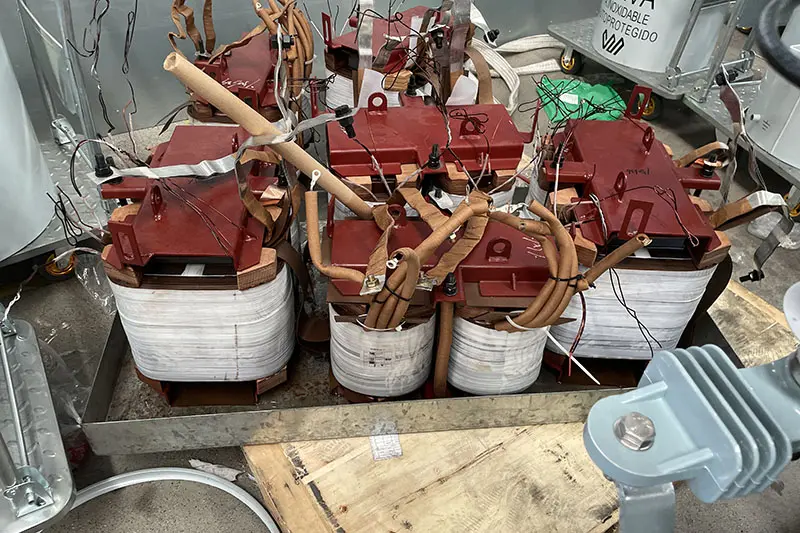
As a key link in transmitting electricity from "substations" to "user terminals", the Amorphous Alloy Iron Core Transformer is the preferred equipment for distribution networks, especially suitable for the following scenarios:
Its high overload capacity and low operating noise make it well-suited for industrial and commercial environments with high power demand and strict operational requirements:
For civil scenarios that prioritize noise control and long-term energy efficiency, this transformer is an ideal option:
Amorphous alloy materials have an irregular atomic structure, which offers much less magnetic friction (hysteresis loss) compared to the aligned crystalline structures of traditional silicon steel. This reduces no-load loss by 30% to 70%, translating to massive, continuous energy savings.
Yes. Due to the very small magnetostriction coefficient of the amorphous alloy core, core vibrations are kept to a minimum. This allows the transformer to operate 5 to 10 dB quieter than traditional steel core models, making them ideal for hospitals, schools, and residential areas.
Absolutely. The core material maintains high magnetic permeability and exhibits superior thermal stability. This provides a strong overload capacity that helps the system handle sudden load surges safely during peak electricity consumption periods.
These transformers are built with low-loss and low-heat characteristics that directly slow down the thermal aging of internal coils and insulating components. They are designed for a reliable operational lifespan of 25 years or more.
Yes. The transformers can be fully customized to meet special operational needs, including high-altitude adaptations (over 1000m), special voltage distributions, and anti-freeze configurations for extreme low-temperature climates.