Explore our premium selection of industrial-grade machinery, production lines, and high-performance core technologies engineered by Shuhong Machinery.
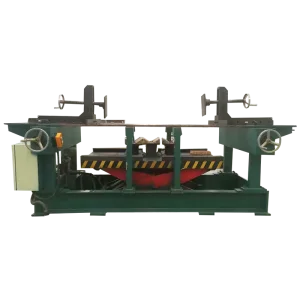
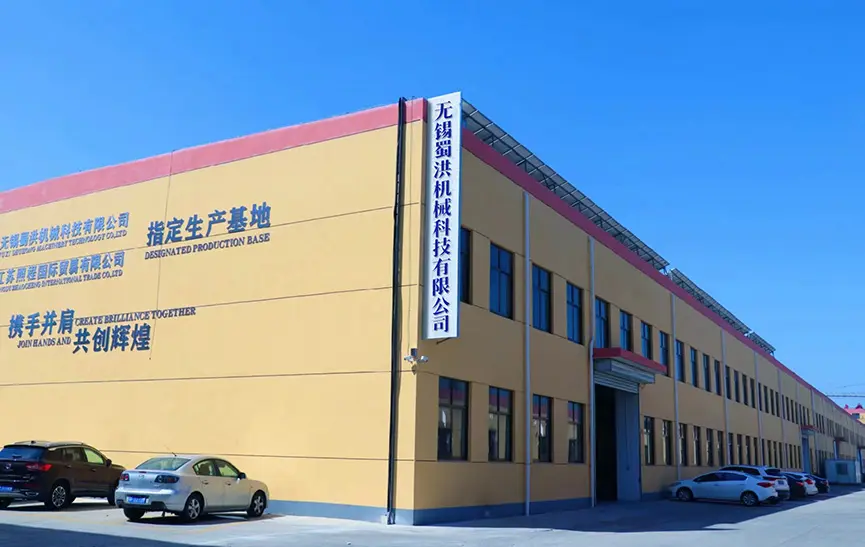
On the shores of the picturesque Taihu Lake lies Wuxi, known as the "Land of Fish and Rice." This beautiful land has nurtured countless enterprising enterprises, with Wuxi Shuhong Machinery Technology Co., Ltd. standing out among them. Since its establishment in 2018, Shuhong Machinery has consistently prioritized technological innovation and quality service, steadily advancing in the fields of electrical and plastic machinery, becoming a high-tech enterprise with both strength and reputation.
Our founder’s deep insight into the machinery manufacturing sector stems from more than a decade of hands-on experience, bridging the gap between front-line technical roles and large-scale plant management. Over this period, the domestic machinery market shifted dramatically from "following" to "running alongside" global peers. Recognizing the emergent market demand for high-efficiency, energy-saving, and intelligent power transformers for homes and grid-edge utilities, Shuhong Machinery established its core competencies in green power technology.
Engineered for high reliability, extended product lifespans, and reduced power distribution losses.
During a State Grid project exchange, our founder observed critical thermal limitations in traditional transformer configurations. Through intensive lab modeling, we introduced innovations that lowered temperature rises by 30% compared to legacy devices.
By optimizing internal coil geometries and employing specialized insulation materials, Shuhong engineered a 15-year minimum lifespan for residential and light industrial transformers, drastically minimizing maintenance overheads.
We supply bespoke solutions for unique applications, tailoring physical layouts, voltage ratios, cooling systems, and core assembly mechanics to match the precise requirements of regional energy operators.
Deep-dive research on modern residential grid integration, efficiency optimization, and regulatory pathways.
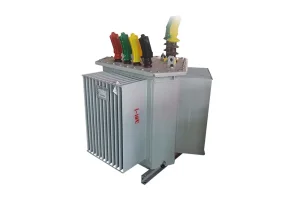
Historically, residential energy systems were unidirectional, consuming power distributed from centralized utilities. However, the rise of domestic micro-generation—principally rooftop solar photovoltaics (PV)—and high-load consumer applications like Electric Vehicle (EV) fast-charging infrastructure, has transformed the household into a bidirectional grid node. Consequently, modern residential energy hubs require specialized power transformers for homes that can handle dynamic back-feeding currents, stabilize voltage fluctuations in real time, and operate quietly within residential zones.
High-efficiency home transformer systems play a vital role in preventing phase imbalances and local grid congestion. Manufacturers must leverage advanced electromagnetic simulations to develop cores that minimize hysteresis and eddy current losses, ensuring that energy harvested on the rooftop is efficiently converted and stored without unnecessary heat dissipation.
For international utility developers, EPC contractors, and distributors, procurement of residential-grade power transformers involves navigating strict regional constraints. Key parameters include:
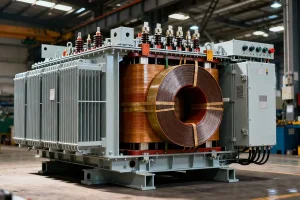
To satisfy these complex criteria, the industry is shifting away from traditional stacked laminate cores. The adoption of 3D triangular rolled cores represents a significant leap forward. By using continuous, tension-annealed silicon steel strips wrapped in a triangular layout, manufacturers can eliminate the air gaps inherent in mitred joints. This structure guarantees a balanced three-phase magnetic circuit, reducing no-load current requirements by up to 60-80% and drastically minimizing noise.
Similarly, amorphous alloy core technology represents another horizon. Lacking a crystalline structure, amorphous steel boasts significantly lower magnetic hysteresis, making it highly effective for municipal and domestic substations operating at low load factors during off-peak hours.
A rigorous sequence of precision steps ensures zero-defect quality and long-term operating safety.
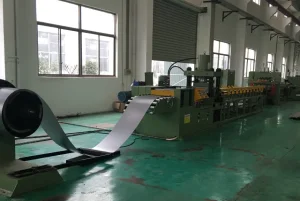
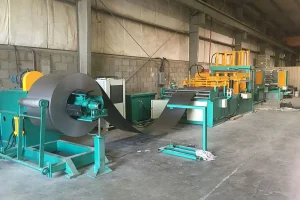
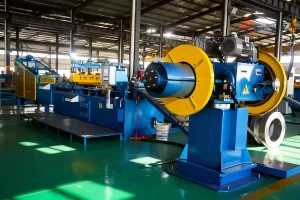
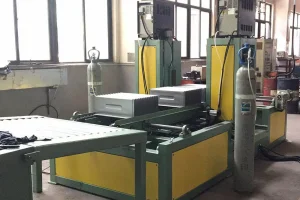
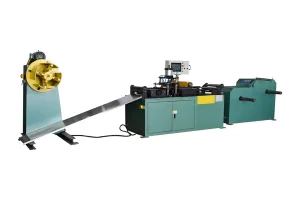
High-speed CNC cross-cutting lines process electrical steel with sub-millimeter tolerances, reducing edge burrs that cause inter-laminar shorts.
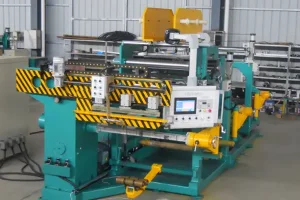
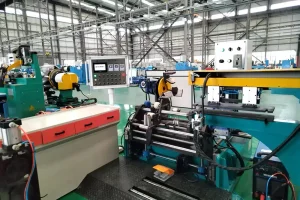
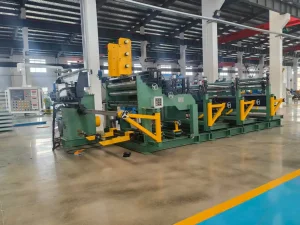
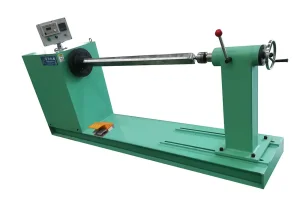
Utilizing high-performance foil and wire winding machines to ensure tight, uniform wire layers with optimized tension controls.
Undergoing thermal annealing to relieve internal mechanical stress generated during cutting and rolling, restoring magnetic performance.
Precision mechanical alignment of the active core assembly followed by thorough vacuum oven drying to extract all moisture.
Hermetic oil filling under deep vacuum to prevent bubble formation, followed by complete impulse voltage, insulation resistance, and load loss testing.
Building high-performing hardware is only half the battle; ensuring seamless integration into local municipal systems requires an active engineering and service network. Wuxi Shuhong Machinery partners with localized field services to oversee commissioning, preventive maintenance, and oil quality indexing. By maintaining local certification portfolios—including KEMA, CE, UL, and IEEE benchmarks—we simplify the approval process for regional utility grids, allowing developers to fast-track residential housing projects.
As we look to the future, Shuhong Machinery is integrating digital monitoring assets directly into the housing of our power transformers. Smart sensors tracking oil temperature, gas-in-oil parameters (DGA), and winding currents will transmit predictive telemetry directly to cloud-based SCADA systems. This proactive shift from scheduled maintenance to predictive analytics prevents sudden outages, extending the lifespan of critical distribution infrastructure and reducing downtime across municipal grids.
Addressing the technical, operational, and procurement queries of utility engineers and sourcing agents.
Key selection parameters include kVA load capacity (calculated using concurrent peak loads from HVAC, EV chargers, and appliances), incoming primary voltage, secondary distribution values, total harmonic distortion levels, and target installation parameters (indoor vs. outdoor).
By eliminating physical air gaps and maximizing magnetic flux alignment along the direction of grain-oriented silicon steel, 3D wound cores significantly lower no-load power losses and decrease exciting current demands, lowering utility billing overheads.
Standard engineering designs are normally validated within 1-2 weeks. Depending on material sourcing and specific grid testing requirements, the manufacturing-to-delivery window ranges from 6 to 12 weeks.
We deploy full factory acceptance testing (FAT) including winding resistance verification, voltage ratio checks, phase displacement measurements, insulation resistance assessments, and full load loss mapping before dispatch.
Complete your production line with high-quality components, heat sinks, and customized winding machinery.