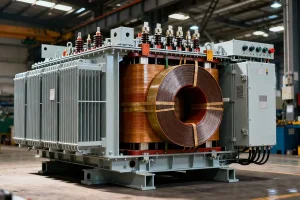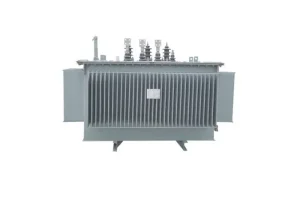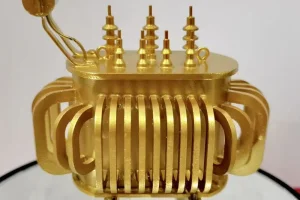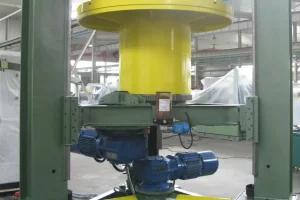

Basic Information
| Item |
Specification |
| Product Model |
Example: S11-M-500/10, S13-R-1000/20, S15-H-2500/35 (S=Three-Phase; 11/13/15=Efficiency Class; M/R/H=Structural Type; Capacity kVA/HV kV) |
| Rated Capacity(Sn) |
30kVA~5000kVA (ONAN: 100% rated capacity; ODAF: 130%; ODWF: 160%) |
| Phase/Frequency |
Three-Phase (standard); 50Hz/60Hz (±1% tolerance, customizable for 400Hz special use) |
| Connection Group |
Dyn11 (default for distribution), Yd11 (for power transformer); Yyn0 (optional) |
| Cooling Type |
ONAN (Oil Natural Air Natural) / ODAF (Oil Directed Air Forced) / ODWF (Oil Directed Water Forced) |
Operating & Environmental Conditions
| Parameter |
Details |
| Ambient Temperature |
-25℃~40℃ (standard); -40℃~45℃ (low-temperature/high-temperature models with modified oil). |
| Altitude |
≤1000m (derate 5% at 1500m, 10% at 3000m, 15% at 4000m). |
| Humidity |
≤90% @25℃ (no condensation); ≤50% @40℃. |
| Seismic Resistance |
GB 50260-2013 / IEC 60076-11, 7-degree intensity (0.15g acceleration); 8-degree optional. |
| Protection Class |
IP23 (outdoor, dust/rainproof) / IP20 (indoor). |
Losses & Impedance (Typical Values by Efficiency Class)
| Efficiency Class |
Parameter |
500kVA/10kV Example |
Test Condition |
| S11 (IEC IE1) |
No-Load Loss (Po) |
≤810W |
Rated voltage/frequency |
| |
Load Loss (Pk) |
≤5200W |
Rated current, 75℃ |
| S13 (IEC IE2) |
No-Load Loss (Po) |
≤650W (20% lower than S11) |
Rated voltage/frequency |
| |
Load Loss (Pk) |
≤4800W |
Rated current, 75℃ |
| S15 (IEC IE3) |
No-Load Loss (Po) |
≤520W (36% lower than S11) |
Rated voltage/frequency |
| |
Load Loss (Pk) |
≤4500W |
Rated current, 75℃ |
| All Classes |
Short-Circuit Impedance (Uk%) |
4%~6% (10kV); 6%~8% (35kV) |
75℃, ±10% tolerance |
| |
No-Load Current (Io%) |
≤1.0% (30~250kVA); ≤0.6% (≥315kVA) |
Rated voltage |
📋 Efficiency Compliance: GB 20052-2024 Class 2 (S11/S13) / Class 1 (S15); IEC 60076-11 IE1/IE2/IE3
Example S13-500/10 Key Specs
| Item |
Value |
| Rated Capacity |
500kVA |
| HV/LV Voltage/Current |
10kV/28.87A; 0.4kV/721.7A |
| No-Load/Load Loss |
≤650W / ≤4800W |
| Short-Circuit Impedance |
4.5% |
| Cooling Method |
ONAN |
| Core Material |
30Q130 Silicon Steel |
| Protection Class |
IP23 |
⚙️ Customizable for special voltages (e.g., 6.3kV, 13.8kV), high-altitude (≥3000m), or explosion-proof (Ex d IIB T4) requirements. All parameters verified by SGS/Intertek.
⚡ I. Power System: Core Equipment for High-Voltage Transmission & Distribution
As a cornerstone of power grids, the Oil-Immersed Transformer is indispensable for voltage conversion and power transmission, especially in:
High-voltage power transmission networks: Used in long-distance power transmission between regional power grids (e.g., from power plants to central substations). Its excellent insulation and heat dissipation enable stable operation under high voltage (110kV, 220kV, or even 500kV) and large current, minimizing energy loss during long-distance transmission.
Substation voltage transformation: Installed in primary and secondary substations, it steps down high-voltage power from transmission lines to medium/low voltage (10kV, 0.4kV) for subsequent distribution to industrial users and residential areas, matching the voltage requirements of different end-users.
Urban & rural distribution networks: For areas with high power demand or large coverage (e.g., suburban industrial zones, rural townships), it adapts to fluctuating loads and harsh outdoor conditions (temperature changes, humidity), ensuring reliable power supply to scattered users.
🏭 II. Industrial Sector: Reliable Power Supply for Heavy-Duty Operations
Its ability to withstand high loads and harsh environments makes it a top choice for industrial scenarios with continuous, high-intensity power needs:
Heavy industry & manufacturing: Applied in steel mills, chemical plants, and machinery factories, it powers high-power equipment (e.g., blast furnaces, chemical reactors, production lines). Its strong overload capacity copes with sudden power surges during peak production, while its sealed structure resists dust, corrosive gases, and mechanical vibrations.
New energy power generation supporting: Used in solar photovoltaic (PV) and wind power plants as "step-up transformers". It boosts the low-voltage electricity generated by PV panels or wind turbines to high voltage, enabling efficient integration into the national power grid — critical for large-scale new energy utilization.
🏢 III. Civil Infrastructure & Large-Scale Buildings
For civil scenarios requiring stable, long-term power supply and low maintenance, it is widely adopted in:
Large commercial & public buildings: Installed in shopping malls, hotels, hospitals, and airports, it provides continuous power for air conditioning, elevators, lighting, and medical equipment. Its long service life (over 20 years) and low maintenance needs reduce operational costs for building managers.
Data centers: Data centers operate 24/7 with high power density. The Oil-Immersed Transformer's efficient heat dissipation reduces the load on the cooling system, while its stable power supply prevents downtime of servers and data storage devices.
Transportation hubs: Used in high-speed rail stations, subway systems, and ports, it supports the power needs of signal systems, traction power (for trains), and logistics equipment. Its resistance to temperature fluctuations and humidity ensures reliable operation in outdoor or semi-outdoor installations.
🌋 IV. Special Harsh Environments
Its robust sealed structure and corrosion resistance make it suitable for challenging conditions:
Mining & oilfields: In underground mines or remote oilfields, where environments are humid, dusty, or exposed to corrosive substances, the transformer's insulation oil and sealed tank protect internal components from damage, ensuring power supply for mining machinery or oil extraction equipment.
Remote off-grid systems: For isolated areas (e.g., mountainous villages, island communities) with independent power systems (powered by small hydropower or diesel generators), the transformer's low maintenance requirements and long lifespan reduce the need for frequent on-site repairs, ensuring stable daily power.
Q What is the difference between S11, S13, and S15 efficiency classes?
S11, S13, and S15 represent different energy efficiency levels for oil-immersed transformers. S11 corresponds to IEC IE1, S13 to IEC IE2, and S15 to IEC IE3. S13 has approximately 20% lower no-load losses than S11, while S15 has approximately 36% lower no-load losses than S11. Higher efficiency classes reduce energy waste and operating costs over the transformer's lifetime, and comply with increasingly strict standards such as GB 20052-2024.
Q What cooling types are available, and how do they affect capacity?
Three cooling types are available: ONAN (Oil Natural Air Natural) delivers 100% of rated capacity; ODAF (Oil Directed Air Forced) allows operation at up to 130% of rated capacity; and ODWF (Oil Directed Water Forced) supports up to 160% of rated capacity. The choice depends on the installation environment, available cooling infrastructure, and load requirements.
Q Can the transformer be used at high altitudes or in extreme temperatures?
Yes. The standard rating is for altitudes up to 1000m. At higher altitudes, derating is required (5% at 1500m, 10% at 3000m, 15% at 4000m). For extreme temperatures, special models with modified insulating oil are available, supporting ambient temperatures from -40℃ to +45℃. Custom high-altitude versions (≥3000m) can also be configured upon request.
Q What is the expected service life of the Oil-Immersed Transformer?
The design life of the Oil-Immersed Transformer typically exceeds 20 years under normal operating conditions. The sealed oil tank protects internal components from corrosion, dust, and mechanical wear, while high-quality insulating oil slows the aging of coils and insulation materials. Routine maintenance — including periodic checks of oil level, oil quality, and tank tightness — further extends operational life.
Q Is the transformer suitable for use in new energy (solar/wind) applications?
Yes. Oil-Immersed Transformers are widely used as step-up transformers in solar photovoltaic (PV) and wind power plants. They boost the low-voltage electricity generated by PV panels or wind turbines to high voltage, enabling efficient integration into the national power grid. Their strong overload capacity and stable performance make them ideal for the variable output characteristics of renewable energy sources.
Q Can the transformer be customized for special voltage requirements or harsh environments?
Yes. The transformer supports a wide range of customization options, including special voltages (e.g., 6.3kV, 13.8kV), high-altitude configurations (≥3000m), and explosion-proof designs (Ex d IIB T4) for use in mining, oilfields, or other hazardous environments. All custom parameters are verified by internationally recognized testing organizations including SGS and Intertek.