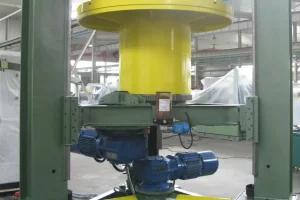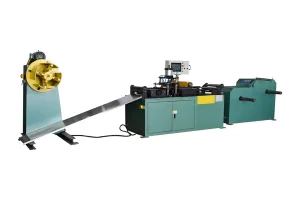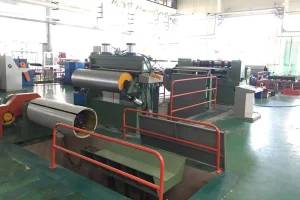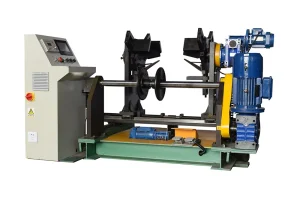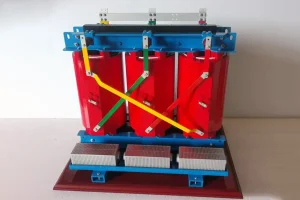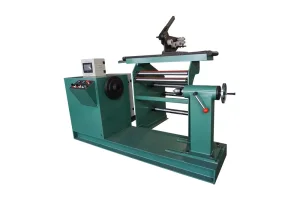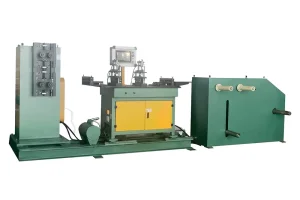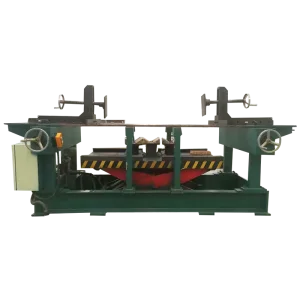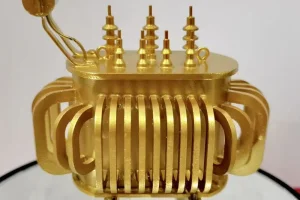
Explore our industrial grade equipment designed to optimize transformer loss performance and core assembly precision.
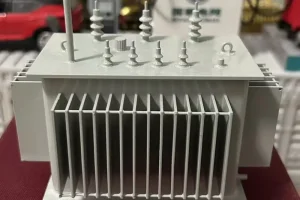
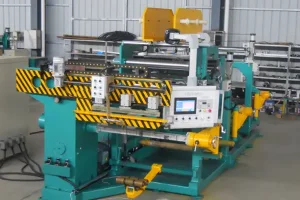
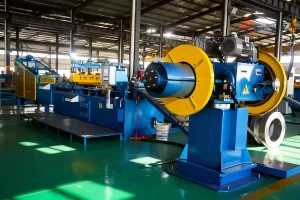
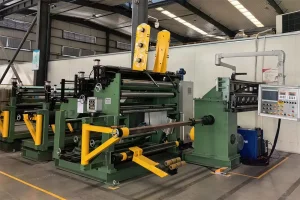
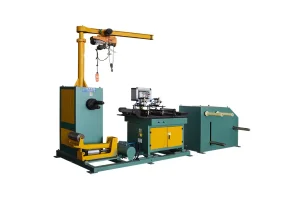
In global utility infrastructure and heavy industrial power networks, minimizing power transformer losses represents a multi-billion dollar opportunity. Transformer loss optimization directly translates to improved grid stability, reduced environmental impact, and a lower total cost of ownership (TCO).
Power transformer losses are categorized into two primary components: No-Load Losses (Core Losses) and Load Losses (Copper or Winding Losses). No-load losses occur continuously whenever the transformer is energized, regardless of the output load. These stem from magnetic hysteresis and eddy currents within the silicon steel lamination. Conversely, load losses scale quadratically with the operating current ($I^2R$), driven by the electrical resistance of the windings and parasitic stray currents within structural components.
To systematically target these issues, modern engineering relies on precision-engineered core material geometries and custom winding profile topologies. Mitigating these losses requires advanced core processing lines, precision tensioned coil winding systems, and high-purity conductor processing equipment.
Decarbonization mandates, coupled with the rapid integration of high-density renewable energy grids, have driven global procurement policies toward strict energy efficiency guidelines. Regulatory frameworks such as the European Union’s Eco-Design Directive (Tier 2 standards) and the United States Department of Energy (DOE) amended conservation standards enforce ultra-low loss thresholds for liquid-immersed and dry-type distribution transformers.
Amorphous metals feature non-crystalline atomic structures that dramatically lower hysteresis losses. Procuring AMC transformers allows utilities to reduce no-load losses by up to 70% compared to standard cold-rolled grain-oriented (CRGO) steel, lowering baseload power dissipation.
Techniques such as 3D wound core and step-lap joints minimize the air gaps at junctions. Reducing flux deviation at core joints directly minimizes stray magnetic field leakage, lowering acoustic noise and core loss simultaneously.
Replacing traditional wire coils with copper or aluminum foil winding in low-voltage structures drastically improves the fill-factor and thermal dissipation. Higher density foil coils mitigate eddy current distribution losses within the windings.
Different manufacturing methodologies yield specific operational benefits. Below is a structural matrix comparing standard technologies with low-loss designs optimized by high-precision machinery.
| Loss Type | Primary Driver | Standard Material / Method | Advanced Mitigation Technology | Estimated Efficiency Gain |
|---|---|---|---|---|
| Hysteresis Loss | Magnetic domain alignment resistance | Thick, Standard Grade CRGO Steel | Laser-scribed ultra-thin Hi-B silicon steel or Amorphous core sheets | 40% to 70% Core Loss Reduction |
| Eddy Current Loss | Induced currents within core laminations | Mechanical manual core stacking & shearing | Precision CNC longitudinal slitting & high-accuracy annealing | 15% Core Loss Reduction |
| Conductor Winding Loss | $I^2R$ electrical resistance in coils | Standard round magnet wire winding | Dual-layer foil winding & high-voltage automated wire layout | 20% Load Loss Reduction |
| Stray & Flitch Losses | Leakage magnetic flux in structural steel | Standard steel clamps & basic core tables | Amorphous core body assembly tables with shielded support structures | 10% Stray Loss Reduction |
Deeply Developing the Machinery Industry, Empowering the Future of Energy
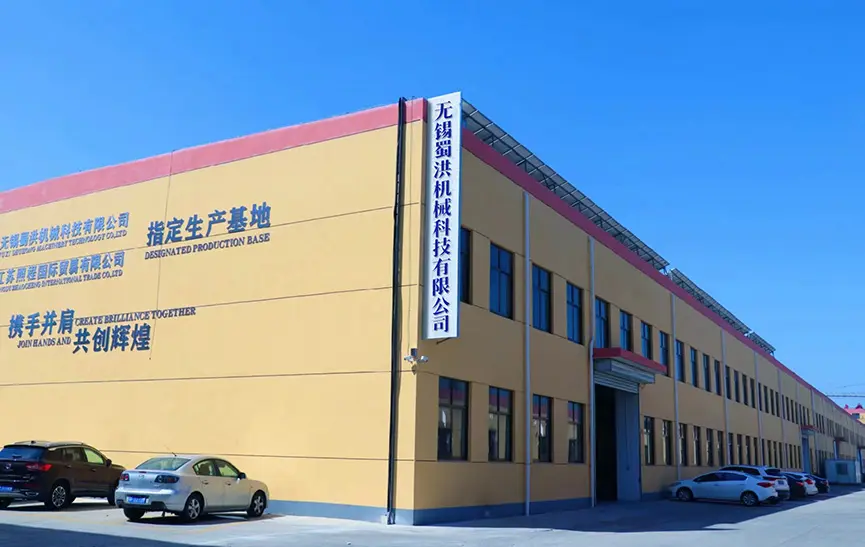
Situated on the shores of the picturesque Taihu Lake in Wuxi, a region known as the "Land of Fish and Rice," Wuxi Shuhong Machinery Technology Co., Ltd. has grown to be an industry-recognized brand. Since its establishment in 2018, Shuhong Machinery has consistently prioritized technological innovation and quality service, advancing in the fields of electrical and plastic machinery, becoming a high-tech enterprise with both strength and reputation.
Our founder's passion for machinery and long-term vision has guided our growth. With over a decade in the industry, starting from front-line technical roles up to management, the founder witnessed the domestic machinery sector shift from "following" to "running alongside" global peers. Recognizing the emerging market need for energy-efficient, intelligent upgrades, the company focused on transformer manufacturing equipment that enables green grids.
During a State Grid project exchange, the founder observed that traditional transformers suffered from poor temperature control and limited service lifespans, which harmed power stability and raised costs. Identifying that new energy infrastructure demands equipment with high resilience, Shuhong Machinery directed its engineering capabilities towards R&D and manufacturing of high-efficiency, energy-saving transformer equipment.
Overcoming early funding and complex technical hurdles, the team worked in laboratories and workshops on functional demonstrations and micro-optimizations. The hard work culminated in developing high-efficiency transformer configurations featuring a 30% lower temperature rise and a 15-year operational lifespan, winning high recognition from leading power distributors.
Today, Shuhong Machinery has established a comprehensive R&D-design-production-sales-service industrial chain. Our professional R&D team and modern production facilities ensure consistent machinery output. Focused on insulation optimization, core cutting control, and temperature management, our systems have successfully passed national grid testing and international industry certifications. We have supplied equipment and solutions to more than 2,000 substations, boosting China's power grid and new energy industries.
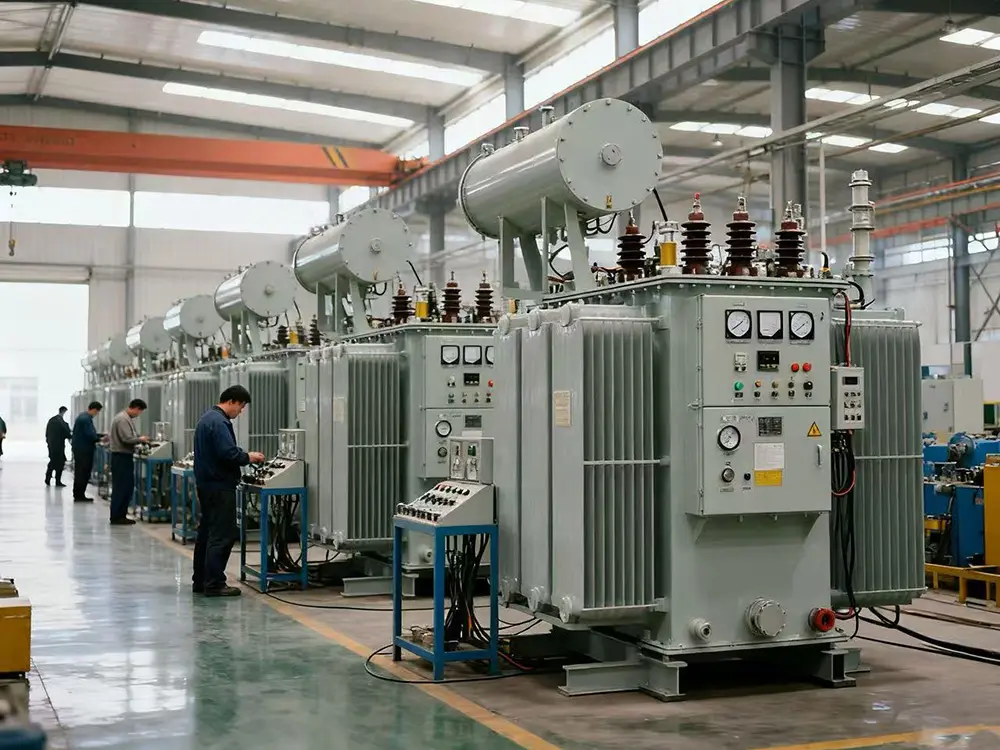
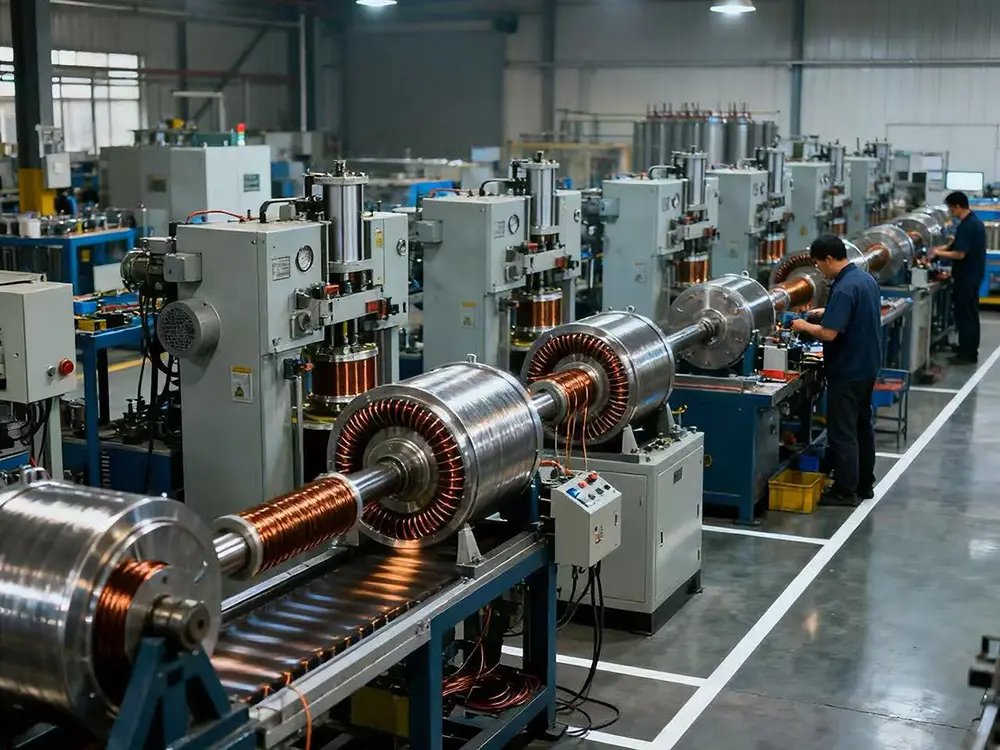
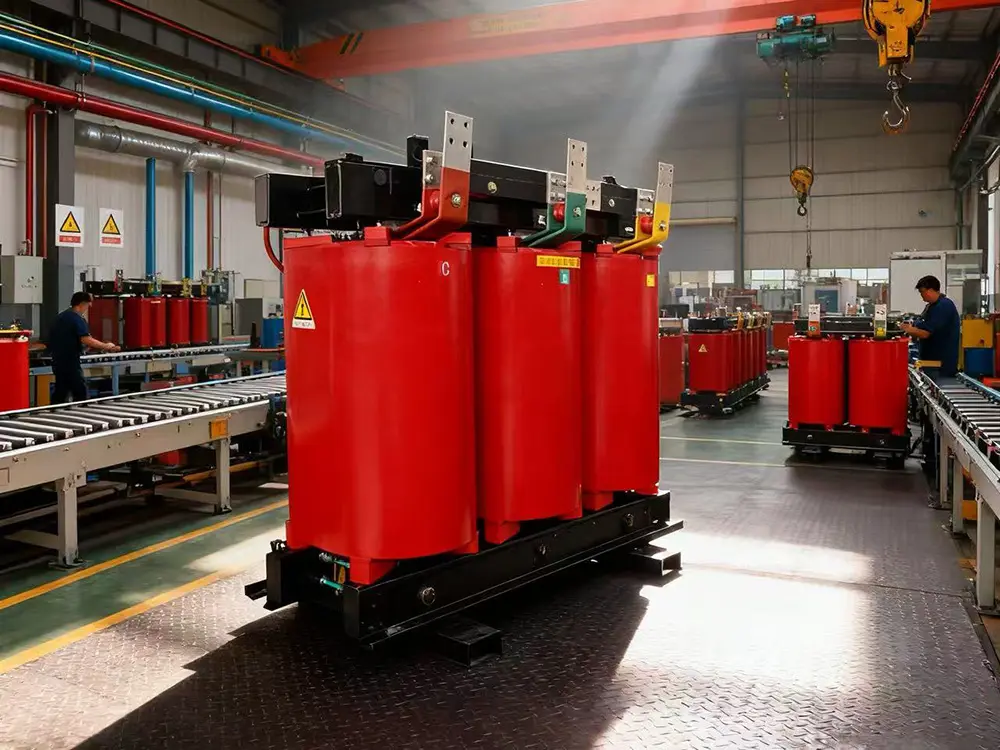
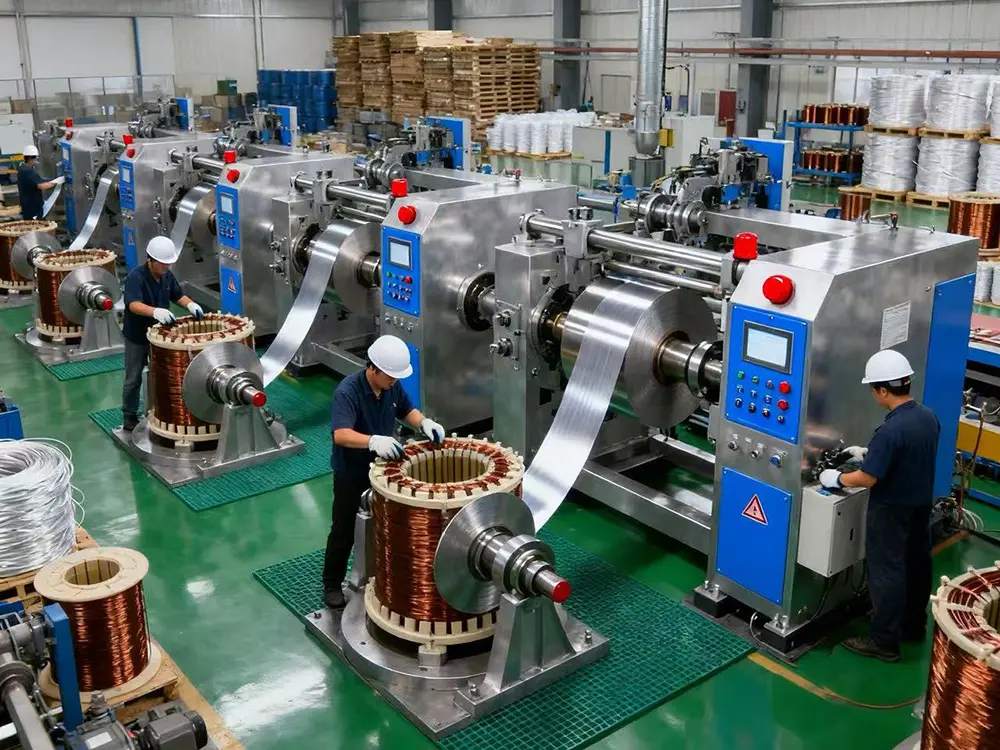
Sourcing transformer processing equipment and core materials from China under a Factory 4.0 framework provides global utilities and original equipment manufacturers (OEMs) with significant strategic advantages. These benefits focus on supply chain resilience, precision manufacturing, and rapid scalability.
Wuxi’s industrial machinery cluster allows Shuhong Machinery to source high-grade raw components, advanced control systems, and precision mechanical parts locally. This proximity minimizes production lead times and insulates clients from global shipping delays.
By using modern machinery like automated CNC cross-cutting lines and servo-controlled winding equipment, we minimize human error. Consistent execution of critical cuts and tension loops results in predictable, high-quality transformer cores.
Unlike rigid production lines, our manufacturing setup is built for rapid customization. We adapt layouts, core shapes (3D, planar, R-type), and voltage requirements to meet specific global standards, such as IEEE, IEC, or CSA.
Lowering transformer losses is a priority across a variety of localized commercial and industrial contexts:
Wind and solar generation networks experience fluctuating load cycles. Our high-efficiency dry-type and oil-immersed transformers adapt well to variable inputs, limiting energy waste during periods of low generation.
Modern data centers run continuously under high computing loads, demanding stable power and low heat output. Using low-loss transformers with 30% reduced temperature rise lowers cooling system demands, improving overall facility PUE.
Heavy machinery, electric arc furnaces, and chemical plants introduce significant harmonics. Custom foil wound coils handle harmonic-induced eddy currents effectively, preventing overheating and extending equipment life.
People-Oriented, Building an Efficient and Collaborative Team
At Wuxi Shuhong Machinery, we believe team management built on collaborative innovation is the foundation of long-term success. In talent development, we maintain a comprehensive training system for technical and management roles, while actively encouraging employee participation in national and international technical exchanges.
Our cross-departmental collaboration is supported by modern project management systems to maintain project efficiency. In incentives, we follow the philosophy of "more work, better performance, better rewards", backed by scientific performance appraisals and equity incentives that keep team motivation aligned with client success.
Looking forward, Shuhong Machinery will uphold its core business philosophy: "People-oriented, Integrity-driven, Collaborative Innovation, and Quality First." We plan to deepen our focus on electrical and plastic machinery, increase R&D investments, and launch energy-saving, intelligent products. We continue to expand our domestic and international partnerships, working to build a globally competitive brand that supports the development of the energy sector.
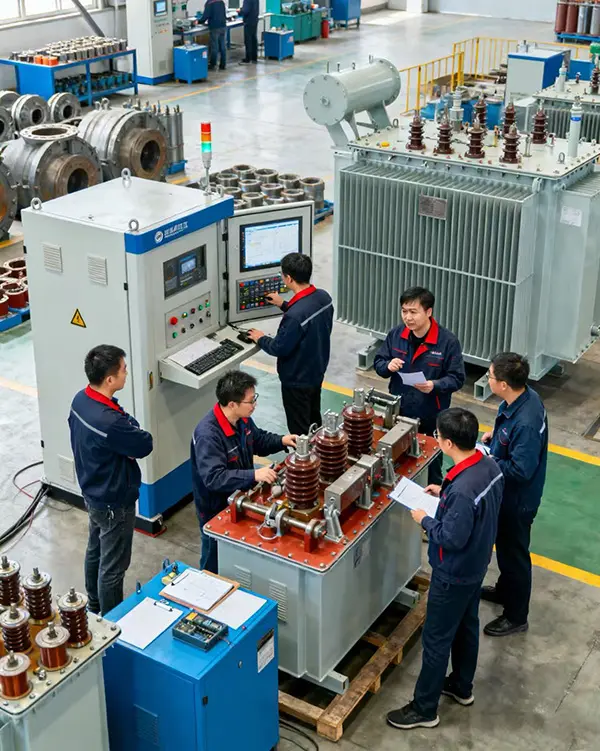
Precision at every stage of production directly influences final transformer loss metrics. Below is the step-by-step process utilized within Shuhong Machinery's digital factory line to guarantee optimal magnetic and electrical properties.
From the initial high-accuracy Material Cutting using specialized CNC slitting lines to the final Testing phase, each step is closely monitored. Stress-free annealing in vacuum furnaces removes mechanical stresses introduced during slitting and winding, restoring the steel's magnetic domain orientation. Precise tension control during coil winding prevents localized hot spots, securing long-term operational stability.
Here are detailed answers to common technical and operational questions regarding transformer procurement and loss optimization.
No-load losses (core losses) are constant losses that occur as long as the transformer is energized, caused by hysteresis and eddy currents in the magnetic core. Load losses (copper losses) vary with the load and are caused by the electrical resistance of the conductor windings when current passes through them.
By combining high-precision foil winding technology with optimized oil-duct geometry, we enhance heat dissipation. Using higher efficiency cores reduces heat generation at the source, resulting in a cooler-running transformer under full load conditions.
Mechanical cutting and handling introduce stress on the micro-crystalline structure of grain-oriented silicon steel, which increases core loss. Annealing in a controlled environment relieves these internal stresses, restoring the material's designed magnetic permeability and minimizing hysteresis.
While simple retrofits are possible, achieving modern low-loss standards typically requires replacing the complete core and winding assembly. Upgrading to a custom-designed low-loss unit often provides a more reliable, cost-effective solution over its operational life.
Explore our specialized industrial assembly tables, slitting lines, and winding machinery built to support high-efficiency transformer manufacturing.