
China’s manual winding equipment market serves workshops, repair centers, and factories producing coils in varied sizes. A Manual Hand Winding Machine may look simple, yet its spindle, tension control, and turn counter can shape winding consistency. A loose guide or uneven pull can leave visible gaps between wire layers. Small details matter.
This guide compares ten manufacturers in China using practical criteria: machine structure, adjustment range, build quality, customization, documentation, and after-sales support. Buyers should ask how the machine handles their wire diameter, bobbin dimensions, and daily production volume. Request clear specifications and, where possible, a sample winding demonstration. A polished product photo is not enough. Real operating conditions can expose awkward controls or inconsistent tension.
Expert insight belongs in a reliable comparison, too. However, no source material was provided to verify a named Manual Hand Winding Machine specialist’s exact words. Rather than invent a quotation, this introduction leaves that attribution open for a sourced interview or publication. That is a limitation, but it is better than presenting an unsupported claim as fact. The rankings should also be treated as a starting point, not a substitute for checking each supplier’s current capabilities.
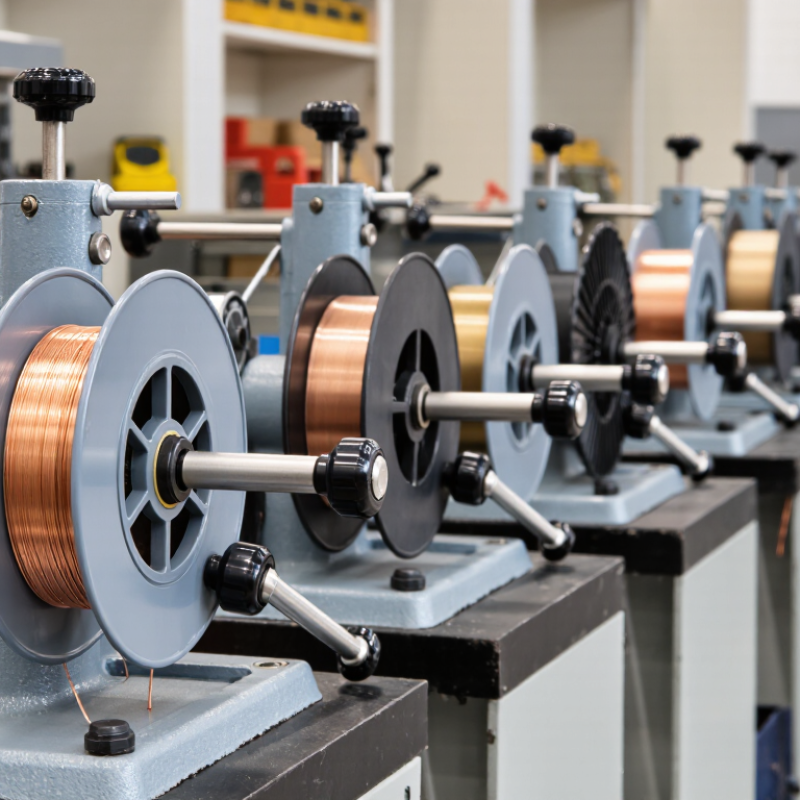
A manual hand winding machine is a mechanical tool for transferring yarn or thread from one package to another. The operator turns a crank, which rotates a spindle and winds the material onto a bobbin, tube, or cone. A guide helps distribute the yarn across the package, while a tension device can reduce slack and uneven layers. It is simple. But it is not a miniature automatic production line.
Textile Exchange’s Materials Market Report 2024 estimates global fiber production at about 124 million tonnes in 2023, with polyester accounting for roughly 57%. This scale highlights the range of fibers entering textile supply chains; it does not measure manual winder sales. For small workshops, sampling, repairs, and low-volume preparation, a hand winder offers direct control without powered drive systems. Operators can feel snags and watch the package build. That matters when handling delicate yarns. Still, hand control has limits: inconsistent crank speed or tension may create loose edges, crossed layers, or a package that unwinds poorly. A tension adjuster and a steady guide help, but results depend on setup and practice. Even experienced users may need to check the finished package before use.
A manual hand winding machine uses a hand-operated crank to rotate a bobbin, spool, or other workpiece while wire or another flexible material is wound onto it. The points below are manufacturer-neutral criteria for comparing machines; specifications vary by model and application.
| No. | Comparison Dimension | What It Means | What to Check |
|---|---|---|---|
| 1 | Operating Method | The operator turns a crank to drive the winding spindle; the machine does not rely on a motor for winding. | Check the crank position, handle comfort, and whether the mechanism turns smoothly under the intended load. |
| 2 | Workpiece Compatibility | The spindle or holding fixture supports the bobbin, spool, reel, or component being wound. | Confirm the fixture’s mounting method and the compatible workpiece dimensions for the specific model. |
| 3 | Winding Material | Manual winders may be used for materials such as wire, thread, cord, or filament, depending on their design. | Verify that the guides and contact surfaces suit the material’s diameter, flexibility, and surface sensitivity. |
| 4 | Tension Control | Consistent material tension helps produce a more orderly winding and reduces slack or excessive pulling. | Check whether tension is adjusted by a friction device, guide, or another mechanism, and whether adjustment is repeatable. |
| 5 | Wire or Material Guide | A guide directs material toward the rotating workpiece during winding. | Look for a smooth guide path and confirm that the material can pass through without snagging or sharp contact points. |
| 6 | Traverse Method | Traverse describes how the material is distributed across the width of the bobbin or spool. | Determine whether the material must be moved by hand or whether the machine includes a guided traversing mechanism. |
| 7 | Rotation Direction | The required winding direction depends on the workpiece and the process. | Check whether the machine can be operated in the direction needed for the application and whether the setup is clear to the operator. |
| 8 | Frame and Stability | A stable frame helps keep the machine in position during hand operation. | Review the base, mounting options, frame rigidity, and suitability for the intended work surface. |
| 9 | Counting and Repeatability | Some winding tasks require a target number of turns or consistent results across multiple workpieces. | Check whether a turn counter or reference markings are included; otherwise, confirm how turns will be tracked. |
| 10 | Safety and Maintenance | Moving parts, pinch points, and wear components should be considered in routine operation. | Inspect guards where applicable, accessible fasteners, lubrication requirements, and the availability of operating instructions. |
It transfers yarn or thread between packages. A hand crank turns the spindle while a guide helps spread the material.
A steady guide and adjustable tension can reduce slack and crossed layers. Setup still matters.
Small workshops, repair teams, and prototype users may value its direct control. It suits low-volume work, not every production need.
Confirm spindle capacity, working dimensions, supported material sizes, and included fixtures. Ask for clear instructions.
Request a sample winding with the intended wire or yarn and bobbin. Check the layers closely.
Look for loose edges, crossed turns, uneven tension, or a package that unwinds poorly. Small flaws can matter.
No. Request a working demonstration and verify model details in writing. A polished sheet can still miss practical issues.
Check the base stability, crank feel, operator comfort, and replacement-part availability. Hands can tire.
No. Practice helps, but crank speed and tension may vary. Even experienced users should inspect each finished package.
A Manual Hand Winding Machine is a practical tool for winding wire, thread, cable, or similar materials onto a reel or core with direct, operator-controlled movement. This overview explains how these machines work and introduces the main factors to consider when evaluating manufacturers, including build quality, winding accuracy, capacity, ease of operation, customization options, and after-sales support. It also outlines how different designs and product types serve a range of production environments and winding tasks.
The comparison of ten manufacturers focuses on capabilities and application suitability rather than brand promotion. By assessing factors such as material compatibility, required winding speed, batch size, available workspace, and budget, buyers can identify the type of supplier and machine that best fits their needs. Careful comparison helps balance performance, durability, operating simplicity, and long-term value when selecting equipment for a specific winding application.
