
China Top Inductor Coil Winding Machine Manufacturers?

Time:2026-10-22 Author:Isabella
0%

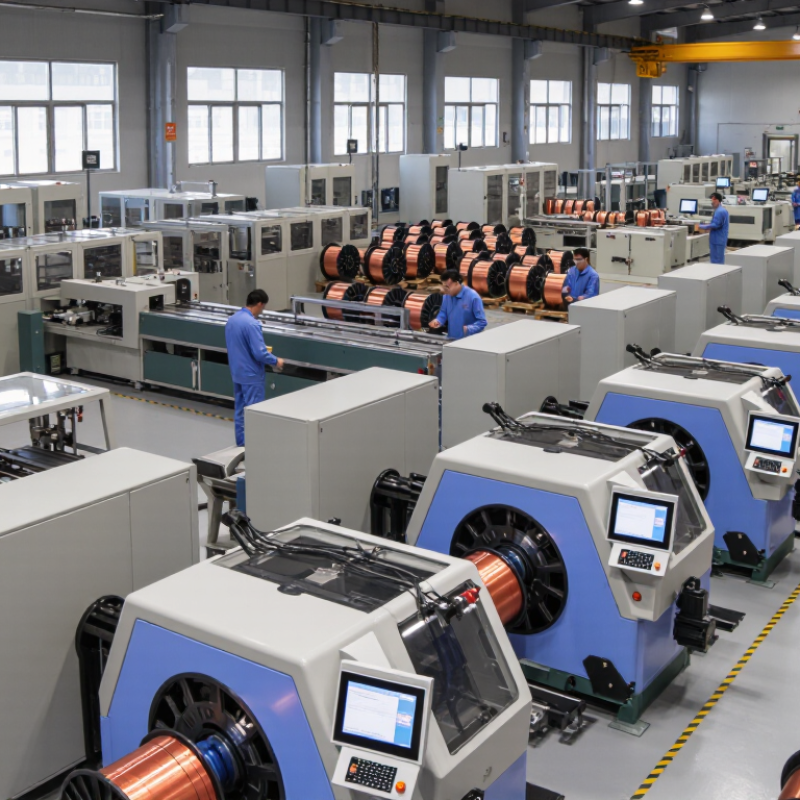
China has become a significant manufacturing base for automated coil-forming and winding equipment. This position reflects its dense electronics supply chain, strong machinery production, and expanding investment in electric vehicles, power supplies, and renewable-energy systems. These sectors all require stable inductors with repeatable winding quality.

Industry reports support this wider demand. MarketsandMarkets’ global inductor market analysis identifies automotive electronics, telecommunications, and power applications as major growth areas. Grand View Research also describes rising demand for compact passive components in consumer and industrial electronics. However, these reports usually measure component markets, not machine suppliers. That difference matters.

An Inductor Coil Winding Machine must do more than rotate a bobbin. It should control wire tension, winding pitch, stopping position, and insulation handling. In a factory, these details appear clearly. A loose wire can create uneven layers. A small alignment error may increase rejection rates. Experienced Chinese manufacturers often respond with servo control, programmable recipes, automatic wire cutting, and inline inspection.

Potential buyers should evaluate manufacturers through practical evidence. Ask for sample coils, cycle-time records, tension-control ranges, and long-term service plans. ISO 9001 certification can support process credibility, but it cannot replace machine testing. Supplier websites may look impressive. Production footage and customer references are stronger evidence.

The market is competitive. Not every supplier offers the same engineering depth. Some machines are highly customized, while others depend on standard platforms. This comparison can be inconvenient, but it is necessary. A reliable review of China’s top Inductor Coil Winding Machine manufacturers should examine accuracy, automation, maintainability, technical support, and total operating cost—not only the initial quotation.

China Top Inductor Coil Winding Machine Manufacturers?

Inductor Coil Winding Machine Manufacturing in China

China Top Inductor Coil Winding Machine Manufacturers?

Inductor coil winding machine manufacturing in China is expanding with demand for compact power supplies, automotive electronics, and communication equipment. Grand View Research valued the global inductor market at about USD 4.9 billion in 2023. It also projects steady growth through 2030. This pressure is changing factory priorities. Buyers now examine winding accuracy, equipment stability, and after-sales response more carefully.

A capable Chinese manufacturer should control wire tension within a repeatable range. It should support fine copper wire, different bobbin sizes, and programmable winding pitches. Practical testing matters. Operators should inspect sample coils under magnification, then measure resistance, inductance, and layer alignment. A machine may reach 12,000 revolutions per minute, yet speed alone proves little. Excessive speed can damage enamel insulation or create uneven layers.

China’s electrical machinery industry also benefits from broad supplier networks for servo systems, tooling, and automation parts. According to the China Association of Machine Tool Builders, intelligent manufacturing remains a major direction for domestic equipment upgrades. However, published specifications can hide limitations. Some suppliers report ideal laboratory output, not continuous factory performance. That deserves reflection. Request production samples, maintenance records, and traceable inspection data before selecting a partner. ISO-based quality procedures help, but they cannot replace hands-on validation. The best evaluation includes a factory visit, a pilot run, and clear acceptance criteria. Small details matter.

Key Machine Types and Their Industrial Applications

China Top Inductor Coil Winding Machine Manufacturers?

Key Machine Types and Their Industrial Applications

Inductor coil winding machines differ by wire size, coil geometry, and production volume. Choosing the right type starts with the application, not the catalog.

Automatic winding machines suit high-volume production of power inductors, transformer coils, and electromagnetic components. They control tension, pitch, turns, and winding speed with strong repeatability. These machines often support programmable recipes, automatic wire cutting, and defect detection. They work well in automotive electronics, power supplies, and industrial control systems.

For compact coils, precision spindle winding machines provide better control over fine wire and tight winding spaces. Manufacturers use them for sensors, communication modules, and medical electronic assemblies. Toroidal winding machines handle ring-shaped cores, where wire distribution and insulation protection require careful adjustment. Operators should check core diameter, wire coating, and maximum winding turns before selecting equipment.

Flyer winding machines are useful for larger coils and irregular bobbins. They commonly serve motors, relays, and high-power inductors. A semi-automatic machine may be more practical for varied orders because setup changes are faster. It can also reduce unnecessary investment. However, labor consistency becomes a concern.

Real factory trials matter. A machine may meet its advertised speed but struggle with fragile enamel wire. Testing should measure tension stability, winding accuracy, changeover time, and scrap rate. No machine fits every coil. That lesson is easy to miss. Engineers should also verify maintenance access, operator training, spare-part availability, and safety documentation before purchase.

Core Technologies Used in Modern Coil Winding Equipment

China Top Inductor Coil Winding Machine Manufacturers?

Modern coil winding equipment depends on precision, feedback, and repeatable motion. Servo-driven axes control wire placement with tiny positional corrections. Programmable tension systems keep the wire stable during high-speed winding. This prevents loose turns, overlaps, and insulation damage.

Many advanced machines use closed-loop sensors to monitor tension, speed, and spindle position. Vision systems can inspect coil shape, lead placement, and winding alignment during production. A programmable controller stores winding recipes for different inductors. This reduces setup errors and supports consistent batch quality. From practical testing, calibration still matters more than impressive specifications. No machine is perfect. Small deviations may appear after long operating cycles, especially with thin wire. Predictive maintenance software can identify vibration, temperature changes, and unusual motor loads before failures occur.

Tips: Check tension stability across the full speed range. Review actual sample coils, not only machine demonstrations. Ask for test reports covering wire diameters, winding patterns, and rejection rates. Keep spare sensors and calibration tools available. Operators also need training, because software cannot correct poor material handling. One overlooked detail can affect an entire production run.

How to Evaluate China-Based Machine Manufacturers

Choosing a China-based inductor coil winding machine manufacturer requires more than comparing prices. Start with the machine’s working details: wire diameter range, winding speed, tension control, spindle accuracy, and coil dimensions. Ask for test samples using your actual wire and core materials. A clear winding video can reveal uneven layers, loose turns, or frequent stoppages.

Evaluate the factory’s engineering ability and production records. Review quality-control procedures, electrical safety documents, inspection reports, and export experience. Experienced suppliers should explain calibration methods and replacement-part availability without vague promises. Request references from similar projects, but verify them independently. Factory visits are valuable, although one clean showroom does not prove stable production. That assumption can be misleading.

Tips: Prepare a written specification sheet before contacting manufacturers. Include output targets, acceptable tolerances, power requirements, and operator skill levels. Ask who handles installation, training, software updates, and remote troubleshooting. Confirm response times in writing. Compare the complete cost, including tooling, shipping, commissioning, and maintenance. Do not select the lowest quotation automatically. A cheaper machine may require more manual adjustment, especially during the first production weeks. Also, leave room for honest uncertainty; trial results can change when materials or production volumes change.

How to Evaluate China-Based Inductor Coil Winding Machine Manufacturers

This procurement model allocates 100 evaluation points across the factors that most affect machine suitability and long-term operating cost. Buyers should verify each factor through technical documentation, sample winding trials, factory audits, reference checks, and contract terms. The weighting is an evaluation framework, not a ranking of any specific company or brand.

Purchasing Factors for Selecting the Right Winding Machine

When comparing China’s top inductor coil winding machine manufacturers, start with the coil, not the catalog. Define wire diameter, insulation type, bobbin dimensions, turns, winding pitch, and target output. A machine handling 0.03 mm wire may struggle with thicker enamel wire. Small errors matter. Ask for sample coils made with your actual materials. Inspect tension marks, crossed turns, end placement, and resistance consistency. Video demonstrations help, but physical samples reveal more.

Production stability deserves equal attention. Check servo accuracy, spindle speed control, nozzle movement, and tension feedback during continuous operation. Request data from an eight-hour trial, not only a polished showroom cycle. Ask how quickly operators can change tooling between coil sizes. Clear screens and accessible components reduce training time. I have seen impressive machines lose value because spare parts were poorly documented. That risk is easy to overlook.

Supplier reliability involves more than a low quotation. Review factory experience, inspection records, electrical safety documents, software support, and response times. Confirm installation training, warranty boundaries, and replacement-part availability in writing. A remote diagnosis process can prevent long stoppages. Consider tooling, maintenance, energy, rejected coils, and labor costs. My preference is to leave a small capacity margin, although this raises the initial price. Overbuying is not always wise. Let trial results guide the final decision.

FAQS

What should I check when selecting a China-based inductor coil winding machine manufacturer?

Check wire range, winding speed, tension control, spindle accuracy, and supported coil dimensions. Request samples made with your actual wire and core materials. Speed alone proves little.

Why is wire tension important during coil winding?

Stable tension helps prevent loose turns, crossed wires, and uneven layers. Ask for repeatable tension data during continuous operation. Excessive tension may damage fine enamel insulation.

Can a high-speed machine guarantee better production?

No. A machine may reach 12,000 revolutions per minute and still produce unstable coils. Inspect resistance, inductance, layer alignment, and insulation condition. Fast is not always better.

What should a practical machine trial include?

Request a pilot run using your real materials and tooling. An eight-hour trial can reveal stoppages, heating, adjustment needs, and quality changes. Short demonstrations can look perfect.

How can I inspect sample coils properly?

Examine the coils under magnification for crossed turns, tension marks, and incorrect end placement. Measure resistance and inductance across several samples. Small errors matter.

Which supplier documents are worth reviewing?

Review inspection records, calibration methods, electrical safety documents, maintenance history, and replacement-part lists. Ask how software updates and remote troubleshooting are handled. Vague answers deserve caution.

What costs should I include beyond the machine price?

Include tooling, shipping, installation, training, commissioning, maintenance, energy, rejected coils, and operator labor. A cheaper machine may require more manual adjustment. The lowest quotation can mislead.

How can I judge whether a factory is genuinely reliable?

Visit the factory, observe production, and compare its records with the promised specifications. Do not rely on a clean showroom alone. That assumption can fail. Trial results may change with higher volumes.

Conclusion

China has become an important manufacturing base for Inductor Coil Winding Machine equipment, offering a broad range of solutions for electronics, automotive components, power supplies, transformers, and other electrical industries. Local manufacturers commonly provide machines for single-layer, multi-layer, toroidal, precision, and automatic coil winding, with configurations adapted to different wire sizes, coil shapes, production volumes, and material requirements. These machines are designed to improve winding consistency, reduce manual labor, and support efficient large-scale production.

Modern equipment increasingly incorporates programmable motion control, servo-driven winding systems, automatic wire tension regulation, digital parameter setting, winding monitoring, and integrated testing functions. When evaluating China-based manufacturers, buyers should consider engineering capability, customization experience, quality control, equipment stability, technical support, delivery capacity, and after-sales service. Selecting the right winding machine also requires careful assessment of production speed, winding accuracy, compatibility with existing processes, safety features, maintenance requirements, energy consumption, and total ownership cost. A detailed comparison and practical sample testing can help buyers choose a reliable solution for long-term manufacturing needs.

Isabella

Isabella

Isabella is a dedicated marketing professional with a sharp focus on driving brand growth and engagement through strategic content creation. With an extensive background in digital marketing, she combines her passion for storytelling with her keen understanding of industry trends to deliver......