
Top Mini Winding Machines for Sale Worldwide

Time:2026-11-12 Author:Isabella
0%

A Mini Winding Machine can look compact on a showroom floor, yet its daily performance depends on details buyers may overlook. Wire diameter, bobbin dimensions, winding speed, tension control, and operator setup all affect the finished coil. A machine that suits one workshop may not fit another. Small differences matter.

Lean-manufacturing pioneer Taiichi Ohno offered a useful principle: “Where there is no standard, there can be no improvement.” Ohno was not a winding-machine specialist, but his point applies to comparing equipment. Ask suppliers for repeatable test results, clear specifications, and practical support—not just a top-speed figure. A neat brochure is not proof of consistent winding.

This guide to top Mini Winding Machine options for sale worldwide will help buyers compare machine types, key features, and supplier questions. Look closely at tension adjustment, controls, changeover time, and access to spare parts. Check whether the machine handles your actual wire and coil sizes. If possible, request a sample winding or a live demonstration. Even then, a demonstration may not reflect your production conditions. No shortlist is perfect. A careful buyer should note what remains uncertain before placing an order.
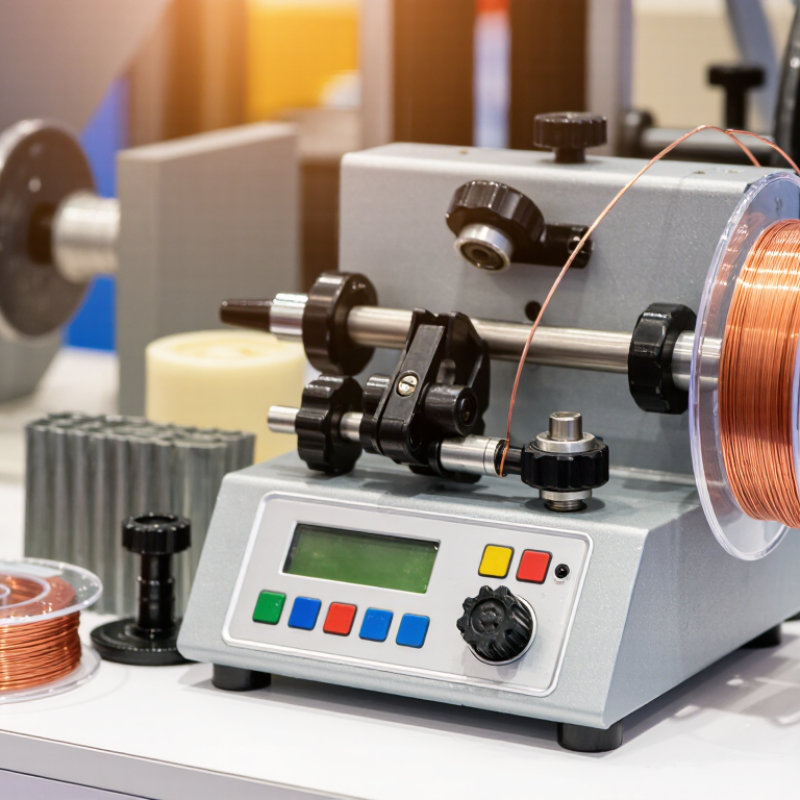
Top Mini Winding Machines for Sale Worldwide

Mini Winding Machines Defined: Coil Types and IEC 60317 Magnet-Wire Standards

Mini winding machines form compact coils for transformers, inductors, small motors, relays, and solenoids. Each coil has a practical geometry: a bobbin may be narrow and deep, while an air-core coil needs a stable inner diameter. The winding pattern matters too. Layer winding builds orderly rows; random winding can suit some compact designs but may make inspection harder. Small details matter.

IEC 60317 is a family of specifications for particular types of winding wire. Depending on the wire type, its requirements address conductor dimensions, insulation construction, thermal class, and test methods. It is not a general certification for a winding machine. Buyers should match the wire specification to the coil’s temperature, voltage, and mechanical demands, then check whether the machine can guide that wire without scraping its enamel. A sharp guide or uneven tension can damage insulation, even when the finished coil looks neat. That part is easy to underestimate.

Before purchase, confirm the machine’s supported wire range, turn-count control, traverse width, and tension adjustment. Test a short winding run with the intended bobbin and wire. Inspect the layers under good light, and measure resistance where the design allows. A machine’s advertised speed may not reflect reliable production with very fine wire. The right choice depends on the coil, not just the machine’s size.

Mini Winding Machines and IEC 60317 Magnet-Wire Thermal Classes

A reference chart of representative thermal classes used for enamelled winding wires covered by the IEC 60317 series.

How to read this chart: The values identify insulation thermal classes, not guaranteed continuous operating temperatures. IEC 60317 specifies requirements for particular winding-wire types; it does not classify winding machines or coil geometries.

Mini winding machines may be configured for solenoid, transformer, or motor coils. Choose a machine based on the wire diameter, coil or bobbin dimensions, winding pattern, and required production rate, then confirm that the wire specification suits the application. Reference: IEC 60317 series.

Key Specifications: Wire Diameter, Turn Capacity, Winding Speed, and 50/60 Hz Compatibility

When comparing mini winding machines, check the wire range against the actual wire you use. Confirm whether the stated diameter means bare copper or enamel-coated wire; that small difference can affect fit and tension. Turn capacity also needs context. A counter may display many turns, yet the bobbin dimensions and coil shape can limit practical capacity. Ask for the maximum supported turns on your intended coil, not only the counter’s display limit. There is no universal sweet spot. Test a sample.

Speed should be specified in revolutions per minute, with adjustable control for delicate wire and small bobbins. High speed is not always better: a sharp start can stretch or break fine wire. The International Energy Agency’s Global EV Outlook 2024 reports nearly 14 million electric car sales in 2023, around 18% of the global total. That growth underscores the value of consistent motor-component production, but it does not make every winding task alike. Check whether the machine’s supply and controller support both 50 Hz and 60 Hz operation, and verify the required voltage on the nameplate. Frequency compatibility alone does not guarantee the correct spindle speed. A detail worth rechecking.

Global Machine Types: Manual, CNC, Toroidal, and Automatic Winding Systems

Mini winding machines differ most in how they control wire placement and repeatability. Manual models suit prototypes and short runs, where an operator guides the wire and adjusts tension by hand. Small batches matter. CNC systems store winding patterns and control turns, speed, and traverse, helping reduce variation between coils. They still need careful setup; a saved program cannot correct a poorly secured bobbin. Toroidal machines feed wire through a core’s center, often using a shuttle or rotating mechanism. Check the core’s inner diameter and wire path before comparing machine capacity. Not always. A compact unit may handle a narrow range of core sizes.

Automatic winding systems can combine wire feeding, tension control, turn counting, and stopping functions. These features can support higher-volume work, but they add setup and maintenance needs. For buyers sourcing equipment worldwide, compare the machine’s usable wire range, winding dimensions, controls, and documentation—not just its advertised speed. Ask how tension is adjusted and whether common wear parts are readily available. A clear sample winding can reveal uneven spacing or insulation damage that a specification sheet may miss. I would also leave room for trial runs: real wire can behave differently from the example used during a demonstration.

Top Mini Winding Machines for Sale Worldwide - Global Machine Types: Manual, CNC, Toroidal, and Automatic Winding Systems

Typical machine configurations for comparison. Actual capacity and performance depend on the machine design, tooling, wire, workpiece, and operating conditions; verify specifications with the supplier before purchase.

Machine Type Winding Method Typical Workpiece Typical Wire Range Typical Speed or Output Control and Automation Common Applications Key Purchase Checks
Manual Mini Winding Machine Hand-operated crank or manually guided spindle; turn counter may be included. Small bobbins, prototypes, and repair coils; capacity is determined by the spindle and fixture. Often suited to fine-to-medium magnet wire; confirm the usable range with the machine and tensioner specifications. Operator-controlled; output varies with coil size, turn count, and winding technique. Manual operation, with optional mechanical or electronic turn counting. Prototyping, small batches, education, and occasional winding or repair work. Check spindle compatibility, turn-counter function, wire-tension control, and availability of bobbin adapters.
CNC Mini Coil Winding Machine Motor-driven spindle with programmed turns and, on suitable models, programmable traverse or layer movement. Small bobbins and coil forms within the specified spindle, fixture, and traverse envelope. Model-dependent; verify the supported wire range, insulation type, and tensioner capacity. Programmable spindle speed and turn count; practical output depends on acceleration, winding pattern, and coil geometry. Digital or CNC control; some configurations support recipes, repeat jobs, and multi-axis movement. Repeatable small-series production of sensor, relay, transformer, and other bobbin coils. Confirm axis count, programming method, turn-count accuracy, tension control, and tooling changeover requirements.
Mini Toroidal Winding Machine A shuttle or flyer carries wire through the center opening of a ring-shaped core. Toroidal magnetic cores; inner diameter, outer diameter, core height, and available shuttle space are critical limits. Depends on shuttle capacity, core geometry, and wire insulation; fine magnet wire is common on compact systems. Usually specified by winding cycles or turns per minute; achievable rate varies significantly with core size and wire handling. Manual, semi-automatic, or programmed operation depending on the configuration. Toroidal inductors, chokes, current transformers, and compact toroidal transformers. Match the core dimensions to the shuttle and machine throat; check wire loading, tension, and lead-management features.
Automatic Mini Winding System Motorized winding with automatic or programmed traverse; optional loading, cutting, or multi-spindle features depend on the system. Repeat-production bobbins or fixtures sized for the machine; workpiece range is configuration-specific. Specified by the winding head and wire-feed system; confirm wire diameter, insulation, and spool compatibility. Production output depends on cycle time, winding pattern, loading method, and the number of active stations or spindles. Programmable control; selected systems offer job storage, automatic sequencing, and production counters. Higher-volume, repeatable winding of small coils where reduced manual handling is useful. Check included automation, changeover time, guarding, service support, and compatibility with the intended bobbins and wire.

For international orders, also confirm supply voltage and frequency, plug and safety requirements, machine dimensions, shipping configuration, documentation language, and access to replacement parts.

How to Compare Models: Accuracy, Tension Control, and Class 155/180 Insulation

When comparing mini winding machines, look beyond advertised speed. Accuracy starts with repeatable turns, consistent traverse, and a stable wire path. Wind the same wire onto several identical bobbins, then check turn count, layer alignment, and finished coil width. A neat first sample proves little. Repeat the test.

Tension control matters just as much. Too little tension can leave loose layers; too much may stretch or damage fine enamelled wire. Check whether the machine offers adjustable tension and whether its guide keeps wire movement steady across the bobbin. Listen for sudden changes in motor sound, and watch for wire snags during a longer run. Small inconsistencies can become costly in production.

Class 155 and Class 180 refer to insulation’s thermal class, not the winding machine’s accuracy. The right choice depends on the coil’s operating temperature and the wire specification. Confirm that the machine can handle the wire diameter and insulation without scraping or kinking it. A sample winding should be inspected under good light, especially at the edges. Specifications help, but a practical trial may reveal details a brochure misses.

Worldwide Buying Criteria: IEC 60204-1 Safety and After-Sales Support

When comparing mini winding machines for sale worldwide, treat IEC 60204-1 as a practical safety reference, not just a line in a quotation. Ask suppliers which edition their electrical design follows and what documents they can provide. These may include wiring diagrams, component lists, and test records. Ask for proof.

Inspect the machine’s real working area. Can an operator reach moving parts near the spindle or wire guide? Are guards secure, and are emergency-stop devices easy to reach? Check the foot pedal, control cabinet, and cable routing too. Small details matter. A label alone does not show how the machine behaves during a jam or wire break. A careful checklist can still miss problems on a busy production floor, so arrange a demonstration where possible.

After-sales support matters just as much when equipment crosses borders. Confirm response hours, available languages, warranty terms, and access to replacement parts such as tensioners, guides, and fuses. Ask whether technicians can diagnose faults remotely and how quickly common parts can ship to your location. Get these details in writing. A low purchase price may feel attractive, but downtime can cost more than expected. Compare support commitments alongside safety documents before choosing a supplier.

FAQS

Which mini winding machine suits prototypes and short runs?

A manual model works well when an operator guides the wire and adjusts tension by hand. It offers flexibility, though results depend on careful handling.

When is a CNC winding machine useful?

CNC systems store winding patterns and control turns, speed, and wire traverse. They can reduce variation, but poor bobbin setup still causes problems.

What should I check before choosing a toroidal winding machine?

Check the core’s inner diameter, wire path, and usable size range. A compact machine may only handle a narrow range.

Do automatic winding systems always improve production?

They can combine feeding, tension control, turn counting, and stopping functions. Higher output may come with more setup and maintenance. Not always simpler.

How can I test winding accuracy?

Wind the same wire onto several identical bobbins. Check turn count, layer alignment, and coil width. One good sample proves little.

How do I spot poor tension control?

Look for loose layers, stretched wire, snags, or damaged enamel. Listen for changes in motor sound during a longer run.

What do Class 155 and Class 180 mean?

They describe insulation’s thermal class, not machine accuracy. Match the wire specification to the coil’s operating temperature, then inspect a sample under good light.

What safety documents and machine details should I request?

Ask which IEC 60204-1 edition the electrical design follows. Request wiring diagrams, component lists, and test records. Check guards and emergency-stop access.

What after-sales support should I confirm?

Get response hours, warranty terms, language options, and replacement-part access in writing. Ask how quickly guides, tensioners, and fuses can reach your location.

Conclusion

A Mini Winding Machine is designed to form coils from insulated magnet wire for electrical and electronic applications. Choosing a suitable model starts with the coil type and wire specifications, including guidance from IEC 60317 standards. Buyers should compare supported wire diameters, maximum turn capacity, winding speed, and electrical compatibility with 50 or 60 Hz power supplies.

Available systems range from manual and CNC machines to toroidal and fully automatic designs. Compare models for winding accuracy, consistent tension control, and suitability for insulation materials rated to thermal classes such as 155 or 180. For international purchases, also review electrical-equipment safety provisions aligned with IEC 60204-1, operator safeguards, documentation, and the availability of installation assistance, spare parts, and after-sales support. Matching these factors to production needs helps identify a reliable machine for the intended coils.

Isabella

Isabella

Isabella is a dedicated marketing professional with a sharp focus on driving brand growth and engagement through strategic content creation. With an extensive background in digital marketing, she combines her passion for storytelling with her keen understanding of industry trends to deliver......