
How to Choose the Best Steel Wire Winding Machine in 2026?

Time:2026-09-11 Author:Charlotte
0%

Choosing the best Steel Wire Winding Machine in 2026 requires more than comparing speed ratings or catalog photographs. The correct machine must match your wire diameter, tensile strength, coating, spool size, and production rhythm. A bright control panel means little if the wire slips during acceleration.

Wire-processing consultant Elena Marquez says, “A reliable winder protects wire quality before it protects production speed.” Her point is practical. Excessive tension can leave marks, flatten delicate coatings, or create uneven coils. Poor traverse control may produce gaps near the flange. These defects often appear only after several hours of continuous operation.

Look closely at the machine’s tension-control system, winding accuracy, motor response, and PLC interface. Ask whether the supplier can demonstrate your actual steel wire, not a convenient sample. Measure the finished coil. Check its edge, density, and repeatability. Listen for vibration around the gearbox. Small noises matter.

Maintenance access also deserves attention. Can operators reach the dancer roller without removing protective panels? Are replacement sensors available locally? Does the manufacturer provide installation training and responsive technical support? These details affect lifetime cost more than a low purchase price.

No machine wins every test. A high-speed model may waste energy in a smaller workshop. A compact unit may struggle with heavier coils. I would also question impressive promises without recorded trial data. Specifications can look precise, yet real production is rarely perfect. The strongest choice combines verified performance, suitable automation, safe operation, and honest support. That is how buyers can select a Steel Wire Winding Machine with confidence in 2026.
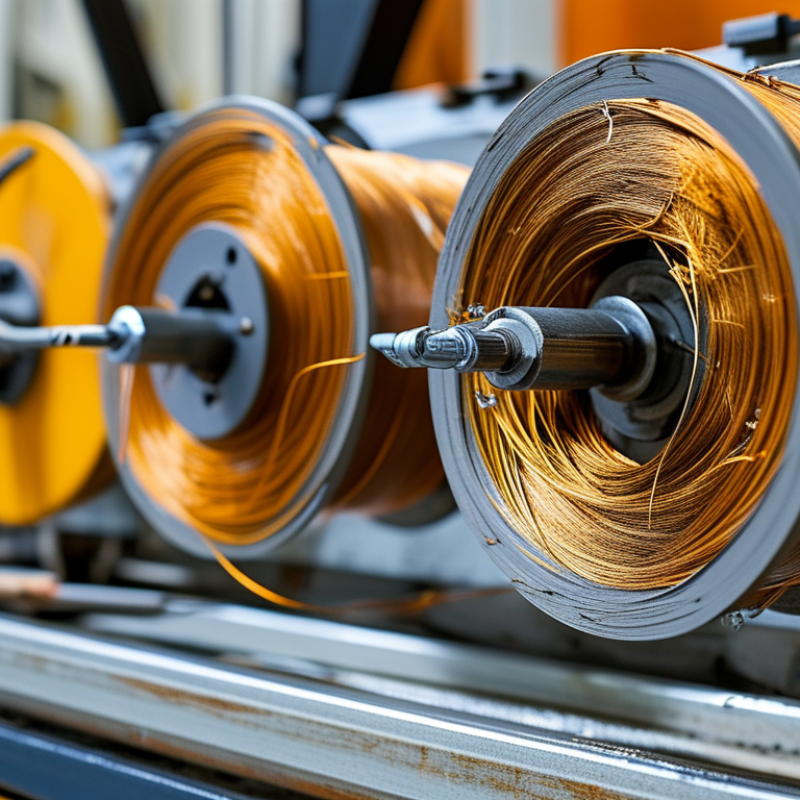
How to Choose the Best Steel Wire Winding Machine in 2026?

Define Wire Requirements: 0.15–6 mm Diameter and 1,600–2,200 MPa Strength

How to Choose the Best Steel Wire Winding Machine in 2026?

Define the wire before comparing machines. Specify a finished diameter of 0.15–6 mm and tensile strength of 1,600–2,200 MPa. These values create very different winding demands. Fine wire needs stable tension, accurate traverse control, and careful surface protection. Larger wire needs stronger payoff and take-up structures. Do not treat one machine setting as universal.

The World Steel Association reported 1.89 billion tonnes of crude steel production in 2023. This scale supports continued demand for efficient wire processing, but production volume alone does not define machine quality. Check the actual reduction schedule, die layout, line speed, and coil weight. For high-strength wire, ask for tension records under full load. Measure ovality and tensile strength after winding. ISO 6892-1 provides a recognized method for tensile testing metallic materials.

A practical trial should cover both diameter limits. Run 0.15 mm wire slowly first, then test 6 mm wire near the planned output rate. Watch for broken wires, crossover marks, and uneven coil edges. Small errors become expensive at high speed. ASTM A370 also offers established methods for mechanical testing of steel products. Reported strength can vary with sampling and heat treatment. That part needs reflection. A machine may pass a factory test yet struggle with your actual wire surface, lubricant, or spool design. Insist on traceable test data, operator training, and adjustable tension control before making the final choice.

Compare Machine Types, Spool Sizes, and 100–500 m/min Line-Speed Ratings

Choosing a steel wire winding machine starts with the wire, not the advertised speed. Single-spindle machines suit flexible production and frequent product changes. Multi-spindle systems improve output when several identical wires run together. Precision layer winders create orderly coils, which helps later feeding and prevents crossed turns.

Speed ratings from 100 to 500 m/min require careful interpretation. A 500 m/min rating may apply only to light wire, steady tension, and a nearly full spool. Thick or high-strength wire often needs a lower operating speed. In my experience, stable tension matters more than maximum speed. Small tension changes can produce loose edges, wire overlap, or damaged insulation. Test the machine at your actual diameter before approving the purchase. That step is easy to skip.

Spool size also changes machine behavior. Small spools support faster changeovers and lower starting inertia. Large spools reduce handling work but need stronger brakes, wider frames, and accurate traverse control. Check flange diameter, barrel width, core size, and finished coil weight. A machine accepting 200 mm spools may not handle a 400 mm spool safely without mechanical changes. Ask for speed curves, not one impressive number. Review noise, vibration, heat, and emergency stopping performance during trials. I would also measure setup time, because production losses often hide there. The “best” machine can still disappoint when operators struggle with threading or adjustment.

Check Tension Control Accuracy, Traverse Pitch, and ±1% Winding Stability

How to Choose the Best Steel Wire Winding Machine in 2026?

A reliable steel wire winding machine begins with tension control accuracy. During a shop-floor evaluation, watch the tension sensor while the wire accelerates and slows. The reading should remain steady, not jump whenever the spool changes direction. Ask for test data from different wire diameters, materials, and line speeds. A calibrated sensor matters. However, calibration can drift after months of vibration, so operators should verify it regularly. Small errors become visible as loose loops, crushed layers, or uneven coil edges.

Traverse pitch deserves equal attention. It must match the wire diameter and maintain consistent spacing across the spool. If the pitch is too wide, gaps appear. If it is too narrow, the wire may overlap and damage the layer. Check the winding pattern at the flange, center, and final layer. Look closely there. A machine claiming ±1% winding stability should prove it through repeated runs, not one impressive sample. Record tension, pitch, speed, and coil weight during at least three tests. Compare the results after cooling and handling. In practice, environmental changes can affect performance, and I would not ignore that detail. A quiet machine is not automatically accurate. Clear records, accessible adjustments, and stable results matter more than polished demonstrations.

How to Choose the Best Steel Wire Winding Machine in 2026? — Check Tension Control Accuracy, Traverse Pitch, and ±1% Winding Stability
Machine Configuration Typical Wire Diameter Typical Tension Range Tension Control Accuracy Traverse Pitch Resolution Winding-Speed Range ±1% Stability Suitability Best-Fit Applications
Precision micro-wire winder 0.05–0.30 mm 0.02–2.00 N Typically ±0.5% of full scale with closed-loop feedback 0.001–0.010 mm 100–1,500 m/min Fine steel wire, miniature coils, sensors, medical and electronic components
General-purpose precision winder 0.20–1.20 mm 0.20–20 N Typically ±1.0% of full scale with load-cell control 0.010–0.050 mm 50–800 m/min Coils, springs, electromagnetic components and standard industrial winding
Heavy-duty steel-wire winder 0.80–3.00 mm 5–150 N Typically ±1.0–2.0% of full scale, depending on calibration and load range 0.050–0.200 mm 20–400 m/min Possible only when the operating range is correctly matched to the tension sensor High-strength wire, reinforcement coils, industrial cable and larger winding packages
Multi-spindle production winder 0.10–1.50 mm 0.10–30 N per spindle Typically ±1.0% of full scale with synchronized feedback channels 0.010–0.100 mm 100–1,200 m/min High-volume coil production and repeatable multi-position manufacturing
Servo traverse precision winder 0.15–2.00 mm 0.20–60 N Typically ±0.5–1.0% of full scale after setup verification 0.005–0.050 mm 50–1,000 m/min Layered coils, bobbins, rectangular winding patterns and programmable pitch changes
Selection benchmarks: For a claimed ±1% winding-stability result, verify the measurement basis, tension-sensor range, calibration interval, acceleration profile, wire diameter, winding speed and sample length. Traverse pitch should be evaluated under actual line speed because acceleration, backlash and wire elasticity can affect layer accuracy. The ranges shown are typical engineering reference values for industrial winding-machine configurations, not manufacturer-specific specifications.

Verify ISO 12100 Safety, CE Compliance, and Production-Line Integration

When choosing a steel wire winding machine in 2026, treat safety evidence as a buying requirement. The machine should reflect ISO 12100 principles through documented hazard identification and risk reduction. Ask for the risk assessment, guarding layout, emergency-stop validation, and safe access procedures. Do not accept a certificate without supporting records. ISO 12100 guides safety design; it is not automatically a product certificate.

CE compliance also needs careful checking. Request the EU Declaration of Conformity and identify the directives and harmonized standards used. Inspect the control cabinet, warning labels, protective doors, and restart prevention during a factory visit. Small details matter. A loose sensor cable can stop a whole shift. CE marking alone does not prove strong production performance. It confirms declared conformity with applicable requirements.

Production-line integration deserves the same attention. Confirm communication with the existing PLC, line speed, wire tension control, coil dimensions, and emergency circuits. Test data exchange with traceability or manufacturing software before installation. Ask how operators change recipes and clear faults. A practical trial using your actual wire is more valuable than a polished demonstration. A checklist can create false confidence. Record unresolved issues, including noise, changeover time, and maintenance access. Those weaknesses may appear only after several hours of continuous operation.

How to Choose the Best Steel Wire Winding Machine in 2026?

ISO 12100 safety, CE compliance, and production-line integration verification checklist

Each bar represents the number of objective checkpoints to verify before purchasing a steel wire winding machine. Safety checkpoints cover risk assessment and risk reduction under ISO 12100. CE checkpoints cover the applicable technical documentation, Declaration of Conformity, and marking requirements. Integration checkpoints cover machine interfaces, safeguarding coordination, and commissioning validation. The values are checklist counts, not certification scores or performance claims.

References: ISO 12100:2010; EU Machinery Directive 2006/42/EC; Regulation (EU) 2023/1230, applicable from 20 January 2027.

Calculate Capacity, Energy Use, Maintenance Costs, and Five-Year ROI

How to Choose the Best Steel Wire Winding Machine in 2026?

Capacity should be measured from real production data, not brochure speed. Record wire diameter, coil weight, winding length, and changeover time.

A practical calculation is: daily output equals machine speed multiplied by operating hours and actual efficiency. If a machine runs at 120 meters per minute for eight hours, 80% efficiency produces about 46,080 meters daily. Leave room for stoppages. Our first estimate was too optimistic.

Energy use requires more than checking motor power. Measure kilowatt-hours per coil during acceleration, steady winding, braking, and idle periods. A 15-kilowatt motor may consume less than a larger motor if it reaches stable tension quickly.

Compare energy cost per finished ton, not per hour. Small losses become expensive across three shifts.

Maintenance costs shape the five-year return on investment. List bearings, tension sensors, belts, lubrication, planned downtime, and technician visits. Request service intervals and spare-part prices in writing.

Use this formula: five-year ROI equals total five-year savings minus purchase and operating costs, divided by total investment.

Include training and rejected coils. They are easy to forget. A cheaper machine can lose its advantage after repeated alignment problems.

Ask operators to inspect vibration, uneven layers, and wire scratching during a supervised trial. Evidence beats confident claims.

FAQS

: What wire range should the machine support?

: Define the finished diameter first. The target range is 0.15–6 mm, with tensile strength from 1,600–2,200 MPa. Fine wire needs stable tension and careful surface protection. Larger wire requires stronger payoff and take-up structures.

Is the highest speed always the best choice?

No. A machine rated at 500 m/min may suit only light wire and steady conditions. High-strength or thick wire often needs slower operation. Ask for speed curves at your actual diameter.

Which machine type fits changing production needs?

Single-spindle machines support flexible production and frequent product changes. Multi-spindle systems suit several identical wires running together. Precision layer winders create orderly coils and reduce crossed turns.

What should a practical machine trial include?

Test both diameter limits. Run 0.15 mm wire slowly first. Then test 6 mm wire near the planned output rate. Watch for broken wires, crossover marks, and uneven coil edges. Small errors become expensive quickly.

How does spool size affect machine performance?

Small spools enable faster changes and lower starting inertia. Large spools reduce handling work but need stronger brakes and frames. Check flange diameter, barrel width, core size, and finished coil weight. A machine accepting a 200 mm spool may not safely handle 400 mm.

How important is tension control?

It is critical. Small tension changes can create loose edges, overlaps, or surface damage. Request tension records under full load. Adjustable tension control should be demonstrated during testing.

What quality checks should follow winding?

Measure ovality and tensile strength after winding. Check the coil edge, wire surface, and layer consistency. Use traceable test data and consistent sampling. Reported strength may vary with heat treatment and sampling. That deserves reflection.

What practical details are easy to overlook?

Measure threading time, setup time, noise, vibration, heat, and emergency stopping. Operator training also matters. A machine may pass a factory test yet struggle with your lubricant or spool design. I would not approve it from one impressive number alone.

Conclusion

Choosing the best Steel Wire Winding Machine in 2026 starts with clearly defining your production requirements. Confirm that the machine can process wire from 0.15 to 6 mm in diameter and handle tensile strengths between 1,600 and 2,200 MPa. Compare available machine types, spool dimensions, and rated line speeds from 100 to 500 m/min to match your output goals. Pay close attention to tension-control accuracy, traverse pitch adjustment, and winding stability within ±1%, as these factors directly affect coil quality and material consistency.

Before investing, verify compliance with ISO 12100 safety principles, CE requirements where applicable, and compatibility with your existing production line. A complete evaluation should also include maximum capacity, energy consumption, maintenance requirements, spare-part planning, and operator training. By comparing the total cost of ownership with expected productivity and quality improvements, you can estimate a realistic five-year return on investment and select equipment that supports reliable, efficient, and sustainable manufacturing.

Charlotte

Charlotte

Charlotte is a seasoned marketing professional with a deep understanding of the company's portfolio and a passion for elevating its presence in the market. With a keen eye for detail and a commitment to excellence, she ensures that our professional blog is regularly updated with insightful articles......