
How to Choose an Automatic Winding Machine for Global Sourcing?

Time:2026-09-21 Author:Charlotte
0%

Choosing a Winding Machine Automatic for global sourcing requires more than comparing speed, price, and catalogue photos. The machine must match wire diameter, coil geometry, insulation requirements, production volume, and local service capability. A shiny enclosure cannot compensate for unstable tension control.

Market pressure is rising. The International Energy Agency reported nearly 14 million electric car sales in 2023, representing about 18% of global car sales. This growth increases demand for precise motor windings and repeatable stator production. The International Federation of Robotics also recorded 541,302 industrial robot installations worldwide in 2023. Automation is no longer limited to large factories.

Dr. Andreas Binder, a respected electrical-machine researcher, describes the winding process as “the heart of electrical machine manufacturing.” His point is practical: small winding errors can create visible defects, excessive heat, noise, or early motor failure. Buyers should therefore examine measured tension accuracy, spindle control, recipe management, changeover time, and sample-coil results. Ask for factory acceptance records, not only promotional claims.

Reports from IEA and IFR provide useful direction, but they do not replace production trials. A machine performing well in a demonstration may struggle with your enamelled wire, bobbin tolerances, or operator skills. That is an uncomfortable reality. Global sourcing also introduces language gaps, spare-parts delays, and inconsistent technical support. The right choice balances automation, maintainability, verified performance, and total ownership cost. In some cases, a slower machine with reliable service may outperform a faster one that stands idle.
How to Choose an Automatic Winding Machine for Global Sourcing?

What Is an Automatic Winding Machine?

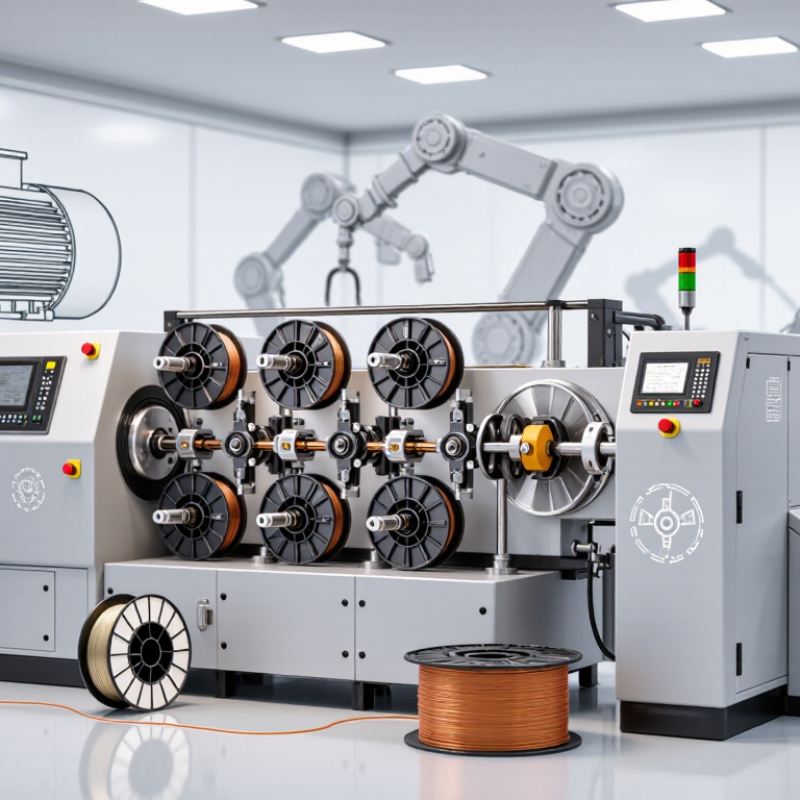
An automatic winding machine winds wire, yarn, film, or filament onto a bobbin or coil with limited operator intervention. It controls tension, winding speed, traverse movement, and layer formation. Sensors can detect material breaks, uneven tension, and full packages. Some systems also cut the material and change bobbins automatically.

That sounds simple. It is not.

In practical production, winding quality affects insulation, assembly speed, storage, and final product performance. A suitable machine should match the material diameter, elasticity, surface finish, and required package shape. During global sourcing, request sample winding tests before comparing prices. Watch the coil closely. Loose edges or overlapping layers may appear only after several minutes.

Check the control interface, electrical requirements, safety documents, spare-part availability, and operator training. Confirm whether the machine supports your local power supply and production standards. Ask for measurable tolerances, not vague claims about precision. Changeover time also matters, although suppliers may describe it too optimistically.

I once focused too heavily on maximum speed. The machine met the headline specification but needed frequent adjustments for smaller bobbins. That experience changed my evaluation process. A slower machine with stable tension may produce less waste and fewer rejected packages. Buyers should examine maintenance access, calibration procedures, and remote technical support. A detailed acceptance test can expose weaknesses before shipment, even when the machine appears impressive in a demonstration.

Which Winding Machine Specifications Match Your Production Needs?

How to Choose an Automatic Winding Machine for Global Sourcing?

Which Winding Machine Specifications Match Your Production Needs?

A suitable winding machine begins with the product, not the supplier’s brochure. Measure the wire diameter, insulation type, coil width, inner diameter, and finished weight. Small errors matter. These figures determine the spindle design, chuck range, and winding accuracy.

Check the required production rate under real operating conditions. Maximum speed can look impressive, but it may reduce tension stability or damage delicate wire. Ask for usable speed at your target coil size. Confirm the number of spindles, loading method, winding pattern, programmable recipes, and changeover time. A machine producing 600 coils per hour may still fail if setup takes too long.

Tension control deserves close attention. Uneven layers can create loose turns, damaged insulation, or poor electrical performance. Request test data using materials similar to yours. Verify power requirements, control language, safety functions, and compliance documents for the destination market. Installation support and spare-part availability also affect total cost.

Do not guess. I have seen sourcing teams focus on machine price while overlooking tooling and operator training. That decision often creates hidden delays. Leave room for improvement, because your first specification may reflect today’s product, not next year’s production plan.

How to Evaluate Machine Quality, Capacity, and Automation Features?

When sourcing an automatic winding machine, evaluate repeatable output, not brochure speed. The IFR’s World Robotics 2024 report recorded 541,302 industrial robot installations worldwide in 2023, with an operating stock above 4.28 million. This expansion raises expectations for machine connectivity and stable automation. Ask suppliers for measured cycle times using your wire diameter, bobbin, and winding pattern. “Maximum speed” means little if changeovers consume an hour. Review samples under magnification. Check wire placement, tension marks, terminal formation, and coil height.

Quality begins with mechanical alignment and control stability. Inspect spindle runout, traverse accuracy, tension feedback, temperature drift, and alarm history. Request capability data, including Cp/Cpk, repeatability, and defect rates from a comparable production run. A factory acceptance test should use your materials, not convenient substitutes. Test the ugly case. Thin wire, interrupted starts, and uneven insulation expose weaknesses quickly. I once treated a clean demonstration coil as proof of quality; that was a poor assumption.

Capacity should include uptime, staffing, maintenance, and changeover losses. Calculate good coils per shift, then deduct rejects and planned service. Automation features deserve evidence: recipe control, barcode or RFID tracking, automatic loading, vision inspection, remote diagnostics, and exportable production records. Confirm data ownership and offline recovery. Safety functions should align with ISO 12100 and ISO 13849-1. Fancy screens are not automation. During acceptance, repeat the test after several hours of heat. Performance may drift, and suppliers sometimes understate that risk.

How to Choose an Automatic Winding Machine for Global Sourcing? - How to Evaluate Machine Quality, Capacity, and Automation Features?

The following evaluation matrix is designed for automatic wire, cable, coil, and similar winding applications. Actual performance depends on material properties, coil geometry, tooling, operator skill, and production conditions.

Evaluation Area Key Dimension Recommended Target or Benchmark How to Evaluate Before Purchase Importance
Machine Quality Frame and mechanical rigidity A rigid welded or machined structure with low vibration during acceleration, deceleration, and high-speed operation. Inspect frame construction, linear guides, bearings, spindle supports, guards, and fastening points. Request a continuous running demonstration at the intended operating speed. High
Winding accuracy Consistent wire placement, stable pitch, uniform coil width, and repeatable start and end positions. Run samples using the actual wire, bobbin, or core. Measure coil width, outer diameter, wire position, and end allowance across multiple cycles. High
Tension control Closed-loop or well-calibrated tension control suitable for the wire diameter, insulation, and winding pattern. Check whether tension is monitored and recorded. Test low-speed start, high-speed operation, direction changes, and spool diameter changes for wire deformation or slack. High
Electrical and control-system reliability Industrial-grade control components, protected electrical cabinet, clear wiring, overload protection, and stable software operation. Review the electrical schematic, safety circuit, alarm history, component specifications, cabinet cooling, and backup method for machine parameters. High
Safety design Emergency-stop buttons, guarded moving parts, door interlocks where necessary, overload protection, and clearly marked hazards. Test emergency stops, access doors, reset functions, alarm messages, and restart prevention. Confirm that the documentation supports the destination market requirements. High
Capacity Wire diameter range The usable range should cover the smallest and largest wire sizes in the current product plan, with a practical margin of approximately 10% to 20%. Confirm the range for the exact conductor, insulation, stiffness, and surface finish. Do not rely only on a general catalog range. High
Spindle speed A variable-speed spindle, commonly from low hundreds to several thousand revolutions per minute depending on coil size and wire type. Compare rated speed, usable production speed, acceleration time, and speed stability under load. Ask for measured output rather than maximum no-load speed. High
Coil or bobbin dimensions The maximum winding diameter, width, length, and bobbin weight should exceed the largest planned product size with adequate tooling clearance. Provide engineering drawings of the largest and smallest products. Verify spindle, chuck, guide travel, fixture clearance, and automatic unloading space. High
Production output Evaluate output in finished pieces per hour, not only turns per minute. Include loading, threading, cutting, inspection, and changeover time. Request a timed acceptance test using representative products. Calculate practical output from cycle time, uptime, scrap rate, and planned shift length. High
Duty cycle and uptime The machine should be suitable for the intended shift pattern, with stable operation during extended production and accessible maintenance points. Ask for a long-duration test, recommended maintenance intervals, consumable replacement frequency, and historical uptime data for comparable applications. Medium
Automation Features Recipe management Programs should store winding speed, turns, pitch, tension, wire type, acceleration, deceleration, and product-specific parameters. Create, save, edit, protect, export, and restore a sample recipe. Confirm user permissions and whether parameter changes are recorded. High
Automatic wire feeding and cutting Controlled feeding, reliable wire clamping, clean cutting, and repeatable lead length without damaging insulation. Test the actual wire at the smallest and largest sizes. Inspect lead length, cut quality, insulation condition, and the time required for threading. High
Automatic loading and unloading Use automatic loading, unloading, or indexing when labor availability, cycle time, or product volume justifies the added complexity. Measure loading and unloading cycle time, fixture repeatability, jam recovery, operator access, and compatibility with upstream and downstream equipment. Medium
Sensors and process monitoring At minimum, monitor wire breakage, material presence, door status, overload, end position, and abnormal tension where applicable. Trigger each sensor during a demonstration and review the alarm message, machine stop behavior, recovery process, and event history. High
Quality inspection integration Optional vision, length, diameter, resistance, or continuity checks should be integrated only when they address a defined quality risk. Define inspection accuracy, false-rejection rate, data storage, calibration method, and how nonconforming parts are separated. Medium
Data connectivity Useful options include USB or Ethernet export, production counters, alarm records, and standard industrial communication interfaces. Confirm available protocols, cybersecurity controls, data ownership, offline operation, and compatibility with the factory monitoring system. Medium
Global Sourcing Voltage and frequency compatibility The electrical system should match the destination country's supply, such as single-phase or three-phase voltage and 50 Hz or 60 Hz frequency. Specify the destination electrical standard before quotation. Check motor, drive, transformer, plug, grounding, and cabinet requirements. High
Documentation and language Complete manuals should include operation, installation, electrical diagrams, pneumatic diagrams, maintenance, spare parts, and troubleshooting procedures. Request sample documentation before ordering. Confirm interface language, technical terminology, revision control, and availability of digital copies. High
Installation and commissioning The supply scope should define installation boundaries, utilities, floor requirements, training, trial production, and acceptance criteria. Use a written commissioning checklist covering machine setup, tooling, recipes, operator training, sample approval, and handover documents. High
Spare parts and technical support Critical wear parts and recommended spare parts should be identified, with clear response procedures and remote-support capability. Request a spare-parts list, lead times, warranty terms, service hours, troubleshooting process, and training materials before placing the order. High
Cost and ROI Total cost of ownership Include machine price, tooling, shipping, duties, installation, training, energy, consumables, maintenance, software, and spare parts. Compare suppliers using the same scope of supply and calculate cost per accepted finished piece over the expected service period. High
Changeover time Quick-change fixtures, guided setup, recipe recall, and accessible tooling can reduce downtime for multi-product production. Time a changeover between two representative products, including fixture replacement, parameter loading, wire threading, and first-piece approval. Medium
Energy and air consumption Review motor power, standby consumption, compressed-air pressure, and air volume under normal production conditions. Request utility specifications and measure consumption during a representative production cycle. Check whether air treatment is required. Medium
Acceptance Testing Sample approval Finished samples should meet agreed requirements for turns, dimensions, lead length, appearance, tension, and electrical or functional performance. Use a signed sample approval document with drawings, tolerances, material specifications, inspection methods, and permitted defect limits. High
Factory acceptance test The test should verify speed, cycle time, repeatability, alarms, safety functions, automation features, and operator procedures before shipment. Perform the test with the actual or approved equivalent materials and record measured results, deviations, corrective actions, and sign-off responsibilities. High
Site acceptance test Final acceptance should confirm stable operation after installation using the buyer's utilities, operators, materials, tooling, and approved recipes. Define measurable acceptance conditions in the purchase contract, including output, quality rate, training completion, documentation, and outstanding issue resolution. High
Practical selection rule: Choose the machine according to the complete product range and required accepted output, rather than the highest advertised spindle speed. For global sourcing, prioritize verified samples, documented acceptance criteria, safety compatibility, service capability, and total cost of ownership.

How to Compare Global Suppliers, Certifications, and Total Costs?

Choosing an automatic winding machine should begin with comparable evidence, not the lowest quotation. Ask every global supplier for the same specifications, including winding speed, wire range, bobbin size, accuracy, and power requirements. Request a live sample run using your actual material. Watch wire tension, bobbin alignment, noise, changeover time, and operator safety. A polished video helps, but it is not proof. Keep that doubt.

Compare suppliers through factory audits, technical interviews, and documented service records. Review production capacity, calibration logs, quality procedures, and recent customer references. Check certification numbers through the issuing organization. Confirm that each certificate matches the exact machine model and production site. Some documents appear suitable but cover different equipment. That mistake is easy. Ask about spare-part availability, remote diagnosis, installation support, and response times across your region. A low price means little if one replacement sensor takes six weeks.

Build a total-cost sheet in one currency. Include the machine, tooling, packaging, freight, insurance, import charges, installation, training, energy use, maintenance, software updates, and expected downtime. Request warranty terms in writing, including labor and travel coverage. Compare payment schedules and currency risks, not only the final price. In practical sourcing reviews, hidden costs often exceed the first discount. I would also score communication quality, although this judgment can be subjective. A supplier that answers quickly may still lack engineering depth. Run a small acceptance test before full payment, and record every agreed performance target.

How to Verify, Purchase, and Install the Selected Machine?

Selecting an automatic winding machine is only half the sourcing decision. Verification must begin with measurable production samples, not attractive catalog images. Ask the supplier to wind your actual wire, bobbin, and insulation materials. Record tension stability, winding speed, traverse accuracy, changeover time, and rejection rates. The IFR World Robotics 2024 report recorded 541,302 industrial robot installations worldwide in 2023, showing strong automation demand. It also reminds buyers that integration quality matters as much as machine selection.

Purchase documents should define acceptance tests, spare parts, training, software access, and response times. Include photographs of the tested machine and signed performance records. A factory acceptance test should repeat your intended production cycle.

Check electrical compatibility, guarding, emergency stops, and documentation against ISO 12100 and IEC 60204-1. Do not trust “high precision” without tolerance data. That mistake is common. I would also challenge optimistic capacity figures, because operators rarely work under perfect laboratory conditions. Confirm packing strength, lifting points, import paperwork, and installation responsibilities before payment.

Tips: Prepare a sample approval sheet with pass-or-fail limits. Measure noise, vibration, air pressure, and power consumption during testing. At installation, inspect the foundation and grounding before energizing the machine. Run a supervised site acceptance test with real materials. Keep one trained technician involved throughout commissioning; small setup errors can create large quality losses.

FAQS

How should machine speed be evaluated?

Measure actual cycle times with your wire, bobbin, and winding pattern. Maximum speed can mislead. Include loading, unloading, and changeover time. A one-hour changeover may erase impressive cycle rates.

Which samples reveal winding quality?

Inspect coils under magnification. Check wire placement, tension marks, terminal formation, and coil height. Test thin wire and interrupted starts. These difficult cases expose weaknesses quickly.

What mechanical details should buyers inspect?

Check spindle runout, traverse accuracy, tension feedback, and temperature drift. Review alarm history, too. Small alignment errors matter. They can create repeated defects across an entire shift.

How can production capacity be calculated realistically?

Calculate good coils per shift, then subtract rejects, maintenance, and changeover losses. Include staffing requirements. Laboratory capacity is rarely realistic. Heat, fatigue, and material changes reduce output.

Which automation features deserve verification?

Request recipe control, automatic loading, tracking, vision inspection, remote diagnostics, and exportable records. Do not judge automation by screen appearance. Confirm data ownership and offline recovery.

What should a factory acceptance test include?

Use your actual materials and repeat the intended production cycle. Record tension stability, speed, accuracy, changeover time, and rejection rates. Test the ugly case. Repeat testing after several hours of heat because performance may drift.

What should purchase documents specify?

Define acceptance limits, spare parts, training, software access, and technical response times. Include signed test records and machine photographs. Tolerance data is essential. “High precision” alone proves little.

How should installation and commissioning be controlled?

Inspect the foundation, grounding, guarding, emergency stops, and electrical compatibility before energizing. Measure noise, vibration, air pressure, and power use. Keep one trained technician involved. Small setup errors can cause large quality losses.

Conclusion

Choosing the right Winding Machine Automatic is essential for achieving stable quality, efficient production, and long-term value in global sourcing. Start by understanding how the machine forms, winds, and controls material according to your product requirements. Then match key specifications—such as winding speed, material compatibility, tension control, spool dimensions, power supply, and required output—with your actual production needs. Consider whether manual, semi-automatic, or fully automatic operation is most suitable for your workforce and workflow.

A reliable evaluation should cover machine construction, operating accuracy, capacity, control systems, safety functions, maintenance requirements, and potential for future upgrades. When comparing international suppliers, review their technical support, documentation, certifications, lead times, warranty terms, and total ownership costs, including shipping, installation, training, energy use, and spare parts. Before purchasing, request detailed specifications, videos or samples, inspection procedures, and a clear quotation. Finally, prepare the installation site, confirm utility requirements, arrange professional commissioning, and verify performance through trial production and acceptance testing.

Charlotte

Charlotte

Charlotte is a seasoned marketing professional with a deep understanding of the company's portfolio and a passion for elevating its presence in the market. With a keen eye for detail and a commitment to excellence, she ensures that our professional blog is regularly updated with insightful articles......