
Choosing a Bobbin Coil Winding Machine is a practical decision, not a simple price comparison. The right equipment affects winding accuracy, production speed, insulation quality, and long-term operating costs. A machine that looks efficient during a showroom demonstration may perform differently with your actual wire, bobbin shape, and coil design.
Start by examining the product requirements in detail. Check wire diameter, bobbin dimensions, winding width, coil tension, and required turns per coil. Automatic tension control can reduce loose wires and uneven layers. Programmable winding patterns help maintain consistent spacing, especially on small bobbins. Also inspect spindle speed, motor stability, tooling flexibility, and compatibility with your existing production line.
Ask the supplier for trial winding using your materials. Bring real bobbins and wire samples, not only technical drawings. Observe the machine at low and high speeds. Listen for vibration, watch wire movement, and measure finished coils with suitable inspection tools. Documentation, operator training, spare parts, and service response matter as much as headline performance. They often decide whether production remains stable after installation.
A cheaper Bobbin Coil Winding Machine may create hidden costs through setup delays, material waste, or frequent adjustment. A more advanced model may be unnecessary for simple, low-volume work. This is where judgment becomes important. I have seen specifications appear convincing while maintenance access was inconvenient. That detail is easy to overlook. Compare verified samples, total ownership costs, and realistic output before choosing. Leave room for future coil designs, but do not pay for features your operators will never use.
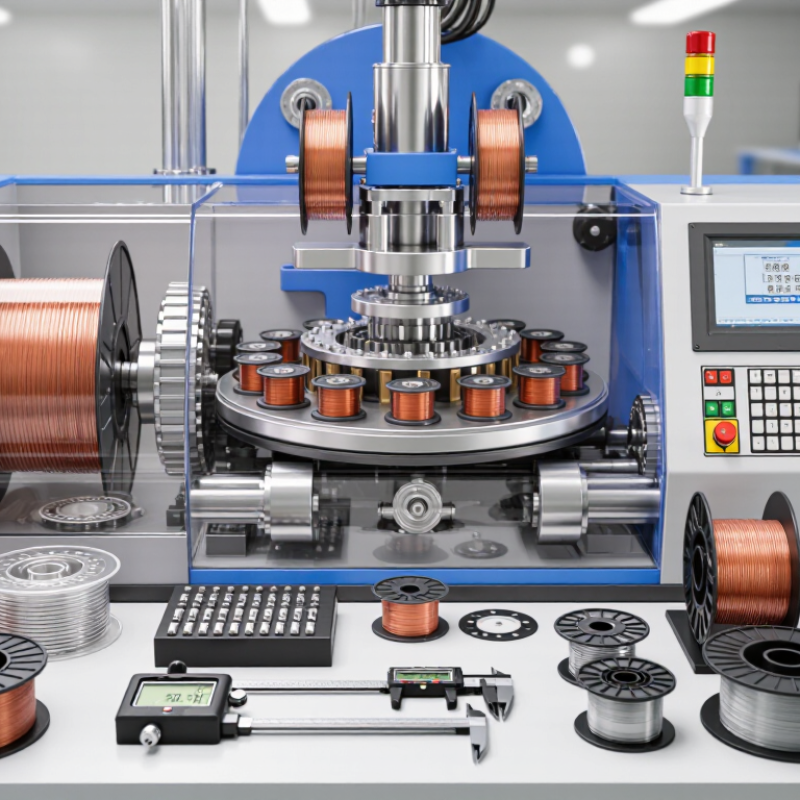
Before comparing winding machines, identify the bobbin the process must handle. A narrow, flanged plastic bobbin needs different support from a wide transformer former or a slotted core. Record the core diameter, winding width, flange height, and overall length. Check how the bobbin is loaded and held; a loose fit can cause wobble, uneven layers, or wire damage. Small details matter.
Next, define the winding task. Note wire diameter, target turns, layer arrangement, and acceptable tension range. Fine wire may need careful tension control, while thicker wire can demand stronger clamping and more torque. Specify the required output per shift, changeover frequency, and whether operators load parts manually. A machine suited to steady, high-volume runs may be awkward for frequent bobbin changes.
Use actual samples when checking machine compatibility, not only a drawing. Dimensions can vary slightly between batches, and that difference may affect the spindle or fixture. Test a sample. Observe whether the wire stays within the flanges and whether the finished coil can be removed without snagging. Record cycle time and winding consistency across several parts. If the bobbin family is still changing, leave room for adjustable fixtures; committing too early can create avoidable setup work.
Choosing a bobbin coil winding machine starts with the workpiece and daily output, not the machine’s highest advertised speed.
Manual machines suit prototypes, repairs, and short runs where operators need close control. The operator guides the wire and can adjust winding by feel. This flexibility helps with unusual bobbins, but results may vary between shifts.
Semi-automatic machines handle repeatable steps, such as rotation and counted turns, while an operator loads bobbins and checks the wire path. They can improve consistency without removing hands-on setup. Automatic machines are better suited to stable, higher-volume production. They may feed, wind, and stop with limited intervention, but changeovers and programming still take time. A fast machine is not always the best fit.
Tips: Test the actual bobbin, wire, and target turn count before choosing. Watch for loose layers, crossed wire, and tension changes near the bobbin edges. Ask how quickly settings can be adjusted for another coil. Keep operator skill in the decision; a complex machine can sit idle if nobody is confident setting it up. Real production is rarely as tidy as a sample run.
Match winding capacity to the bobbin sizes, wire gauges, and daily batch volumes you actually run. Check the usable spindle range and whether changeovers require special tooling. A machine rated for high speed may still struggle with fine wire or delicate bobbins. IEA’s 2023 energy-efficiency analysis estimates that electric motor systems account for more than 40% of global electricity use, making consistent coil production an important part of reliable motor manufacturing. Capacity matters. But speed alone is an easy specification to overvalue.
Precision depends on more than a published tolerance. Inspect how the machine controls tension, guides wire across each layer, and handles starts and stops. Ask for a trial using your own bobbin and wire; examine the finished coil for crossed turns, loose edges, and uneven fill. Programmable recipes, clear alarms, and repeatable setup controls can reduce operator variation. Still, a neat-looking coil may hide inconsistent tension, so check samples from repeated runs rather than one successful cycle.
Choosing a bobbin coil winding machine starts with material compatibility. Copper and aluminum wire behave differently under tension. Enamel-coated wire also needs careful handling to prevent insulation damage. Check the supported wire diameter, coating type, tensile range, and acceptable winding speed. A machine may run smoothly with one wire, then produce loose layers with another. Small mismatches matter. Request sample winding tests using your actual materials. Inspect the finished coil under magnification, not only by appearance.
Tooling must match the bobbin, mandrel, flange, and winding pattern. Confirm the machine can hold your bobbin securely without distortion. Guide nozzles should follow the wire path accurately. Quick-change tooling can reduce setup time, but it is not automatically precise. Check concentricity after repeated changes. In production practice, worn guides often create uneven layers before operators notice them. Measure twice. No machine fits every bobbin perfectly, and that assumption can become expensive.
Software compatibility deserves equal attention. The control system should support programmable turns, winding direction, layer changes, tension settings, and recipe storage. Look for clear alarms and recoverable settings after a wire break. Data export may be important for quality records or production tracking. Test whether operators can adjust approved parameters without altering protected recipes. A practical trial should include real production files, not only a demonstration program. Even a careful evaluation may miss an inconvenient interface detail, so let operators use the system during acceptance testing.
| Machine configuration | Material compatibility to check | Bobbin and tooling requirements | Control and software fit | Best suited to |
|---|---|---|---|---|
| Bench or manually assisted winder | Commonly used with insulated copper magnet wire. Confirm the machine’s tensioner and guides are suitable for the wire diameter, insulation, and spool format. | Simple bobbin holders or interchangeable mandrels; check bobbin bore, width, flange clearance, and how the part is secured. | Basic turn counting and speed control may be sufficient. Check whether settings can be stored if repeat jobs are expected. | Prototypes, repairs, samples, and low-volume work with frequent operator adjustments. |
| Programmable flyer winder | Suitable wire types depend on the tensioning system and guide design. Verify compatibility with the conductor material, insulation coating, wire diameter, and required winding tension. | Requires a bobbin fixture matched to the part’s bore and profile, plus guides that direct wire onto the winding area without rubbing sharp edges. | Look for programmable turns, speed, traverse, and winding patterns, along with recipe storage and suitable fault or break detection options. | Repeatable production of coils on bobbins with accessible winding surfaces. |
| Precision traverse winder | Check that the tensioner and wire path suit the selected magnet wire or other specified winding wire. Fine or delicate insulation may require lower, more consistent tension. | The traverse guide must match the wire size and winding width. Confirm the fixture keeps the bobbin concentric and supports the required winding direction. | Useful controls include adjustable traverse pitch, layer settings, winding direction, and saved programs. Check whether parameters can be entered directly at the machine. | Coils requiring orderly layers, consistent fill, or repeatable wire placement across the bobbin. |
| Needle winder | Confirm the needle or nozzle opening accommodates the wire and its insulation. Check the machine’s tension control for the conductor type and the tight bends required by the coil path. | Typically needs a custom bobbin nest and a needle or nozzle suited to the winding path. Check access to narrow slots, internal areas, and terminal features. | A programmable multi-axis path is important. Verify how winding paths are created, edited, checked, and saved for production. | Compact or complex bobbins where a flyer cannot easily place wire in the required locations. |
| Multi-spindle winder | Check that every spindle can run the chosen wire type with consistent tension and feed. Multiple positions are most effective when the bobbins and winding specifications are alike. | Each spindle needs a compatible fixture. Verify fixture changeover, alignment, loading access, and whether tooling can be exchanged without disrupting other positions. | Check whether recipes coordinate spindle speed, turns, and stopping points, and whether the interface reports faults or completion for each position. | Higher-volume runs of repeat coils where parallel production can improve throughput. |
| Any machine under evaluation | Test the actual production wire, including insulation, spool dimensions, and any change in material. Ask how tension is set and how wire damage is avoided. | Provide sample bobbins or dimensional drawings. Check bore, winding width, flange shape, overall dimensions, material, and fixture changeover requirements. | Confirm recipe backup, user access, parameter editing, data export needs, and compatibility with any required production or quality records. | A practical machine selection based on a sample winding trial and the actual production process. |
Compatibility depends on the specific machine, wire, bobbin, and winding program. Confirm operating limits with the machine supplier and validate performance using production-representative materials and tooling.
How to Choose a Bobbin Coil Winding Machine?
Safety should be checked on the machine, not only in the manual. During factory evaluations, I inspect guarding around the winding head, emergency stops, access doors, and exposed moving parts. The operator should reach controls without leaning over rotating components. Test the stop circuit. A warning label is not a safety system.
Maintenance affects production stability. Ask how often tension assemblies, bearings, cutters, and electrical contacts require inspection. A machine with clear access panels can reduce service time considerably. Look for standard fasteners, readable wiring diagrams, and spare parts that can be stored locally. Dust around the bobbin area is easy to overlook. It can affect sensors and winding accuracy. Keep records.
Service support deserves practical questions. Can technicians respond remotely within one working day? Are training materials available in clear language? Request service rates, response times, and realistic repair examples. Some suppliers promise fast help, but their engineers may be far away. That gap matters.
Calculate total cost beyond the purchase price. Include installation, operator training, tooling, electricity, planned maintenance, rejected coils, and possible production delays. A cheaper machine may need more manual adjustment. That difference becomes expensive over several years. Ask for a five-year cost estimate based on your actual shift pattern. Still, estimates are imperfect. Material changes, overtime, and skill shortages can distort them. Leave room for uncertainty.
Example comparison using a 1–5 buyer-assessment scale. Higher scores are more favorable; for lifetime cost, a higher score means a lower expected total cost of ownership.
Use these indicative scores as a screening example, not as universal machine specifications. Verify guarding, maintenance requirements, local service availability, and lifetime costs with each supplier for your production needs.
Record the core diameter, winding width, flange height, and overall length. A loose fit can cause wobbling, uneven layers, or wire damage.
Drawings may not show small batch variations. A real sample reveals fixture fit, wire movement, and removal problems. Small differences matter.
Manual machines suit prototypes, repairs, and short runs. Operators can guide the wire and adjust winding by feel. Results may differ between shifts.
It suits repeatable work with regular operator involvement. The machine can rotate the bobbin and count turns. The operator still loads parts and checks the wire path.
Automatic machines suit stable, higher-volume production. They may feed, wind, and stop with limited intervention. However, programming and changeovers still require time.
Fine wire needs careful tension control. Thicker wire may require stronger clamping and higher torque. Do not rely on speed alone.
Define wire diameter, target turns, layer arrangement, and acceptable tension. Also record output per shift and changeover frequency. Manual loading changes the decision.
Check for loose layers, crossed wire, and tension changes near the flanges. Measure cycle time across several parts. One perfect sample proves little.
Adjustable fixtures can handle moderate dimensional changes. They may reduce repeated setup work. Still, flexibility has limits.
A complex machine can remain idle without confident setup skills. Ask how quickly settings can be changed for another coil. The fastest machine may not be the best one.
Choosing a Bobbin Coil Winding Machine starts with identifying the bobbin types, coil designs, and production volume your operation requires. These details help determine whether a manual, semi-automatic, or automatic machine is the most suitable choice. Consider how much operator involvement is practical, how consistently the machine can meet production targets, and whether its winding capacity, precision, and control features match your specifications.
Next, confirm that the machine works with your materials, tooling, and any software used to manage winding parameters or production data. Safety features, ease of maintenance, service availability, and the cost of operation over time also matter. Comparing these factors together can help you select equipment that supports reliable coil quality, fits your workflow, and meets current needs without overlooking future production demands.
