
Choosing the China Best HT Coil Winding Machine Manufacturer requires more than comparing prices or production photos. The right partner must combine winding accuracy, stable tension control, reliable automation, and responsive technical support. A well-built Ht Coil Winding Machine should handle conductor tension consistently, maintain neat layer alignment, and reduce insulation damage during continuous operation. These details become visible on the shop floor: smooth coil edges, controlled wire feeding, and repeatable winding cycles.
Market demand makes this decision increasingly important. The International Energy Agency’s Electricity 2024 report expects global electricity demand to grow strongly through 2026. Grid expansion and transformer replacement programs are supporting equipment investment across Asia and other regions. The U.S. Department of Energy has also highlighted distribution transformer supply challenges and the need for more resilient manufacturing capacity. These trends create opportunities for Chinese manufacturers with practical engineering experience and dependable export systems.
Still, “best” is not a universal label. It depends on coil dimensions, conductor type, voltage class, daily output, and factory skill levels. Buyers should request trial winding results, tension records, machine acceptance standards, and documented after-sales response times. ISO 9001 certification can support process confidence, but it cannot replace technical verification. That point is easy to overlook. A manufacturer may present impressive specifications while offering weak commissioning support. The most reliable choice balances machine performance, customization ability, spare-parts access, operator training, and transparent communication. This guide examines those factors carefully, while recognizing that no supplier is perfect.
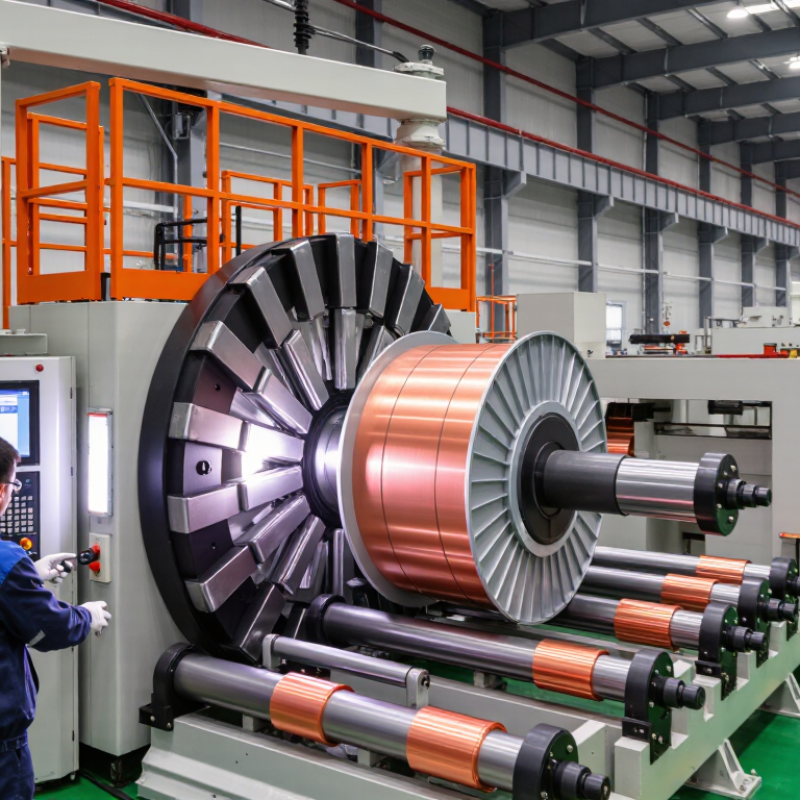
An HT coil winding machine forms insulated coils for high-tension transformers, reactors, and similar electrical equipment. “HT” usually means high tension, so the machine must control wire placement under demanding electrical and mechanical conditions. It guides copper or aluminum conductors onto a cylindrical or rectangular former. Operators also manage winding tension, layer spacing, insulation paper, and turn counting.
According to the International Energy Agency’s Electricity 2024 report, global electricity demand may grow by about 4% annually through 2027. This growth supports continued investment in transformer production and related winding equipment. Grand View Research estimates that the global power transformer market will expand at a compound annual growth rate above 7% in the coming years. These figures do not guarantee machine sales, but they show why accurate HT coil production matters.
A practical machine should provide stable tension control and repeatable positioning. A typical production line may include a programmable controller, servo drive, automatic braking, and real-time length monitoring. Even a small deviation can create uneven insulation stress. That can become serious during high-voltage testing.
However, automation is not a complete solution. Operators still need experience with conductor hardness, paper thickness, and temperature changes. In my view, manufacturers should test winding quality with actual materials, not only empty-form demonstrations. The perfect specification is rarely obvious at the beginning. Cost, maintenance access, coil dimensions, and operator training deserve equal attention.
China Best HT Coil Winding Machine Manufacturer?
Key Features of a High-Quality HT Coil Winding Machine
Choosing an HT coil winding machine requires more than comparing price and advertised speed. In practical workshop testing, stable tension control often matters most. It prevents loose turns, uneven layers, and damaged insulation. A reliable machine should adjust wire tension smoothly during acceleration and stopping. Sudden changes can create hidden defects.
Precise alignment is equally important. The winding head, mandrel, and guide system must remain centered during operation. Servo-driven positioning helps maintain consistent pitch and layer spacing. A clear control interface allows operators to set speed, turns, wire diameter, and stopping points. Data recording also supports quality checks and production traceability. Safety doors, emergency stops, and overload protection should be easy to inspect.
Small details matter.
A strong frame reduces vibration, especially when larger coils rotate at higher speeds. Automatic insulation feeding can improve repeatability, but it must match the coil design accurately. In my experience, complicated software is not always better. Operators may need practical training, and unclear alarms can slow production. Some machines perform well during demonstrations but need stronger testing under continuous loads. Before selecting a manufacturer, request sample winding, tension records, maintenance guidance, and evidence of final inspection. Ask difficult questions. That step often reveals more than a polished brochure.
Demand for high-tension transformer equipment is increasing. The International Energy Agency reported in Electricity Grids and Secure Energy Transitions that annual grid investment may need to exceed 600 billion US dollars by 2030. This growth makes supplier evaluation more important.
A suitable manufacturer should understand conductor size, coil diameter, insulation materials, winding tension, and tap-changing requirements. Ask for actual production records, not only polished brochures. Details matter.
Check whether the machine supports your required wire range and winding accuracy. Request measured tension data under continuous operation. Review coil samples, layer alignment, brake response, and emergency-stop performance. The design should support relevant transformer requirements under IEC 60076. A factory audit should include assembly areas, calibration records, software control, and spare-parts storage. ISO 9001 certification helps, but it does not prove machine quality alone.
The acceptance test needs clear numbers. Define maximum tension deviation, winding-speed stability, positioning error, noise, and cycle time before signing. Ask for a factory acceptance test using your actual conductor and insulation structure. Service response also deserves attention. Can engineers diagnose a servo fault remotely? Are electrical diagrams available in English? A low quotation can still be a warning. I would compare five-year operating costs, not only purchase price. Some evaluations miss training quality. That mistake is easy to repeat.
China Best HT Coil Winding Machine Manufacturer?
Manufacturing Standards, Customization, and Quality Control
Choosing a high-tension coil winding machine manufacturer requires more than comparing prices. Manufacturing standards should appear in drawings, material records, software controls, and inspection reports. A reliable factory documents wire-tension ranges, spindle accuracy, insulation handling, and electrical safety procedures. These details reveal experience. Technicians should explain machine performance during continuous production, not only during demonstrations. Ask for calibration dates and acceptance criteria before signing a technical agreement.
Customization begins with the coil, not a sales template. The manufacturer should review conductor diameter, bobbin dimensions, winding speed, layer structure, and required output. Useful options may include programmable tension control, automatic wire cutting, recipe storage, and winding-data traceability. A practical design also considers operator access and maintenance space. Small interfaces matter. For unusual specifications, engineers should provide simulations or sample-winding tests before final production. However, customization can create weaknesses if every request is accepted without reviewing risks. That limitation deserves honest discussion.
Quality control should cover incoming components, assembly, software validation, and final machine testing. Inspectors can verify runout, tension stability, winding alignment, noise, and emergency-stop response. A factory with documented corrective actions is more trustworthy than one claiming perfect results. Perfection sounds impressive, but production often exposes overlooked details. Request test videos, dimensional records, training plans, spare-parts lists, and remote-service terms. Clear records make responsibility easier to trace when a coil fails inspection. Test carefully.
This chart highlights internationally recognized standards commonly used when evaluating HT coil winding machine manufacturers. The publication years indicate the latest edition referenced for machinery safety, quality management, environmental management, and rotating electrical machine requirements. A qualified supplier should also provide documented customization procedures, traceability, inspection records, and final acceptance testing.
Selecting the Best HT Coil Winding Machine Supplier in China requires more than comparing prices. The International Energy Agency’s Electricity Grids and Secure Energy Transitions report says annual grid investment must exceed USD 600 billion by 2030. This expansion increases demand for reliable high-voltage transformer production equipment. A capable supplier should provide stable tension control, programmable winding patterns, automatic layer counting, and traceable process records. Ask for evidence from similar coil sizes, wire materials, and insulation systems. Factory experience matters here.
Request a complete Factory Acceptance Test before shipment. Check winding accuracy, emergency stopping, mandrel alignment, and software repeatability. A practical test should use your actual conductor and insulation materials. Review electrical drawings, spare-part availability, training plans, and remote service response times. The U.S. Department of Energy has reported extended transformer lead times and supply-chain pressure. Delays can make a cheap machine expensive. Still, specifications alone cannot prove performance. I have seen impressive demonstrations fail when operators changed wire tension. That detail deserves attention.
Tips: Compare at least three suppliers. Require sample coils, not only videos. Confirm calibration records and safety compliance. Ask who supports the machine after installation. Visit the factory when possible, but do not treat a clean showroom as proof. A supplier’s quality system, often aligned with ISO 9001, should connect directly to measurable inspection records. Leave room for honest uncertainty; every project has different materials, tolerances, and operator skills.
Supplier evaluation scorecard for high-voltage transformer coil winding machine procurement
| Evaluation Dimension | Recommended Benchmark | What to Verify With the Supplier | Why It Matters for HT Coil Production | Suggested Weight |
|---|---|---|---|---|
| Applicable Coil Type | Disc, layer, foil, or combined winding capability according to the transformer design | Request machine drawings, application examples, and a written list of compatible conductor and insulation materials. | Different HT coil structures require different tension systems, guides, tooling, and winding-control functions. | 12% |
| Conductor Size Range | Typical copper or aluminium wire range: approximately 0.5–5.0 mm diameter, depending on machine configuration | Confirm the minimum and maximum conductor dimensions, strip width, conductor profile, and insulation thickness supported by the proposed model. | A suitable range prevents production limitations when the transformer portfolio includes different voltage and power ratings. | 10% |
| Coil Dimensions | Typical working envelope: inner diameter around 200–1,200 mm; outer diameter and coil width must be customized to the product design | Compare the supplier’s winding diameter, coil height, maximum coil weight, mandrel size, and usable working area with actual production requirements. | The machine must accommodate the complete dimensional range without reducing winding accuracy or operator safety. | 12% |
| Tension Control | Closed-loop tension control with load-cell feedback; target stability commonly specified at approximately ±2% of the set value | Check the tension range, sensor type, calibration method, response time, and test results at low, medium, and high tension. | Stable tension helps avoid loose turns, conductor deformation, insulation damage, and uneven radial pressure. | 15% |
| Winding Speed | Common adjustable spindle-speed range: approximately 0–100 rpm, subject to conductor size and coil design | Verify maximum safe speed under actual load conditions rather than relying only on no-load speed specifications. | Adjustable speed allows the operator to balance productivity, conductor handling, insulation protection, and winding quality. | 8% |
| Winding Accuracy | Programmable pitch and traverse control with repeatable positioning; acceptance limits should be defined before purchase | Require a witnessed trial coil and measure turn pitch, layer alignment, end position, and cumulative error against agreed tolerances. | Accurate positioning supports consistent electrical clearances and reduces rework during coil assembly and insulation processing. | 14% |
| Control System | PLC-based control with touchscreen HMI, recipe storage, alarm history, manual mode, and production data recording | Confirm language options, user permissions, backup procedure, remote diagnostic capability, and availability of electrical schematics. | Clear controls improve repeatability, operator training, troubleshooting, and traceability between production batches. | 8% |
| Tooling and Changeover | Quick-change mandrels, adjustable guides, and documented setup procedures for different coil sizes | Review the tooling list, changeover time, spare-part pricing, alignment method, and whether special fixtures are included in the quotation. | Efficient changeover reduces downtime and makes the machine practical for mixed-volume transformer production. | 7% |
| Safety and Compliance | Guarding, emergency stops, overload protection, electrical protection, safe access, and a documented risk assessment | Request the electrical diagram, safety-circuit description, conformity documentation, factory test records, and applicable export compliance documents. | Proper safeguards reduce mechanical and electrical hazards and support the buyer’s internal compliance process. | 6% |
| Factory Acceptance Test | FAT using the buyer’s conductor, insulation materials, tooling, and representative coil recipe | Define measurable FAT criteria for tension stability, speed, pitch accuracy, alarm functions, coil dimensions, and continuous operation. | A documented FAT confirms that the machine meets production requirements before shipment and reduces commissioning risk. | 4% |
| Installation and Training | Installation guidance, operator training, maintenance training, manuals, and commissioning support | Clarify the number of service days, travel responsibilities, training language, training materials, and remote-support response time. | Effective commissioning helps the production team achieve stable output more quickly and prevents avoidable operating errors. | 2% |
| Spare Parts and Service | Recommended spare-parts list, component availability, preventive-maintenance schedule, and defined warranty terms | Check lead times for sensors, drives, bearings, tension components, control parts, and other wear items. | Reliable after-sales support minimizes unplanned downtime during the machine’s operating life. | 2% |
| Total Suggested Evaluation Weight | 100% | |||
| Recommended purchasing method: shortlist suppliers by technical compliance first, then compare verified FAT results, total cost of ownership, delivery terms, training scope, spare-parts support, and warranty conditions. | ||||
It forms insulated coils for high-tension transformers, reactors, and related electrical equipment. The machine guides copper or aluminum conductors onto cylindrical or rectangular formers.
It commonly handles copper or aluminum conductors. Performance depends on conductor diameter, hardness, insulation paper, and required winding tension. Material testing matters.
Stable tension control and accurate wire positioning are essential. Useful functions include programmable controls, servo drives, automatic braking, and length monitoring. Small deviations matter.
Uneven tension can shift conductors and stress insulation layers. Problems may appear during high-voltage testing. Temperature changes can also affect winding quality.
No. Operators still adjust settings for conductor hardness, paper thickness, and temperature. Automation improves repeatability, but it cannot remove every judgment call. Human review remains necessary.
Review drawings, material records, software controls, and inspection reports. Ask about spindle accuracy, tension ranges, insulation handling, and electrical safety procedures. Claims alone are insufficient.
Discuss conductor diameter, bobbin size, winding speed, layer structure, and target output. Consider recipe storage, wire cutting, traceability, access, and maintenance space. A custom feature may create new risks.
Inspectors should verify runout, tension stability, alignment, noise, and emergency-stop response. Request dimensional records, test videos, training plans, and spare-parts information. Perfect results are never guaranteed.
Yes, sample winding should use the intended conductor, former, and insulation paper. An empty-form demonstration can hide practical weaknesses. Testing may still miss something.
Choosing the best Ht Coil Winding Machine manufacturer in China requires a clear understanding of the machine’s purpose, structure, and performance. An Ht Coil Winding Machine is designed to produce accurately wound coils for high-voltage electrical applications, where winding tension, alignment, insulation protection, and repeatable operation are essential. A high-quality machine should offer stable speed control, precise tension adjustment, reliable automation, strong mechanical construction, and compatibility with different coil sizes and materials.
When evaluating Chinese manufacturers, buyers should examine production experience, engineering capabilities, customization services, testing procedures, and after-sales support. Manufacturing standards, material selection, electrical safety, dimensional accuracy, and strict quality control all influence long-term machine reliability. The best supplier should be able to provide practical technical communication, detailed specifications, factory inspection options, operator training, and responsive maintenance support. By comparing performance, customization flexibility, total cost, delivery capability, and service quality, customers can select a dependable Ht Coil Winding Machine supplier that meets their production requirements and supports stable business growth.
