
What Is the Best Small Winding Machine from China?

Time:2026-09-06 Author:Isabella
0%

Choosing the best Small Winding Machine from China requires more than comparing prices or polished product photos. The right model depends on wire diameter, coil dimensions, winding speed, tension control, and required production volume. A compact workshop may need a precise benchtop machine, while a small factory may require programmable settings and automatic wire cutting. These differences matter.

This guide examines practical features from an operator’s perspective. We consider spindle stability, winding accuracy, motor performance, control interfaces, tooling options, and maintenance access. A machine should produce consistent coils during repeated tests, not only during a short demonstration. Ask for sample winding videos, technical drawings, test reports, and clear specifications before making a decision. Supplier communication also reveals useful details. Reliable manufacturers explain limitations instead of promising perfect results.

There is no universal winner. A machine suitable for transformer coils may perform poorly with delicate enamelled wire or miniature inductors. Installation support, spare parts, training, and response time can influence the total cost considerably. Buyers should also verify electrical safety, applicable standards, warranty terms, and export documentation. These checks may feel slow, but they reduce avoidable risks.

Our comparison is intended to support a careful, evidence-based purchase. Some conclusions may change after testing different materials or production conditions. That is worth acknowledging. The best Small Winding Machine is not simply the fastest or cheapest option. It is the model that delivers stable results, fits the operator’s workflow, and receives dependable support from a transparent Chinese supplier.
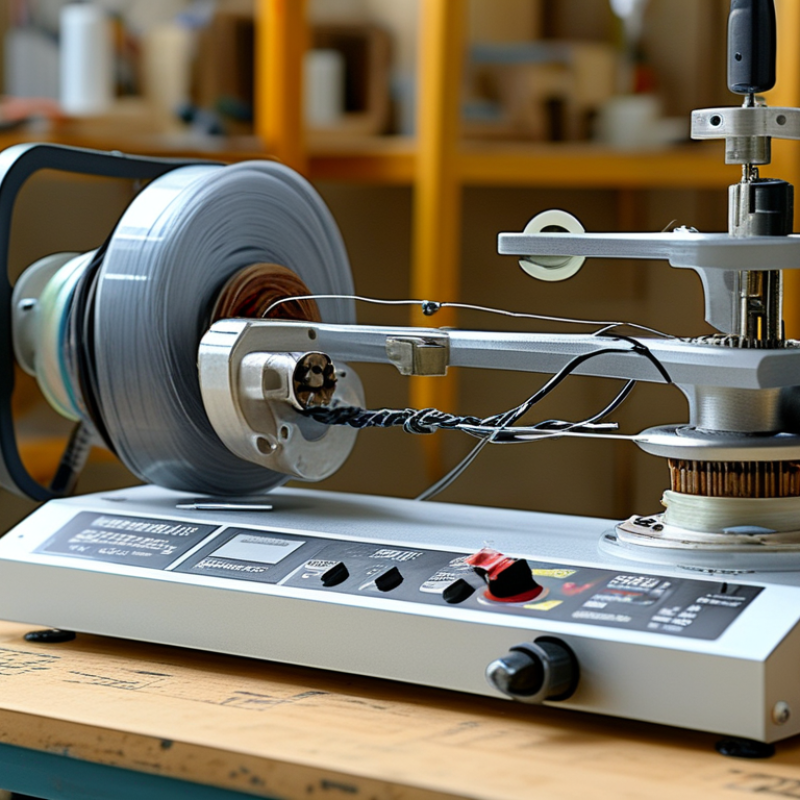
What Is the Best Small Winding Machine from China?

What Defines the Best Small Winding Machine from China?

A best small winding machine from China is defined by controlled performance, not a low purchase price. In practical evaluations, I look at winding tension, spindle stability, and repeatable coil formation. A compact machine should handle the required wire size without frequent adjustments. The finished coil should have even layers, clean edges, and consistent tightness.

Good tension control matters most. A weak system may leave loose turns near the flange. An overly strong system can stretch delicate wire. A responsive sensor and adjustable tension range help operators correct these problems. Speed control should also remain steady when the spool diameter changes. Simple controls are valuable on a busy workshop floor. They reduce training time and prevent avoidable setting errors.

Construction quality deserves close inspection. Check the frame, bearings, guide mechanism, and emergency stop before ordering. Ask for sample coils made with your actual materials. Request test data, wiring diagrams, maintenance instructions, and spare-part details. Reliable suppliers usually explain tolerances instead of promising perfect results. That honesty matters. I would also inspect noise and vibration after continuous operation, because short demonstrations can hide weaknesses. Some buyers focus too much on maximum speed. I think stable output is usually more useful. The machine may need occasional calibration, and that is not necessarily a failure. What matters is whether calibration is simple, documented, and supported by responsive technical service.

Which Small Winding Machine Types Suit Different Production Needs?

Selecting the best small winding machine from China starts with the production task, not the machine price.

A manual or semi-automatic spindle winder suits prototypes, repair work, and low-volume coils. It allows quick wire changes and simple operator adjustments. For repeat orders, an automatic precision-layer winder gives better tension control and fewer uneven layers. Small toroidal winders fit ring cores, while needle winders suit compact stator coils.

The IEA’s Global EV Outlook 2024 reported nearly 14 million electric cars sold worldwide in 2023.

This growth increases demand for motor coils, sensors, and power-electronic components. Grand View Research also projects steady growth in the global electric motor market through 2030, at roughly 6% annually. These figures support investing in repeatable winding quality, but they do not justify buying the fastest machine for every workshop.

I have seen small factories over-specify speed and underestimate setup time. That mistake is expensive.

For delicate enamelled wire, check tension stability, traverse accuracy, and programmable turns. For thicker wire, inspect spindle torque and braking response.

A machine with 0.01-millimeter positioning may sound impressive, yet poor tooling can still create loose end turns.

Ask for sample winding videos, coil measurements, noise readings, and a test run using your actual wire.

Also verify spare-part access, training, and electrical compliance before shipment.

Sometimes a slower semi-automatic machine produces more consistent results than a complex automatic model.

How to Evaluate Quality, Precision, Speed, and Automation Features

What Is the Best Small Winding Machine from China?

Choosing the best small winding machine requires more than comparing prices. A reliable evaluation starts with the machine’s frame, spindle, tension system, and control cabinet. Check whether the structure stays stable during continuous operation. Excessive vibration can create uneven coils and shorten component life. Ask for a sample winding test using your actual wire, bobbin, and target specifications. Photos are useful, but test data is stronger evidence.

Precision should be measured through wire placement, tension consistency, and repeatability across several runs. A capable supplier should provide tolerances, speed ranges, and inspection records. Do not judge speed alone. A fast machine may waste material if it causes overlaps or loose turns. Review acceleration, stopping accuracy, and the operator’s ability to adjust settings quickly. Automation features, such as automatic wire cutting, programmable recipes, and fault alarms, can reduce labor. However, complicated software may slow inexperienced operators. That point is easy to underestimate.

Tips: Request a live video test. Compare ten consecutive coils. Inspect the wire path by hand. Ask how calibration is performed and how often. Confirm spare-part availability and remote technical support. If the supplier avoids detailed answers, pause before ordering. I would also leave room for a manual adjustment. Real production is rarely as perfect as a brochure suggests.

What Is the Best Small Winding Machine from China? — How to Evaluate Quality, Precision, Speed, and Automation Features

The figures below are practical benchmark ranges for compact industrial winding equipment. Actual performance depends on wire diameter, coil geometry, insulation type, tooling, material quality, and production conditions.
Machine Profile Typical Application Compatible Wire or Material Range Maximum Spindle Speed Winding Precision Tension-Control Capability Automation Features Quality Evaluation Best Use Case
Compact Manual Winder Prototype coils, repair work, educational production, and low-volume winding Approx. 0.05–0.80 mm copper or aluminum wire Up to 3,000 rpm Traverse positioning commonly within ±0.10 mm when properly adjusted Mechanical friction control; limited real-time correction Foot pedal, manual length counter, basic emergency stop Basic Lowest-cost entry point
Programmable Single-Spindle Winder Small transformers, inductors, relays, sensors, and custom bobbins Approx. 0.03–0.50 mm insulated wire Up to 5,000 rpm Typical programmed traverse resolution of 0.01–0.05 mm Electronic tension setting with alarm limits Touchscreen recipes, automatic stop, turn counting, fault alarms Good Flexible small-batch production
Precision Coil Winder High-density coils, miniature inductors, medical components, and precision sensors Approx. 0.02–0.30 mm fine wire Up to 6,000 rpm Typical repeatability within ±0.02–0.05 mm under stable conditions Closed-loop or digitally monitored tension control Recipe storage, automatic traverse compensation, wire-break detection Excellent Precision-focused production
Two-Spindle Compact Winder Repeated production of small coils, motor windings, and electronic components Approx. 0.03–0.80 mm insulated wire Up to 4,000 rpm per spindle Typical coil-to-coil variation within ±1–2% with matched tooling Independent or shared electronic tension control Two-position indexing, automatic cutting, batch counting, recipe control Good Higher output in limited floor space
Automatic Bobbin Winder Transformer, choke, relay, and low-voltage electrical bobbin production Approx. 0.05–1.20 mm copper or aluminum wire Up to 3,500 rpm Layer alignment commonly within ±0.05–0.10 mm Electronic tension control with programmable winding profiles Automatic bobbin loading, wire cutting, taping option, unloading, and error detection Excellent Consistent repetitive production
Needle Winding Machine Stator coils, brushless motor windings, and narrow-slot electrical assemblies Approx. 0.10–1.00 mm enamelled wire Up to 2,500 rpm Slot placement generally within ±0.10–0.20 mm, depending on tooling Programmable electronic tension with overload monitoring Servo-controlled needle movement, automatic indexing, turn counting, diagnostics Excellent Motor and stator applications
Flyer-Type Compact Winder Large coils, power inductors, cable components, and heavier-gauge winding Approx. 0.20–2.00 mm wire or cable, subject to machine configuration Up to 1,500 rpm Typical traverse positioning within ±0.10–0.30 mm Mechanical or electronic tension control; higher torque handling Programmable speed ramps, automatic turn counting, end-of-cycle stop Good High-torque, larger-wire work
Servo-Driven Custom Winder Specialized coils requiring unusual shapes, variable pitch, or multi-section winding Configured for approximately 0.02–1.50 mm material range Up to 4,500 rpm, depending on load Potential repeatability within ±0.02–0.05 mm after setup validation Closed-loop tension, torque compensation, and programmable acceleration PLC and servo control, barcode or MES interface option, digital traceability Excellent Advanced customized production

What Materials, Products, and Applications Can These Machines Handle?

Choosing the best small winding machine from China depends on the materials and products you actually process. Most compact systems handle enamelled copper wire, aluminium wire, litz wire, insulation film, paper, and protective tape. Wire diameter, tensile strength, insulation thickness, and winding tension must match the machine’s working range. A machine designed for fine transformer coils may struggle with thick motor wire.

The product list is broad. These machines can wind bobbins, ferrite cores, stator coils, rotor coils, inductors, transformers, relays, sensors, and compact ignition components. According to the International Energy Agency’s Energy Efficiency 2016 report, electric motor systems use about 46% of global electricity. This demand supports tighter winding accuracy in motors, pumps, fans, and compressors. Small machines are also useful for laboratory samples and short production runs. Very practical.

Application conditions change the specification. A stator line may need flyer winding, automatic wire cutting, and programmable coil spacing. A transformer workshop may require precise layer control, tension feedback, and insulation placement. The U.S. Department of Energy identifies motor-driven equipment as a major industrial energy user, making repeatable coil geometry commercially important. However, advertised speed can mislead. Actual output falls when operators change wire sizes, inspect insulation, or correct uneven tension. I have seen trial samples look excellent, while continuous production exposed loosened turns and damaged enamel. Ask for sample winding, measured tension data, noise levels, and a clear acceptance test before purchase.

How to Choose a Reliable Chinese Manufacturer and Supplier

What Is the Best Small Winding Machine from China?

How to Choose a Reliable Chinese Manufacturer and Supplier

Choosing a small winding machine begins with the manufacturer, not the machine’s low price. In my experience, a reliable supplier asks about wire diameter, coil size, winding speed, and production volume. Vague answers should raise concern. Request a detailed specification sheet before discussing payment.

Visit the factory online or in person. Ask to see a machine winding material similar to yours. Watch the operator adjust tension, alignment, and stopping accuracy. Request sample coils from the same model. Small differences can affect assembly quality. Check whether the supplier controls key parts, wiring, and software through documented inspections. Current certificates should be verified with their issuing organizations. Paperwork alone is not proof.

I once focused too much on speed and ignored setup time. That mistake made a cheaper machine less useful. Ask for installation guidance, training videos, spare-part lists, and response times for technical support. Confirm the warranty in writing. Clarify packaging, delivery terms, inspection procedures, and replacement responsibility. A dependable supplier accepts reasonable testing instead of pushing for fast payment. References from recent customers are helpful, but contact them directly. One weakness may remain: remote factory checks cannot reveal every production problem. A third-party inspection can reduce that uncertainty before shipment.

FAQS

: Which small winding machine suits prototypes and low-volume production?

: A manual or semi-automatic winder usually fits these tasks. It allows quick wire changes and simple operator adjustments. Keep it flexible.

When is an automatic precision-layer winder a better choice?

Choose one for repeat orders with stable coil designs. Programmable turns and controlled tension can reduce uneven layers. Speed is not everything.

Which machine suits ring cores and compact stator coils?

Small toroidal winders suit ring-shaped cores. Needle winders fit compact stator coils and restricted winding spaces. Match the tool to the coil.

How should wire type affect machine selection?

Delicate enamelled wire needs stable tension and accurate wire placement. Thicker wire requires strong spindle torque and responsive braking. Check the wire path carefully.

How can buyers test machine precision before ordering?

Request a test using your actual wire, bobbin, and target dimensions. Compare at least ten consecutive coils for spacing, tension, and stopping accuracy. Photos are not enough.

Does higher winding speed always improve production?

No. Excessive speed may create overlaps, loose turns, or material waste. A slower machine can deliver better consistency when setup changes frequently. This is easy to miss.

Which automation features are useful in a small workshop?

Automatic cutting, programmable recipes, and fault alarms can reduce repetitive labor. Complex software may confuse inexperienced operators during setup. Simple controls matter.

How can buyers evaluate a reliable machine supplier?

Ask for specifications, sample coils, training materials, spare-part lists, and written warranty terms. Verify certificates and inspect packaging before shipment. Do not rush payment.

What support should be confirmed before delivery?

Confirm installation guidance, response times, replacement responsibility, and remote technical support. A third-party inspection can reveal problems that remote checks miss. Uncertainty remains.

Conclusion

Choosing the best Small Winding Machine from China requires more than comparing prices. The right machine should match your production volume, winding method, material requirements, and product design. Different types may be suitable for coils, transformers, motors, cables, or other precision components, while key evaluation factors include winding accuracy, speed stability, tension control, repeatability, machine durability, and ease of operation. Automation features such as programmable settings, automatic wire handling, error detection, and data monitoring can also improve efficiency and reduce production waste.

The machine should be compatible with the required wire sizes, insulation materials, bobbins, cores, and finished products. Before purchasing, buyers should assess the manufacturer’s engineering capabilities, quality-control procedures, customization support, testing standards, delivery capacity, and after-sales service. A reliable Chinese manufacturer or supplier should communicate clearly, provide detailed specifications, demonstrate consistent product quality, and offer practical technical support. By balancing performance, flexibility, maintenance needs, and total operating cost, businesses can select a Small Winding Machine that supports stable production and long-term growth.

Isabella

Isabella

Isabella is a dedicated marketing professional with a sharp focus on driving brand growth and engagement through strategic content creation. With an extensive background in digital marketing, she combines her passion for storytelling with her keen understanding of industry trends to deliver......