
2026 Top Automatic Transformer Coil Winding Machines

Time:2026-10-01 Author:Madeline
0%

The 2026 market for Automatic Transformer Coil Winding Machine technology is becoming more precise, connected, and demanding. Manufacturers now expect stable tension control, accurate layer alignment, and repeatable coil dimensions. These machines serve distribution transformers, power transformers, and specialized electrical components. Their value is measured on the production floor, not only in a catalog.

A capable system can guide copper or aluminum wire smoothly around a prepared bobbin. Servo motors adjust speed while sensors monitor tension and winding position. Operators can review settings through a touchscreen and reduce repeated manual corrections. This improves consistency, especially when production involves thin wire, multiple layers, or complex winding patterns. Safety guards, emergency stops, and documented maintenance procedures also deserve close attention. They are not optional details.

Real experience remains important.

A high-speed machine may appear impressive, yet poor tension control can create loose turns, damaged insulation, or uneven coils. Energy use, changeover time, software support, and spare-part availability should be checked before purchase. These practical factors often affect long-term reliability more than headline speed. However, no machine fits every factory perfectly. This is where the selection process becomes less certain. Testing with actual wire, insulation, bobbins, and production targets can reveal limitations early. The following guide examines leading 2026 models through performance, control systems, build quality, usability, and after-sales support. It aims to provide a balanced reference for engineers, purchasing teams, and manufacturers seeking dependable winding equipment.
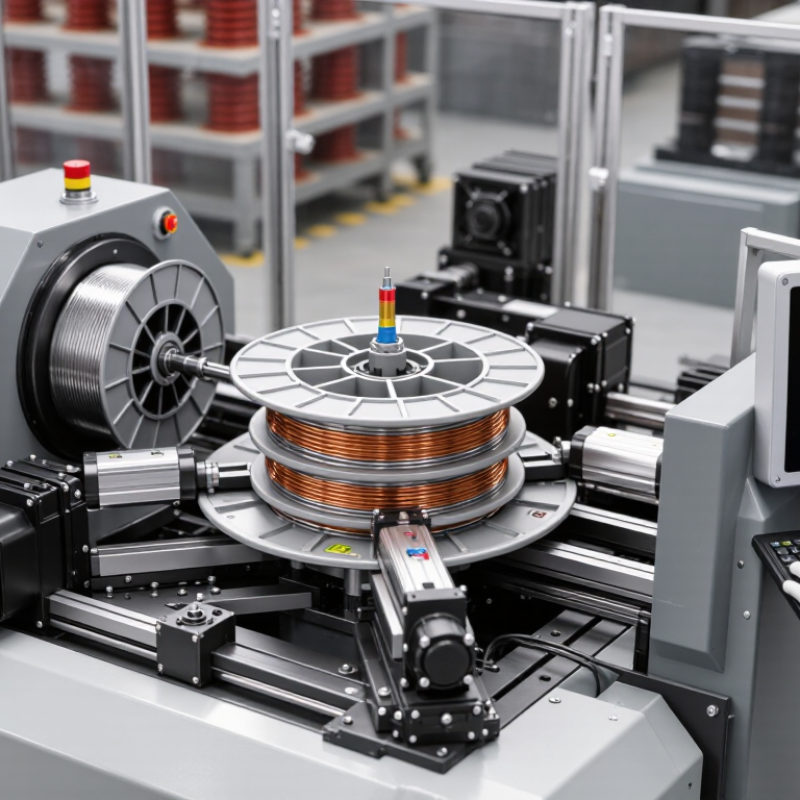
2026 Top Automatic Transformer Coil Winding Machines

What Are Automatic Transformer Coil Winding Machines?

Automatic transformer coil winding machines are industrial systems that wind insulated copper or aluminum wire around a core, bobbin, or former. They replace repetitive hand-guided movement with programmed tension, speed, and turn control. A typical machine includes a winding spindle, servo motor, wire guide, tension unit, controller, and safety enclosure. The system follows a digital winding recipe. It can create precise layers, controlled spacing, and consistent lead positions. Small details matter. A slight tension change may damage insulation or distort a coil edge.

In practical production, operators set wire diameter, winding direction, turns, layer count, and start-stop points. Sensors can detect wire breaks, abnormal tension, and position errors during operation. Some machines also support automatic wire cutting, taping, crossing, or coil removal. These functions reduce manual handling and improve repeatability across batches. However, automation does not remove engineering judgment. The former must match the design, insulation materials need suitable handling, and winding speed must fit the wire. A fast setting is not always a better setting.

Quality checks may include turn counting, visual inspection, resistance testing, insulation verification, and dimensional measurement. Production records help trace settings and investigate defects. In my view, the most reliable results come from careful setup, skilled supervision, and regular calibration. Machines can drift. That point is easy to overlook. A poorly aligned guide or worn tension roller may produce hidden damage, even when the finished coil looks acceptable. Trial runs should be measured, not assumed.

How Transformer Coil Winding Machines Operate

2026 Top Automatic Transformer Coil Winding Machines

How Transformer Coil Winding Machines Operate

Automatic transformer coil winding machines convert insulated copper or aluminum wire into controlled, compact coils. A pay-off unit releases the conductor, while tension rollers maintain steady pressure. The spindle rotates the coil former at a programmed speed. A servo-driven guide places each turn beside the previous one. Small errors matter. Uneven spacing can increase electrical stress and weaken insulation.

Modern machines usually combine programmable logic controllers, servo motors, laser sensors, and tension monitoring. The system adjusts guide movement according to wire diameter and winding pitch. Operators enter parameters such as turns, layer width, speed, and acceleration. During interlayer winding, the machine pauses or coordinates insulation paper placement. It may also create lead exits and tap positions automatically. In practice, alignment still deserves human inspection.

The International Energy Agency’s Electricity 2024 report projects global electricity demand to grow by an average 3.4% annually through 2026. This growth increases pressure on transformer production lines and quality control. The U.S. Department of Energy has reported that transformers can represent roughly 2% to 3% of national electricity consumption through energy losses. Accurate winding therefore supports both reliability and efficiency. Yet automation is not magic. Different insulation materials, conductor shapes, and coil dimensions can require repeated calibration. A machine may complete thousands of turns precisely, but poor tension settings can still produce a defective coil. Experienced technicians check winding tightness, insulation overlap, lead placement, and final dimensions before testing.

Key Components and Automation Technologies

In 2026, automatic transformer coil winding machines rely on precise mechanical and electronic components. A rigid winding spindle controls rotation without excessive vibration. Servo motors manage speed, acceleration, and stopping accuracy. The traverse system guides wire across each layer. Small alignment errors can damage insulation.

Tension control is equally important. A closed-loop tensioner maintains stable wire pressure during winding. Sensors detect wire breaks, diameter changes, and position errors. Programmable logic controllers coordinate these signals with spindle movement. Modern interfaces store winding recipes, including turns, pitch, speed, and layer spacing. This reduces setup time and improves repeatability between production batches.

Automation also supports inspection and traceability. Vision systems can check lead placement, insulation gaps, and surface defects. Data records help technicians identify recurring faults instead of relying on memory. However, automation is not self-correcting. Poor calibration, worn guides, or incorrect wire settings still create defective coils. Experienced operators must verify the first winding cycle and inspect difficult shapes manually. In practice, the best results come from combining accurate components, clear process data, and careful human judgment.

2026 Top Automatic Transformer Coil Winding Machines

Key Components and Automation Technologies

The chart summarizes representative engineering reference ranges commonly used when specifying automated transformer-coil winding equipment. Actual values depend on conductor size, coil geometry, insulation method, winding tension, and production requirements. Servo-driven axes, closed-loop tension control, programmable winding recipes, automatic wire guiding, and inline inspection are the main technologies supporting repeatable production.

Machine Types, Specifications, and Production Applications

2026 Top Automatic Transformer Coil Winding Machines

Modern automatic transformer coil winding machines support repeatable production with less manual handling. Their value depends on matching the machine type to the coil design. Layer winding machines suit round or rectangular coils and insulated wire. Foil winding machines handle wide conductors for low-voltage transformer sections. Toroidal machines guide wire around a ring-shaped core. Each design creates different tooling needs. Small details matter.

Important specifications include wire diameter range, winding width, programmable turns, spindle speed, and tension control. Traverse accuracy affects layer alignment, especially on fine wire coils. Automatic tension systems help prevent loose turns, insulation damage, and uneven edges. Production applications include power transformers, distribution transformers, current transformers, and high-frequency components. A specification sheet may look impressive, yet real performance depends on core size, insulation thickness, and operator setup. In practice, one setting rarely fits every coil. That limitation deserves honest testing.

Tips: Request sample winding trials before purchase. Check tension stability at low speed and high speed. Measure finished coils, not only machine cycle time. Keep records of wire breaks, adjustment time, and rejected coils. These figures reveal practical productivity better than advertised speed.

2026 Top Automatic Transformer Coil Winding Machines - Machine Types, Specifications, and Production Applications
Machine Type Typical Winding Configuration Typical Wire or Conductor Range Typical Maximum Winding Speed Main Control and Accuracy Features Suitable Transformer Products Production Applications
Automatic Bobbin Winding Machine Single or multi-spindle winding on bobbins, formers, and plastic coil bodies Round enamelled copper or aluminium wire: approximately 0.05–2.00 mm diameter Approximately 3,000–12,000 rpm, depending on wire size and coil geometry Programmable turns, winding pitch, acceleration and deceleration;
automatic wire cutting and termination;
typical turns-count accuracy of about ±0.1% under controlled conditions
Small power transformers, control transformers, signal transformers, chargers, and low-voltage inductive components High-volume electronic assembly, appliance controls, industrial control panels, and compact power supplies
Precision Layer Winding Machine Orderly layer-by-layer winding with controlled wire traversing and insulation placement Round wire: approximately 0.10–3.00 mm diameter; suitable for fine and medium magnet wire Approximately 500–3,000 rpm Servo-controlled traverse;
programmable layer pitch and end margins;
automatic interlayer insulation insertion;
tension control commonly within approximately ±5%
Distribution transformer coils, oil-immersed transformer windings, dry-type transformer coils, and high-voltage auxiliary windings Medium-voltage and high-voltage coil production where insulation spacing, uniform layers, and repeatability are critical
Foil Winding Machine Continuous winding of copper or aluminium foil with insulation paper between layers Foil thickness approximately 0.08–2.00 mm; foil width commonly 100–1,500 mm Approximately 0.5–8 m/s line speed, depending on foil width and coil design Constant-tension foil pay-off;
automatic edge alignment;
programmable overlap and end positioning;
insulation-paper tension and length control
Low-voltage windings for cast-resin, dry-type, furnace, rectifier, and distribution transformers Large cross-section windings requiring low-loss conductors, uniform current distribution, and reduced axial leakage
Toroidal Coil Winding Machine Continuous winding through the central aperture of a toroidal core Round magnet wire approximately 0.05–3.00 mm diameter; conductor size depends on core window and application Approximately 100–1,000 turns/minute Programmable turns and winding distribution;
core-size recipe management;
adjustable wire tension;
automatic start, stop, cut, and termination functions
Toroidal power transformers, current transformers, isolation transformers, and audio-frequency transformers Compact power conversion, measurement equipment, medical electronics, audio equipment, and energy-efficient power supplies
Tape-Winding and Insulation Wrapping Machine Controlled winding of insulation tape, shielding foil, or protective film around coils and conductors Tape width approximately 5–100 mm; tape thickness approximately 0.02–0.30 mm Approximately 20–250 rpm or equivalent line speed Adjustable tape overlap, winding angle, and tension;
programmable layer count;
edge alignment and automatic tape cutting;
optional splice and fault detection
High-voltage transformer coils, interlayer insulation systems, cable terminations, and shielded windings Electrical insulation reinforcement, electromagnetic shielding, coil finishing, and automated preparation before impregnation
Continuous Disc Winding Machine Disc or helical winding using continuous conductor with controlled axial movement Round or rectangular conductor; typical conductor cross-section approximately 2–100 mm² Approximately 5–60 m/min conductor line speed Servo-controlled conductor positioning;
programmable disc width and transposition sequence;
tension and conductor alignment monitoring;
recipe-based winding control
High-voltage power transformer windings, regulating windings, and large oil-immersed transformer coils Large transformer production requiring high mechanical strength, controlled electric-field distribution, and accurate disc geometry
Layer and Helical Winding Machine Helical, multilayer, or continuously transposed winding on cylindrical formers Round or rectangular wire approximately 0.5–20 mm equivalent conductor diameter Approximately 10–150 m/min conductor line speed Programmable pitch, lead, and winding direction;
conductor tension monitoring;
automatic turn counting;
synchronized insulation placement and end control
Power transformer low-voltage, high-voltage, tertiary, and regulating windings Medium- and large-power transformer manufacturing where high current capacity and controlled leakage reactance are required
Multi-Spindle Automatic Winding Line Two or more synchronized spindles for parallel production, sequential operations, or different coil variants Typically 0.05–3.00 mm round magnet wire, depending on spindle tooling Approximately 2,000–10,000 rpm per spindle for small and medium coils Centralized PLC or industrial computer control;
barcode or recipe selection;
automatic loading and unloading;
wire-break detection, tension monitoring, and production data logging
Small and medium transformer coils, inductors, chokes, relays, and filter components High-throughput manufacturing, mixed-model production, labor reduction, and automated quality traceability
Technical note: The values shown are typical engineering ranges for automatic transformer coil winding equipment. Actual speed, conductor size, coil dimensions, tension accuracy, and output depend on core geometry, insulation system, winding method, conductor material, tooling, and required electrical performance.

How to Select and Maintain a Winding Machine in 2026

2026 Top Automatic Transformer Coil Winding Machines
How to Select and Maintain a Winding Machine in 2026

Selecting an automatic transformer coil winding machine requires more than checking its advertised speed. Match the machine to wire diameter, bobbin size, winding width, and insulation requirements. A narrow wire may need finer tension control, while thicker conductors demand stronger guides and stable braking. Review the control system carefully. It should record winding counts, tension settings, stoppages, and operator adjustments. Useful sensors can detect wire breaks, loose layers, and incorrect positioning before defects spread.

Maintenance begins with a clean working area. Dust and insulation fragments can affect tension rollers and optical sensors. Inspect the wire path every shift, especially after changing conductor sizes. Check guide alignment, spindle runout, and clamping pressure weekly. Lubricate approved moving parts according to the maintenance manual, not personal habit. Excess lubricant can reach insulation surfaces. That mistake is easy to make.

Calibration also deserves attention. Compare programmed turns with a physical count during scheduled checks. Test emergency stops, door switches, and overload protection regularly. Keep replacement guides, belts, and sensors in controlled storage. Operators should record unusual noise, heat, vibration, or uneven layers. Small symptoms often appear before major failures. In practice, production teams sometimes extend service intervals when orders increase. That decision may save hours today, but it can create costly rework tomorrow. A realistic maintenance plan must allow for human error, rushed changeovers, and imperfect cleaning.

FAQS

What controls the rotation of an automatic transformer coil winding machine?

A rigid winding spindle controls rotation and reduces excessive vibration. Servo motors manage speed, acceleration, and stopping accuracy. Stability matters.

Why is wire tension control important during winding?

Stable tension helps create even layers and protects insulation. A closed-loop tensioner adjusts wire pressure continuously. Poor tension can cause loose or damaged coils.

Which sensors support automatic winding processes?

Sensors can detect wire breaks, diameter changes, and position errors. Vision systems inspect lead placement, insulation gaps, and surface defects. They are helpful, not perfect.

What information should a winding recipe contain?

A recipe should include turns, pitch, speed, and layer spacing. It may also record tension settings and stoppages. Clear data reduces setup mistakes.

How should buyers choose a winding machine in 2026?

Match the machine to wire diameter, bobbin size, winding width, and insulation needs. Thin wire needs finer tension control. Thick conductors need stronger guides and stable braking.

What should operators inspect during each shift?

Keep the work area clean and inspect the wire path every shift. Remove dust and insulation fragments near rollers and sensors. Small debris can create large problems.

Which maintenance checks should happen weekly?

Check guide alignment, spindle runout, and clamping pressure weekly. Lubricate approved moving parts according to the maintenance manual. Extra lubricant may reach insulation surfaces.

How can teams prevent serious winding failures?

Compare programmed turns with a physical count during scheduled calibration. Test emergency stops, door switches, and overload protection regularly. Record unusual heat, noise, vibration, or uneven layers.

Can automation replace operator judgment?

No, automation does not correct every mistake. Operators should verify the initial winding cycle and inspect difficult shapes manually. A rushed changeover may still cause defects.

Conclusion

Automatic Transformer Coil Winding Machines are advanced production systems designed to wind copper or aluminum conductors onto transformer coils with high precision, consistency, and efficiency. By coordinating tension control, programmable speed, coil positioning, and layer management, an Automatic Transformer Coil Winding Machine can produce uniform windings while reducing manual effort and material waste. These machines typically combine a sturdy winding structure with motors, sensors, control software, wire-guiding mechanisms, and safety systems to support stable and repeatable operation.

In 2026, transformer manufacturers can choose among different machine types according to coil size, conductor design, voltage requirements, and production volume. Key considerations include winding capacity, spindle speed, tension accuracy, automation level, control flexibility, and compatibility with existing processes. Proper maintenance, including cleaning, lubrication, calibration, inspection of electrical components, and timely replacement of worn parts, helps preserve performance and extend service life. Selecting the right machine requires balancing technical specifications, production goals, operator needs, energy efficiency, and long-term operating costs.

Madeline

Madeline

Madeline is a dedicated marketing professional with a wealth of expertise in our company's core offerings. With a keen understanding of the industry, she brings a unique perspective to her role, consistently delivering high-quality content that highlights the superior aspects of our products. As......